1987 Lieyu massacre - Vietnam boat people killed by ROC troops

Reviving this thread about a little-known massacre on Kinmen in the 1980s to include an article in today’s Taipei Times focusing on a new report from the Control Yuan:

Thu, July 14, 2022 page 3
  • Control Yuan member probes 1987 killing of refugees

    • By Jason Pan / Staff reporter
Summary

Control Yuan member Kao Yung-cheng (高涌誠) yesterday unveiled a report on the military’s killing of 20 Chinese-Vietnamese refugees in Kinmen County (金門) in 1987 amid a standoff between Taiwan and China.

The refugees had departed from Hong Kong and stopped at a Chinese port before going ashore in Kinmen, where the shooting happened.

Kao presented his findings to the Control Yuan, after interviewing the military personnel involved in the incident. He also visited the site of the incident, and examined archives and documents kept by the military.

The report’s summary said that 20 Vietnamese nationals, who were of ethnic Chinese descent, came ashore on the islet of Lieyu (烈嶼) on a motorboat on March 7, 1987.

They were killed by soldiers stationed on islet upon orders from the army’s Kinmen Defense Command, the report said.

The shooting took place on Donggang (東岡) shore, and came to be known as the Donggang Incident, or the Lieyu massacre. The islet is off Kinmen Island, about 6km from Xiamen in China’s Fujian Province.

Accounts of the shooting soon leaked, as conscripts returned home after their mandatory service ended, Kao said, leading to newspapers reporting on the incident a few months later.

It also prompted Democratic Progressive Party (DPP) lawmakers to demand an investigation by the Ministry of National Defense.

Initially, ministry officials did not talk to anyone outside the military establishment about the killing, and a gag order was issued by officers of the army’s 158th Division, which was responsible for the defense of Kinmen, Lieyu, and nearby islets against China.

“Files and records about the incident do exist in the archives kept by the army, but these were not open to the public,” Kao said.

The command interviewed and questioned soldiers who were involved to compile a preliminary report, he said.

Meanwhile, under pressure from lawmakers, a military court conducted an investigation, which concluded in September 1987, he said.

The military court recommended charges against several unit commanders for the killing of unarmed civilians.

A division leader, a brigade commander and two company officers were handed prison terms of less than two years, but the sentences were suspended, with the court saying “there are mitigating circumstances, as they [the defendants] took action out of duty and responsibility.”

Kao said he reopened the case last year, because many reports had been written over the decades by people involved, followed by second-hand accounts.

Some people retold the original accounts with exaggeration and wildly different information regarding the number of deaths and the circumstances which led to the killings, he said.

“With the pervasive use of social media in recent years, people have been retelling the 1987 incident, creating new reports, which are replete with errors. So I felt the responsibility to investigate and straighten the facts,” Kao said.

“I also did it to avoid an international misunderstanding, as there was confusion on the original departure points of the Vietnamese nationals,” Kao said.

Kao pointed to the Cold War and the tense military standoff between Taiwan and China at the time, with frequent enemy intrusions and shooting between the two sides on frontline islands.

“Up to early 1980s, Taiwan had an open policy to accept Vietnamese refugees fleeing from conflict and postwar turbulence, most of them fleeing by boat to Hong Kong, China or Taiwan,” the report said.

They were of Chinese descent, although they were Vietnamese citizens, the report said.

Source: Control Yuan member probes 1987 killing of refugees - Taipei Times

Guy
3 Likes

Related to Lieyu Dong Gang Massacre 1987
Dear all commentator,
Maybe you will be surprised to read this. Please, let me first introduce myself to you.
My name is Tran Quoc Dung, I am Vietnamese and born 07.02.1963 in Dalat, south of Vietnam. I am now living in Ski, Norway. I am a younger brother of 2 of 24 Vietnamese boatpeople who may have been killed in Lieyu (烈嶼) Dong Gang massacre 07.03 and 08.03.1987.
I understand the seriousness of the situation so I take full responsibility for what I will say below.
In 1981, my two brothers and I crossed the border to China with the hope of continuing on to Hong Kong, but we were not accepted as refugees, we were transferred to a detention center in Dongxing in Guangxi province. When we arrived at the camp there were about over 300 Vietnamese and Chinese Vietnamese already there. In 1984, we were transferred to a camp far from the border with Vietnam called Fangcheng Box 82, in Fangcheng district in Guangxi province.
In 1986, when there was an open policy from the central government, we made plans to escape group by group the information from the previous group gives us hope and joy for their success. Through many years of living together, we got to know each other very well. We knew which groups reached freedom and which groups disappeared.
In March 1987, my group made a plan to escape. We were 21 people departed from Zhanjiang in Guangdong via Macau, then we arrived in Hong Kong and stopped there for 20 days for boat repairs, and food aid needed for the long journey to South Korea. We took the same route that my brother’s boat took a month earlier, we went to Shantou then Xiamen, in Xiamen April 1987, we were warned by local people that a month earlier Taiwan had shot at two Vietnamese refugee boats, at that time we only knew it as unexpected incidents. We continued our journey around Kinmen to Taizhou, then Chongming (Shanghai) and finally Mokpo of South Korea in July 1987. This journey had reported to Hong Kong as a success of a refugee boat reached South Korea after they left Hong Kong. I lived in Busan refugee camp for 4 years then I left South Korea for Norway in August 1991.
It’s been 37 years until a few days ago, my wife and I watched a report on YouTube by a Vietnamese American journalist with purpose of honoring Mr. Alcoh Wong, a Chinese Malaysian who helped bury many bodies of Vietnamese boatpeople who died because they were shipwrecked in Malaysian waters. This event reminds us of my brother’s death, so my wife advised me to look for information on the internet. I started with keywords Vietnamese boatpeople killed in Taiwanese waters… Results shocked me with The Lieyu Massacre 1987.
The time, the location, the number of victims, they are Vietnamese boatpeople, there are children and women, pregnant and they can speak Chinese and English. All matched…!
The details in Lieyu Massacre made me imagine the murder scenes, the screams of women and children when they were shot many times by Taiwanese soldiers to make sure they were all dead. The brutal act that they laughed and joked on the victims’ body…
The children and women what did they do to commit a crime? They died tragically in a planned massacre…! They deserve to live as human beings or they deserve a fair trial by civilized Taiwanese judiciary. They deserve to protect by the main rules of international humanitarian law. Taiwan the land of freedom. Taiwan, a destination they lay there but never reached it.
Please help me get to my brothers and friends and let me take them home…!

Tran Quoc Dung
Email: (removed by moderator olm - if you post emails here, you are sure to get tons of SPAM from bots that scrape websites for addresses. You can get contacted through the PM function. Of this forum. It will notify you by email.)

15 Likes

This is a great post. The journey you took is incredible. Thank you for reaching out and telling us about your story.

The harm done by the ROC dictatorship ruling Taiwan in 1987 is widely known although still denied by conservatives here who continue to minimize or disregard the many forms of violence that government did to people. Taiwan has been since the 1990s an open and democractic society. The refugees killed in 1987 deserve to be remembered. I hope the current government of Taiwan will do the right thing and apologize, especially after the Control Yuan report from 2022. The government of Taiwan should also finally pass a proper refugee law, although this step may be difficult given the state of the legislature starting in May 2024 (the current ruling party will no longer control it following the election results this weekend).

Guy

6 Likes

Why are you telling us this now?

The boat people are escaping the current regime.
As if country X accidentally killed some Nationalist escapee at the end of WW2 and offer an apology to the commie government.

What international law recognizes any country as an independent nation?

It is a popularity contest. Any country can recognize Taiwan. Some do. The ones that support the CCP and are fearful of their cheap labor made product retaliation strategy just bow down. It’s pretty gross. Organisation’s like the UN could work, but they put tyrants like the CCP in charge sometimes and allow them to bully other nations. So it seems obvious their original purpose is no longer as relevant. Time for a UN 2.0 perhaps.

There is no meaningful law, per se, that recognizes any place as a nation. UN, WTO, WHO and so on are probably as close as it gets. But even the WHO, who should prioritize health over political disputes, chooses sides. Even during pandemics. So it seems they are basically retarded, at best.

#petoria

I think you should write to the Human Rights Commission and ask for help.

National Human Rights Commission
No. 2, Section 1, Zhongxiao East Road, Zhongzheng District, Taipei City 100216, Taiwan (R.O.C.)

  • Tel | (+886) 2-2341-3183

This priest might be able to help. He does a lot of human rights work for Vietnamese in Taiwan. He escaped Vietnam on a boat too. I believe he can be contacted through the Hsinchu Diocese

Nguyễn Văn Hùng
Director for Vietnamese Migrant Workers and Spouses
Hsinchu Diocese Office
No. 116 Zhonghua Road Bade District
Taoyuan, Taiwan
886-3-217 0468
nguyenvanhung2025@gmail.com

天主教新竹教區越南外勞配偶辦公室主任 阮文雄神父
33464桃園縣八德市中華路116號
電話:03-2170468
傳真:03-3798171
nguyenvanhung2025@gmail.com

Lo Yi-wen is an assistant professor and award-winning author who works as an court interpreter for Vietnamese immigrants. She was born in Vietnam but grew up in Taiwan.
ywlo@mx.nthu.edu.tw

羅漪文 助理教授

開設課程: 紅樓夢

研究專長: 現代中文寫作教學、紅樓夢

Email: ywlo@mx.nthu.edu.tw

7 Likes

Thank you so much for your help. I do appreciate your concerning. I will write to Father Nguyen Van Hung. I am waiting for Victims documents from Hong Kong Immigration Department, I will write to Office of The President ( Tsai Ying Wen ).
Tran Dung Quoc

1 Like

I think it is fine to write the President’s Office but I would recommmend sending a copy to the National Human Rights Commission. They are the agency responsible for this kind of matter.

The President’s Office is going to be very busy with the transition between administrations for the next six months. But they might forward your letter to the Commission even if (as is likely) they don’t act on it or respond.

Father Nguyen is a very remarkable person. It would be great if you could raise awareness of his important work in Sweden.

You might also be interested in this excellent documentary. Of course this is an extreme case. There are about 400,000 Vietnamese living in Taiwan including 260,000 migrant workers, 116,000 marriage migrants, and about 22,000 students.

4 Likes

Coincidently I serendipitously found the human rights museum in Jingmei last night, I was just walking over a random bridge and there was a big poster up about some information event or something about the white terror facing out to the traffic and visible from the road and then I realized it was the museum.

Not very relevant to the thread but anyway: The cops were directly in front of it stopping scooters and checking for drunk scootering, all very polite and functional. It is strange to imagine what it must have been like. I am putting visiting that museum on my to do list.

I remember visiting the war museum in Saigon and it was difficult and upsetting to see even as a complete outsider. It’s heart breakingly tragic when completely innocent people especially women, children and old people find themselves in such horrific situations. Every best wishes to @Tran in finding success tracing his family.

2 Likes

Yes you absolutely should take an afternoon to have a look.

I also strongly recommend visiting, when you can, the other site of the Taiwan Human Rights Museum located on Green Island.

Guy

1 Like

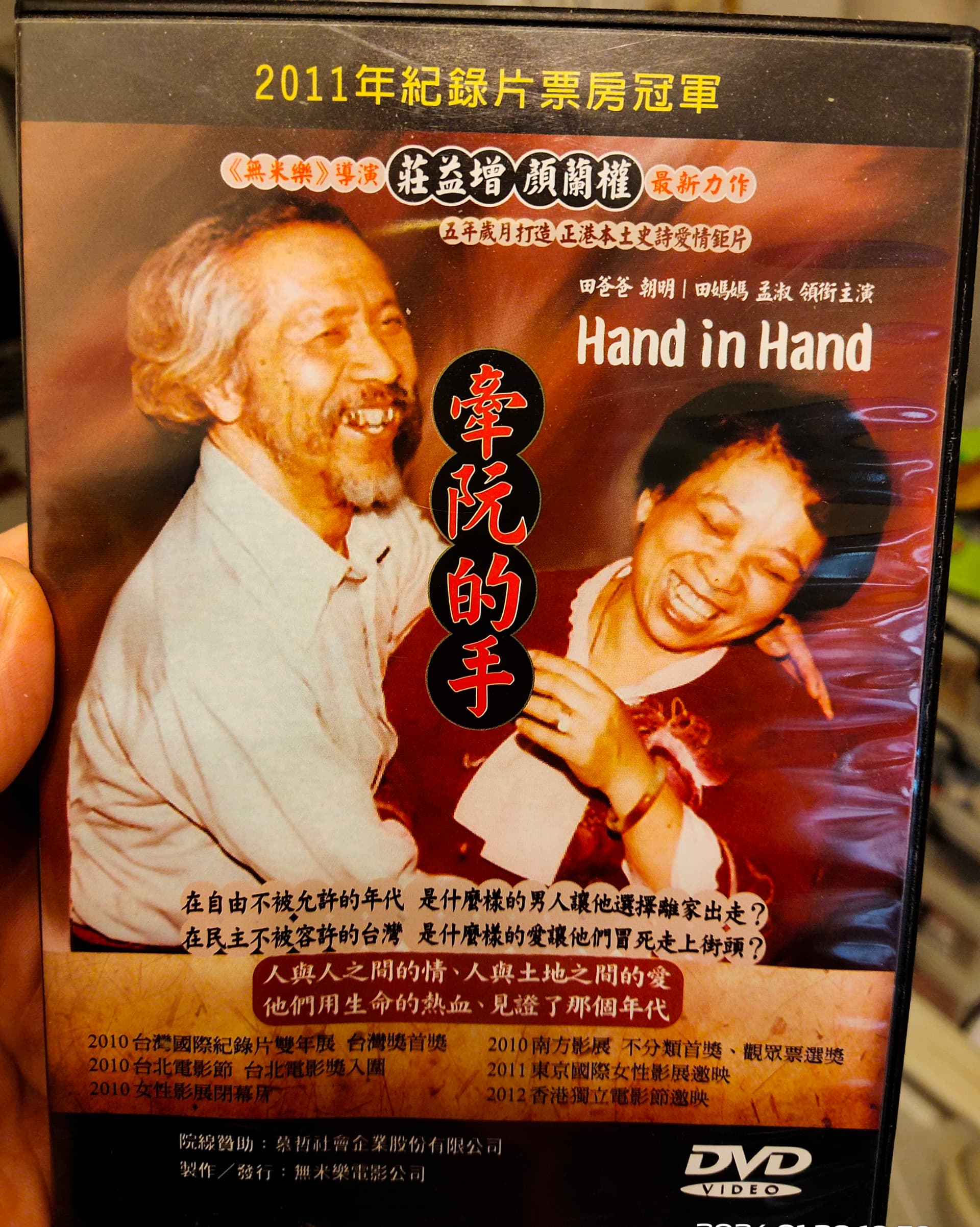
Going along with the Human Rights Museum topic, I suggest watching this non-fiction film if you can get your hands on it, 牽阮的手. It’s a combination of post WWII Taiwan history and love story. The movie is in Mandarin, Taiwanese, and Japanese; my DVD has English and Mandarin subtitles.

3 Likes

The great Han Cheung, writing his Sunday column in the Taipei Times, has revisited the Lieyu massacre:

Sunday March 1, 2026 page 12
  • Taiwan in Time: Refugees shot on sight

    About 20 people fleeing Vietnam were gunned down by the military on the frontline island of Lieyu on March 7, 1987, with the incident censored for decades

    • By Han Cheung / Contributing reporter
    Summary

    Gunfire rang out along the shore of the frontline island of Lieyu (烈嶼) on a foggy afternoon on March 7, 1987. By the time it was over, about 20 unarmed Vietnamese refugees — men, women, elderly and children — were dead. They were hastily buried, followed by decades of silence.

    Months later, opposition politicians and journalists tried to uncover what had happened, but conflicting accounts only deepened the confusion. One version suggested that government troops had mistakenly killed their own operatives attempting to return home from Vietnam.

    A Vietnamese refugee boat photographed during the late 1970s.

    Photo courtesy of Wikimedia Commons

    The military maintained that the victims were “communist bandits” possibly sent by Beijing to infiltrate Taiwan, and therefore barred from landing under any circumstances. Previously, an officer who had allowed two Chinese refugees to seek shelter was punished, reinforcing this hardline policy.

    Still, commanding officers, including General Chao Wan-fu (趙萬富), lost their posts, and the soldiers were convicted for failing to report the incident, ultimately receiving suspended sentences.

    Only when Hau Pei-tsun (郝柏村), who was chief of general staff at the time, published his diary in 2000 was it revealed that the victims were indeed Vietnamese refugees. The Control Yuan released a detailed report in 2022, but the victims’ families continue to seek answers.

    Relatives display the names and photos of the victims of the March 7, 1987 massacre of Vietnamese refugees during a press conference in 2024.

    Photo courtesy of Amnesty International

    THE MASSACRE

    Lieyu, also known as Little Kinmen, lies about 5km from the Chinese coast and has long been heavily militarized. According to the military, the 1980s saw an increase in fishing vessels from China approaching Kinmen, raising concerns about infiltration and intelligence gathering.

    A map showing the location of the March 7, 1987 massacre of Vietnamese refugees on Lieyu Island.

    Photo courtesy of Control Yuan

    There were also claims of Beijing sending spies disguised as refugees or defectors. Hau’s diary recorded discussions suggesting that some North Vietnamese refugees who had fled overland to China were allegedly being paid by Chinese authorities to attempt landings on Kinmen. Under regulations at that time, both Chinese and Vietnamese vessels were prohibited from coming ashore.

    The rules stipulated that soldiers fire warning shots at unidentified approaching vessels. If the warnings were ignored and the ships displayed hostile intent — particularly at night or in conditions of low visibility — troops were authorized to open fire, and if necessary, destroy them.

    That afternoon, with visibility limited by thick fog, a Vietnamese refugee boat approached a stretch of Lieyu’s coastline that troops later described as a blind spot. Warning shots were fired, and when the vessel did not turn back, the soldiers opened fire.

    According to the Control Yuan report, three passengers who left the boat to plead for help were shot. As the vessel continued drifting toward shore, troops fired a 66mm anti-tank weapon, destroying it. Four more people who disembarked to beg for their life were then shot. Soldiers then boarded the wreckage and killed the remaining survivors, including children.

    The bodies were buried in a shallow grave, and later reburied after they were dug up by stray dogs.

    THE COVER UP

    The soldiers later claimed that Kinmen had longstanding implicit orders to shoot on sight any “communist bandits” who made it ashore, citing several similar incidents in previous years.

    A year earlier, two defectors had landed on nearby Dadan Island (大膽), leading to the removal of the commanding officer. In the Control Yuan report, several soldiers say they were ordered to “kill on sight” during the incident, and one recalled that General Chao even praised the troops for their actions afterward.

    After searching the victims, some soldiers realized they may have killed the wrong people. While some belongings were Chinese, other items suggested the victims were Vietnamese. Some soldiers also recalled hearing them plead in Chinese, though many refugees were ethnic Chinese or had spent time in China.

    A soldier told the Control Yuan that after the burial, the brigade commander reiterated the Dadan incident before adding, “You may feel that it was cruel as there were women and children … But if we showed them mercy by killing the adults and leaving the children, when the children grow up, they would hate our country. Therefore, it had to be done.”

    The incident was never reported to military headquarters as reports indicate that the officers involved realized they had overreacted. Hau only learned of it two months later and summoned then-Army Commander Chiang Chung-ling (蔣仲苓), who was also unaware of what had happened. Hau then ordered Chiang to conduct an investigation.

    Hau’s diary indicates that they already knew that the vessel carried Vietnamese refugees. However, the military investigation stated that “no Vietnamese vessels had been detected in the area. The vessel in question has been confirmed to be a Chinese fishing boat, and there was no possibility that Vietnamese refugees had been mistakenly killed.”

    The identities of the victims were never officially released.

    THE AFTERMATH

    In June, Democratic Progressive Party (DPP) Legislator Wu Shu-chen (吳淑珍) questioned the Ministry of National Defense about the incident. According to her account, which was dated May 20, the refugees were actually government agents attempting to return to Taiwan. She alleged that after the three passengers who came ashore were shot, the troops decided to kill the rest to silence them. The ministry declined to respond.

    Her claims sparked a flurry of media speculation, but the ministry denied all allegations, maintaining that the vessel had been a communist ship.

    Four high-ranking officers were dismissed — a general, two major generals and a colonel — although historian Kuan Jen-chien (管仁健) notes that they were later able to resume their careers. Chao went on to become deputy chief of general staff and military strategy advisor to the president. The four officers directly involved in the incident were detained and initially sentenced to more than two years in prison. After appealing, their sentences were reduced to suspended terms of 20 to 22 months, and they were allowed to remain in the army until retirement.

    The incident was censored for two decades until Hau’s diary was published, and it took until 2022 for Control Yuan member Kao Yong-cheng (高涌誠) to launch an investigation.

    In 2024, relatives of the victims visited Lieyu, holding a ceremony to honor the dead. According to an Amnesty International report, the boats set out from Vietnam at the same time, but upon arriving in Xiamen in April 1987, they heard that another refugee ship was attacked in Taiwan a month earlier.

    Kao has called on the Ministry of National Defense to reopen the investigation and either release or return the evidence and personal belongings recovered from the ship.

    Taiwan in Time, a column about Taiwan’s history that is published every Sunday, spotlights important or interesting events around the nation that either have anniversaries this week or are tied to current events.

Guy

1 Like