Calligraphy translation/interpretation

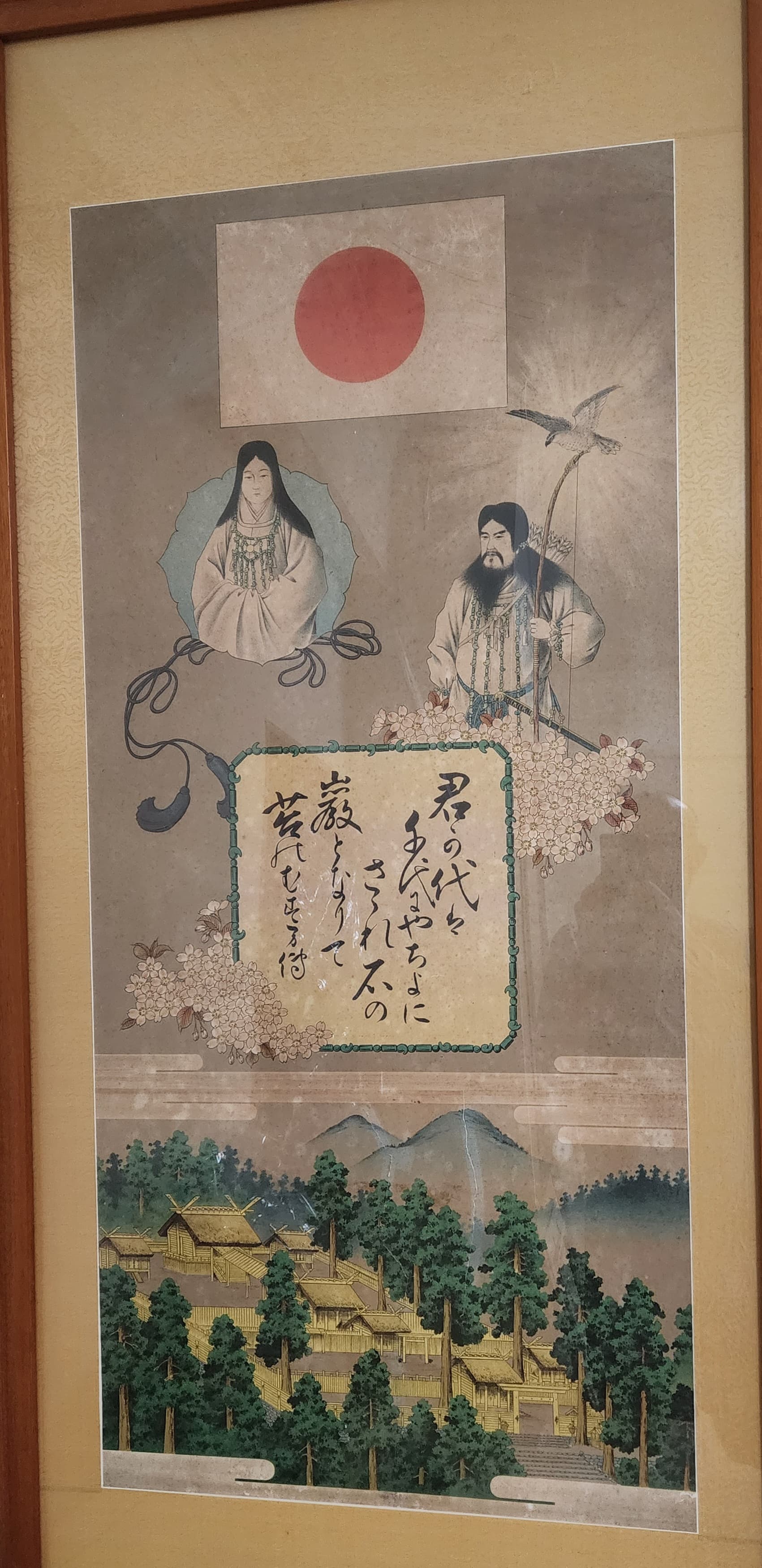
Came across a watercolor painting from the Colonial Era at a friend’s house. It’s apparently been in the family since their great grandfather’s time, but nobody in the house is able to read the calligraphy.

Does anyone know whether the calligraphy is Japanese or Chinese language and what it says or what the scene is about?


1 Like

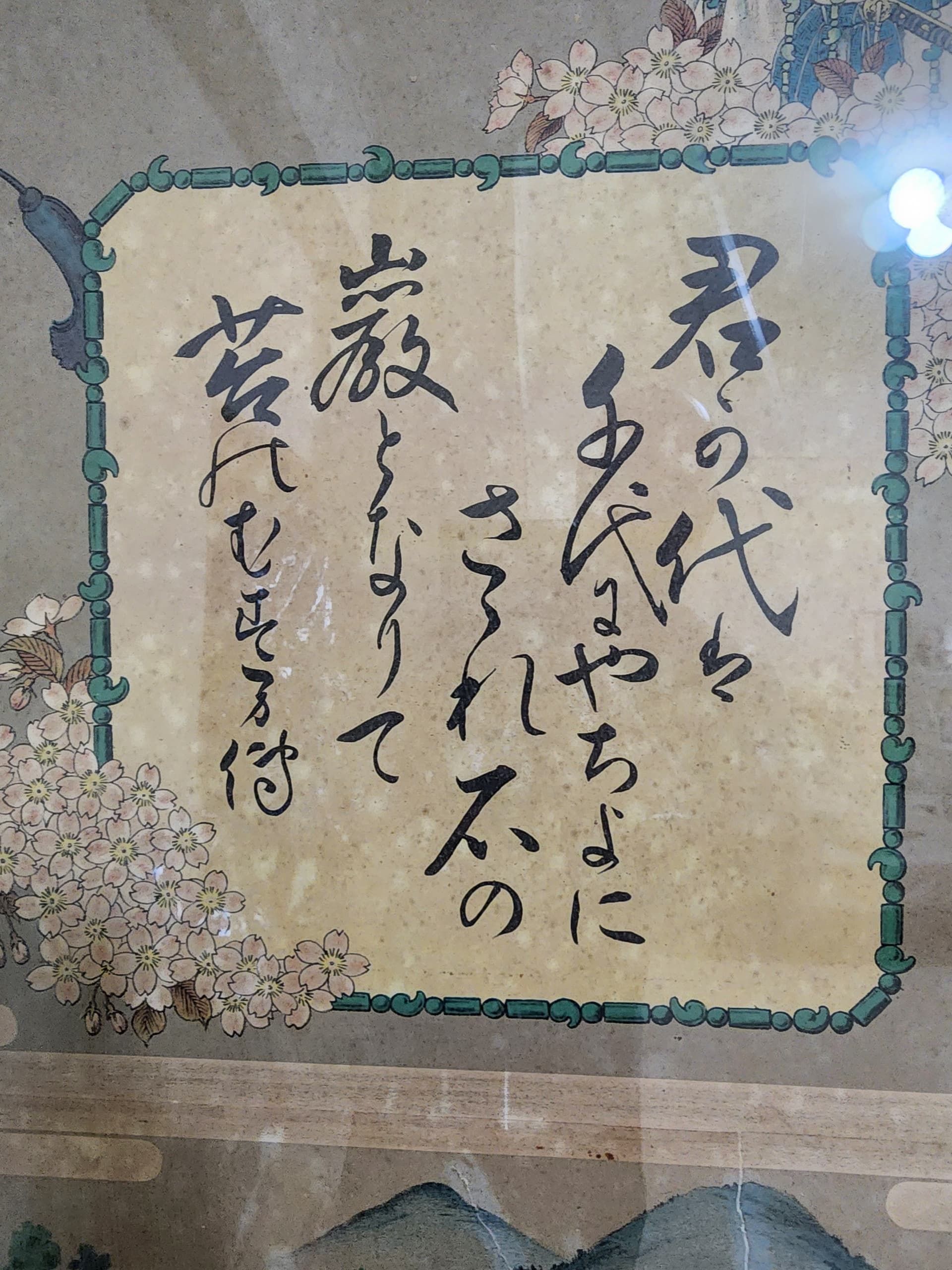
It’s the national anthem of Japan.

君が代は
千代に八千代に
細石の
巌となりて
苔の生すまで

3 Likes

Thanks, I’ll pass the info on. :+1:

Kimigayo is also the oldest national anthem in the world.

It’s interesting (in Taiwan) they did not know it’s Japan’s language (easy to see)

1 Like

May your reign
Continue for a thousand, eight thousand generations,
Until the tiny pebbles
Grow into mighty rocks
Lush with moss.

Lyrics are kind of cool, the last three lines, I mean.

1 Like

I think it’s more because I was the first person who asked about it in a long time and everyone who knew how to read japanese (or even noticed the drawing was still there) were no longer around. I had to clean off a decently thick layer of dust to see the complete drawing.

1 Like

It’s worth noting that the lyric written is slightly different from the present day lyrics.

For example, instead of 君が代は, the first line is written as 君の代は. In fact I can’t even be sure the last character is は, it honestly looks like ら.

Many characters are also different, such as the last line is 苔の生すまで, but it looks more like 苔みむそ乃得

Maybe it’s in manyōgana? Then it would make sense.

2 Likes

Is it a significant difference in terms for the variation in the use of characters? Or does it largely retain the original meaning?

1 Like

All the key Kanji are the same. The only difference are replacing some hiragana in the present lyrics with other hiragana or even kanji. The artist could be deliberately trying to invoke an sense of this is the writing from a long time ago, so used the more archaic form of manyogana. It would match the lyrics thematically, as it is about the imperial dynasty being ancient and will last a long time.
1 Like

Meaning is there.

Some history, if your interested

Ok, so apparently, in Kokin Wakashū, which was compiled around 920, the poem went something like:

わが君は ちよにやちよに さされ石の巌となりて苔のむすまて

I think the last two line from that writing matches this old from.
さされ石の
巌となりて
苔のむすまて

But with の and すまて replaced with 乃 and そ万得.

Not 100% sure about 乃 and そ, but まて was definitely replaced by 万得.

2 Likes