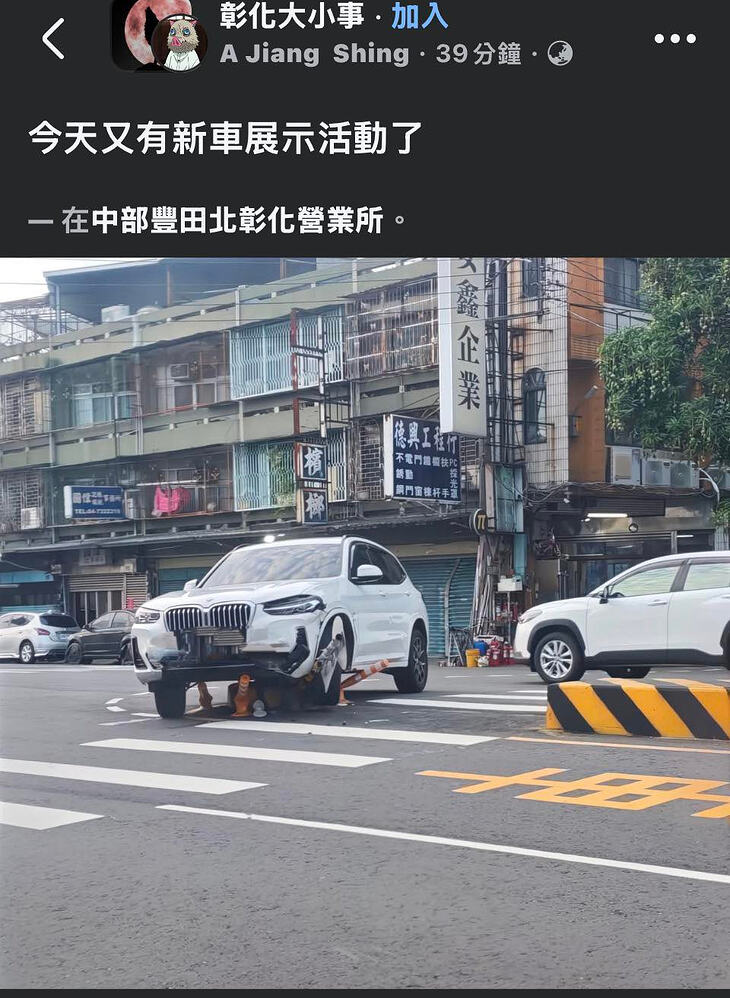
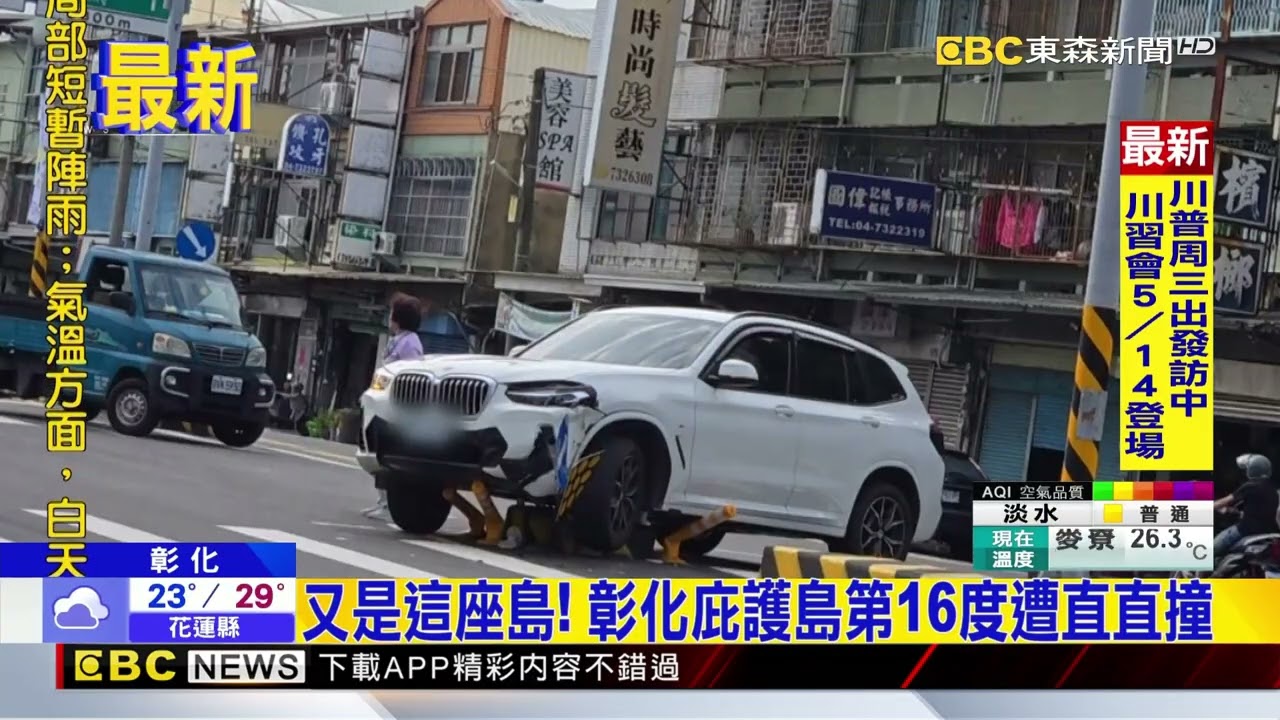
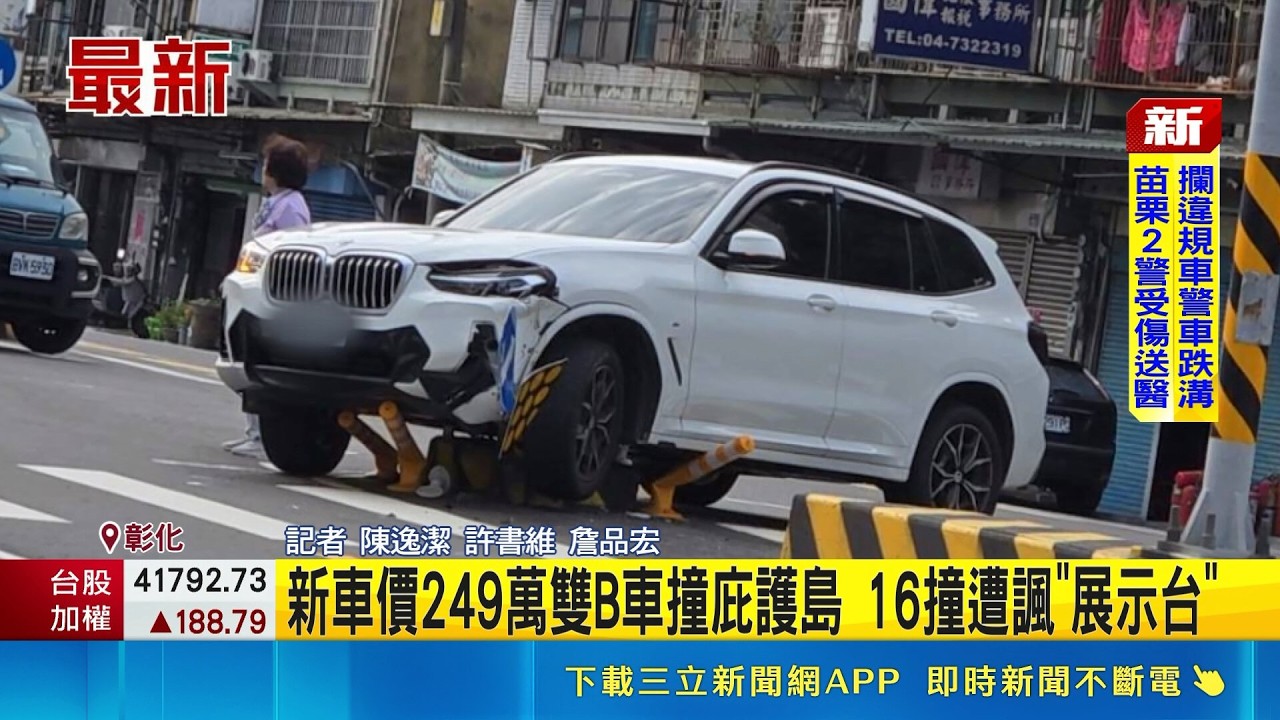
If drivers in Taiwan simply cannot make a turn, then every traffic island should be hit about the same amount of times. If just that one island has been hit 20 times, it’s either the traffic island or the intersection that’s been poorly designed.
Anyway, you can’t even see the intersection with the traffic islands in street view because Google hasn’t revisited that road since Jan 2024, and those traffic islands were put in place Apr 2025.
I dont know, anecdotally in my observations taiwanese find it impossible to stay within the road turn markings almost 100% of the time (for cars), which leads them to cut the corner. So even without traffic islands it is still a fail. There’s a reason they install these islands.
In this photo look where the road turn markings are
If the driver stayed on the correct side of those markings they would not have hit the traffic island.
They get away with cutting the corner time and time again where there are no traffic islands. It is just shit driving.
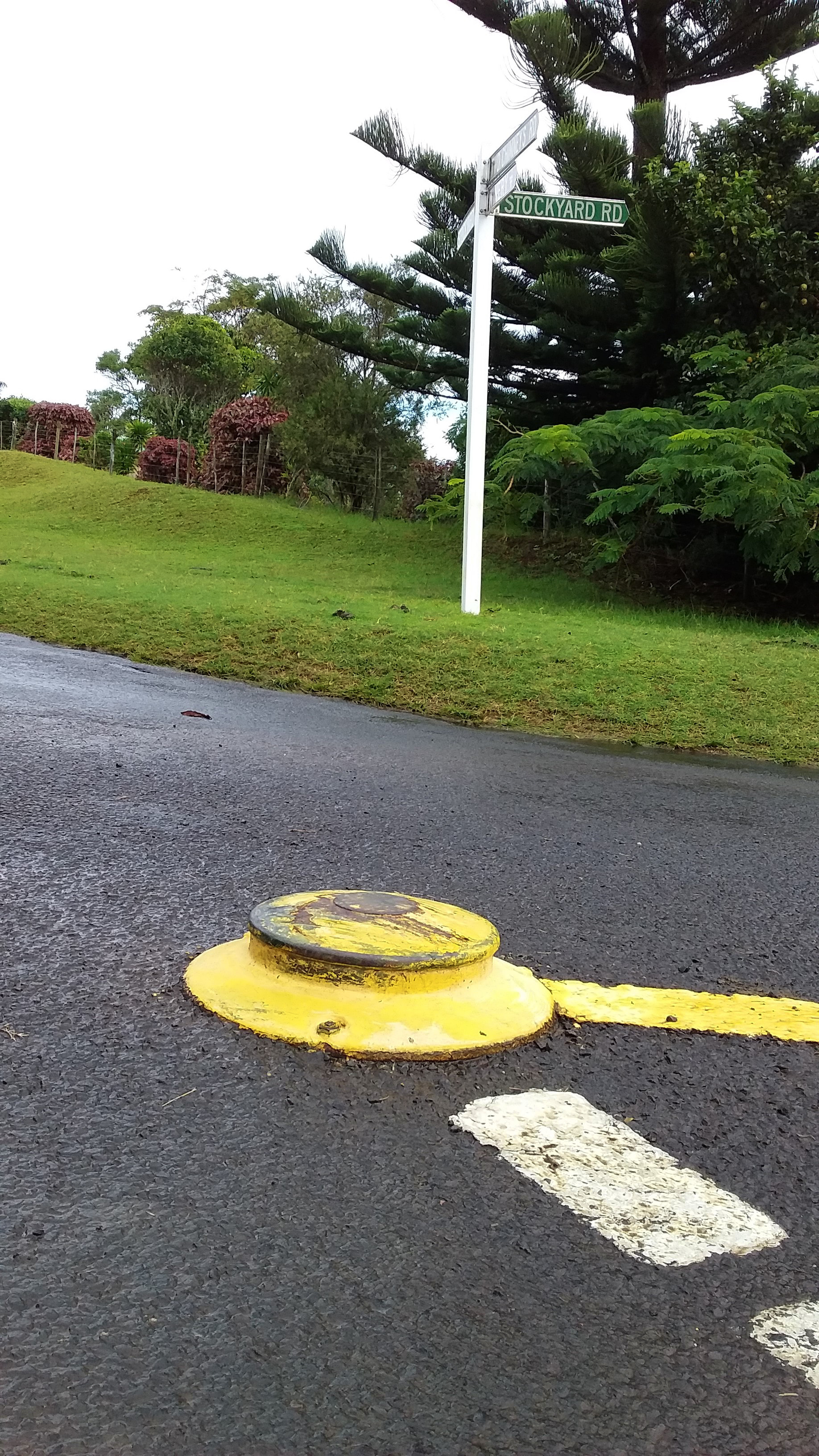
In Australia they used to have steel domes at intersections colloquially known as silent cops.
Cheap and effective, they should install these everywhere there isnt a traffic island to retrain Taiwanese drivers.
They’ll probably have to make these domes a bit taller now given all the SUVs… they need to be tall enough to cause some damage to the underside of the car.
This! It’s farcical. The cutting the corner and the complete lack of lane discipline, it’s rare that a driver in the left lane of two will still be in the left lane after the turn. Perhaps driving schools discourage drivers from turning the steering wheel too much!
Yes, they quite often start the turn way too early and perform too shallow a turn. I think they are scared of staying stationary in the left lane.
Scooters doing left turns are even worse they start the turn too early again and in front of oncoming traffic rather than waiting at the point where the turn should be performed (Where they are allowed to do left turns).
Maybe hook turns are the blame for left-turnphobia. Resulting in a lack of knowledge and experience on how to properly make a left turn.
As most started out on scooters, this left-turnphobia seems to have flowed through to car drivers too.
If you want to single out anomalies, than you have to single out anomalies across the places you are comparing and then compare the severity. Take your friendliness example, if people are usually barely acknowledging you, but once a month someone on the street would pull the corner of their eyes up to make “Asian eyes” to mock you as they pass by, compared to the moment you walk into a K-mart and everyone at the store turns in unison to stare at you, but don’t say a thing, which is less friendly? Real stories that happened more than once.
Same with traffic. If you don’t think the average number tell the whole story, then it’s time to look at the number of severe injuries and deaths.
The driver wasn’t even cutting the corner this time. He was performing a u-turn from the side of the road. Despite having all that space the driver just drove straight into it. There are signs, plastic bollards, and reflective material all over that thing. He just didn’t even look at it.
Actually even if he didn’t hit the pedestrian island it looks like he would’ve cut off an oncoming truck anyways.
The infamous one in Taichung that was getting hit all the time by drivers has plastic bollards, guiding lines, and reflective material after the first few times it was hit and drivers still constantly kept hitting it. Meanwhile the numerous bus drivers turning left there had no problems at all.
A perfectly normal way to perform a u-turn (in Taiwan).
Also, those thick and parallel white lines mean “perform your u-turn here, ignore any human shape forms, unlikely you’ll see any anyway thanks to your dear friend the A-pillar”
Anyone noticed the car parked on the zebra crossing, I’m sorry, the thick and parallel white lines? They also lead to a wall.
By the looks of it people frequently run over these as well. It’s just that when cars do run over them, it would offer little protection for the pedestrians.
If you search this thread for my handle and skill, you’ll see this is the first post I’ve made even mentioning skill.
In the other traffic related threads, this is the only time I mentioned skill, and I think I made my stance on “skill” pretty clear.
Anyway, I think Taiwan’s traffic is terrible for 4 factors.
High population density leading to high traffic volumes.
Terrible road design and engineering.
Scooters allowed weave in and out of lanes.
The first 3 points may have contributed to some people placing yourself getting to your destination above other people over others, and some drivers are driving as if they are on a scooter.
I believe a lot of the issues would be solved if scooters are required to drive in the middle of the lane, or at the very least, only 2 scooters are allowed to occupy the same section of a lane at a time. Then convert most low volume intersections to roundabouts.
Whether people know how to use them now is irrelevant, as traffic won’t improve of people aren’t reeducated how to use the road anyway.
If the right lane is lane 1
The middle lane is lane 2, and
The left lane is lane 3
How does scooters riding in middle of the lane prevent:
Car in lane 2 turning right into side street directly across lane 1 (without entering lane 1) in front of scooter riding in middle of lane 1.
In kaohsiung there are many 3 lane roads that allow scooters in first 2 lanes. But in practice scooters still hug the right lane unless overtaking, and cars try to own the middle lane, some will beep you if you’re in the middle lane on a scooter. Or they will force you into right lane by coming up beside you in the lane.
The issue now is that lane 3 is treated as the lane for slow moving vehicles, and fasting moving vehicles should only enter when they are turning. In reality, scooters either go super fast in lane 3 or super slow, all the while weaving in and out land 2 and lane 3, making it difficult for cars to enter lane 3.
Cars are not required to enter lane 3 to turn right. If they want to enter lane 3 to turn right, they can, but they have to switch to lane 3 (the slow lane) 30 to 60 m before the turn.