Kano - A movie about the origin of Taiwanese seeking identity through baseball

It was just a reference to the “Takasago Volunteers,” which in today’s term means forces formed by Taiwanese aboriginals. Those with facial tattoo are probably from Altayal or Seediq/Truku tribes. Many of the first generation Kano players (especially the Japanese ones) also served in the IJA during WWII, it did turn out well for them.

If you haven’t you should watch Seediq Bale, as those facial tattoos are well explain in that movie.

I concur with you on this. Prof. Andrew D. Morris is one of the foremost experts in English on Taiwan baseball. I’ve got a copy of that book and it reads quite easily for an academic book. His research on the 100 years of Taiwan baseball is quite astounding with the personal interviews and statistical data that he has accumulated.

I recommend another book that was published a little earlier to Morris’ book, Playing in Isolation, by Yu Junwei. Yu’s book is a much easier read that also credits KANO with making baseball a national sport for Taiwan. But for the juicy details, I’d recommend Morris’ Colonial Project, National Game - Morris devotes more pages (a whole chapter) specifically into KANO than Yu (3 pages)

Yu’s focus is on taking a critical look at the “Chinese” aspects of baseball in Taiwan, such as Confucianism, KMT propaganda and diplomatic isolation, whereas Morris approaches Taiwan’s baseball as a site where Taiwan was able to retain and maintain international links despite martial law and colonialism.

That said, I don’t think that Morris’ book needs to translated into Chinese- there are enough Taiwanese baseball historians that have written about KANO in Chinese. However, I think that a translation into Japanese would help the Japanese to understand the KANO story from a more Taiwan-centric perspective. It does make one wonder how the Japanese would respond to Morris’ analysis of the KANO players’ self identification vis-a-vis their colonial “masters”.

That scene is also very interesting to showcase movie theatre culture with the use of “Benshi”. This also leads me to wonder if that scene is also a minor tribute to Wu Nian-Jhen’s 吳念真 Duosang/A Borrowed Life 多桑 (1994) that also has a scene at the movie theatre employing the services of a “Benshi”. The “Benshi” in Duosang serves as a translator into Taiwanese Holo from the movie’s Japanese dialogue. Because the the film depicts Wu Nian-Jhen’s own memories of his father, we can assume that his memory of the “Benshi” at the movies took place in post-war Taiwan (Wu Nian-Jhen was born in 1952). Which means, it took a lot longer for the role of Benshi to be wiped out in Taiwan for audiences who watched Japanese film but needed translators.

The youtube clip below is that scene from the Duosang. It’s a really funny scene: the Benshi interrupts his own translation midway to tell one of the patrons to go to the box office to pick up the phone, inserts commercials for ice lollies and tells off the naughty kid in the theatre for making a racket and ruining the movie for the others.

Unfortunately, the film doesn’t have English subtitles. The only copy of Duosang with English subtitles is in Martin Scorcese’s private collection. Scorcese loved the film so much at a film festival that Wu Nian-Jhen offered it as a gift to him.

Kungwan 2000, thanks for links and updates and head-ups, nice.

Re your idea that Morris’s book would best be translated into Japanese so that they can learn more about
Taiwan baseball from the Taiwan side, good idea. I asked Prof Morris about translations and he said so far nobody
has asked for one, i mean no publishers have approached him, and my guess is that Japanese publishers are not aware of his book. Taiwan too. But maybe after KANO goes big time, if it goes big time and gets an Oscar for best foreign film at 2015 Oscars awards in LA, maybe then his book might get translated or if some academic press comes forward and wants to translate it maybe with govt funding from Japan or Taiwan. But yes, a very good book. That other book I’d like to read later, too.

and this just in from a man called Chris who writes: re language issues

''Chinese is a written language, “standardized” during the Chin (or Qin, if you live in the PRC) dynasty. Thus, Chin-ese.
Mandarin, the now official language of both China and Taiwan was brought into use by the Ching (Qing) dynasty much later. The Ching court originated in now northern China, previously Manchu(-ria), (thus, Man-darin) and were considered through most of Chinese history by the Han to be northern Barbarians and invaders.

What now known as “Taiwanese” or as some call it, Hoklo, was, for a long time, the official language of the Han-Chinese court (since the Han Dynasty). As northerners moved in and officially took over China, Hoklo speaking population moved south and settled along the southern shore, many crossed the straits and moved to Taiwan.
To look at history in perspective, one could argue that Taiwan preserved Han Chinese culture better than China linguistically with the preservation Hoklo and traditional Chinese writing.
Kind of the same way that people in the US preserved proper English spellings and pronunciation.’’

by the way, I recently got my hands on this

It’s published by the National Museum of Taiwan History, which is in Tainan (not to be confused with the National Museum of History in Taipei).
nmth.gov.tw/

The title is “A Oral History of Taiwan’s Baseball during the Japanese Era”

I will start reading it when I have more time. The author spent a lot of time interviewing many baseball players who grow up in the Japanese era. It’s a wonderful thing, because that generation of player are fading away quickly.

By the way, that museum has a exhibition on baseball right now.

here is a blog post I found on Bruce Morton website with lots of pics of the movie set a year ago before they finished shooting the movie:

apparrently the blue screens and green screens in the photos were used to create the Special Effects in the movie
of which there were 3000 sfx edits i was told. 3000! so these photos just show the early ideas, later the photoshop editors turned it into this magficdent movie. Does anyone know how they perform photoshop on video? in chinese it is called TER SHAO, excuse my pinyin, but how to write it in Chinese characters? DISH if you know and what do the two characters mean?

ichof191.blogspot.tw/2013/02/kan … 39672ffe27

and

ichof191.blogspot.tw/2013/02/mov … ormal.html

特效 Te4 Xiao4

特 - special (from 特別 te4 bie2)
效 - effect (from 效果 xiao4 guo3)

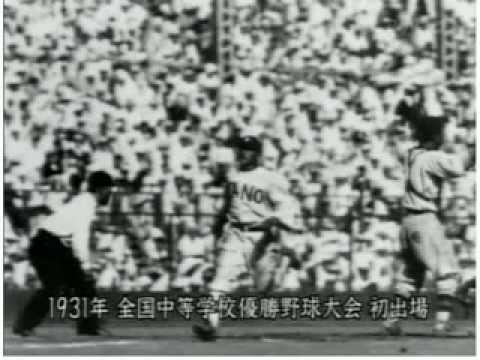
Actual footage of the final match between KANO and Chukyo 83 years ago.

CGI? Taiwan is quite good at it, ie. Life of Pi.

Looked nice on TV.

Oh, and 120 million box office so far.

Photos from Osaka film festival later.

A new interview of Umin Boya by the Aboriginal centric blog Pure Taiwan/Mata Taiwan (Eyes of Taiwan), it’s an amazing site, people should check it out.
pure-taiwan.info/2014/03/int … ya-on-kano

some of the introductory stuff are just rehash of interviews we’ve seen millions of times, but other stuff related to Umin Boya and his life experiences are a rare insight into his life. Perhaps it’s because the website is Aboriginal centric, which drew some of the stories out of Umin.

I’ll translate this far for now… will do the rest when time allows me.

oh, and now there’s part 2
pure-taiwan.info/2014/03/int … ys-on-kano

thanks Hansioux for the translation of the Umin Boya interview, that is great stuff and thanks. Can’t wait to see part 2 and more.

surfing the net, i came across this news brief in Liberty Times just now, website only, so not in newspaper but avail online only i guess. they linked to USA reactions for KANO with thumbs up by Variety reviwer, and two more from Hollywood Reporter and the Wrap. KANO is going UP but Producer Wei says in Liberty Times news here that he has no plans as of now to show KANO in USA. why? wouldn’t basbeball crazy USA love the movie?

iservice.libertytimes.com.tw/liv … Slots=Live

film of Tokyo Giant’s Go Shosei. He’s the little kid in the movie.

most of those criticizing the film, including that Clarence Tsai guy from Hollywoodreporter whose review reads like an angry KMT supporter ranting on about how the movie is “ahistorical, apolitical and perhaps even amoral” (his actual words) because it shifted the completion of Hatta’s water ducts a year earlier. Tsai went as far as saying the film depicted Hatta as “god-like”. I’m glad Tsai thinks so highly of us engineers.

Well, this is how students of KANO feels about Hatta. This Japanese TV program interviewed Hong Tai-Shan, nick named the Babe Ruth of Taiwan, and was the third generation of KANO players (Go Shosei was the second generation). Hong appreciation of Hatta’s contribution to the livelihood of people in southern Taiwan is clear.

Hatta didn’t design and build the dam and aqueducts because he was ordered to do so. He was determined to build the project because he once asked a farmer for a glass of water, and the farmer spent 2 hours fetching it from the creek for him. He is an engineer that genuinely wanted to help the farmers. The Japanese colonial prefecture was extremely reluctant to spend so much money (Total amount spend on the project was 54million Yen back then = 79.1 billion yen now). Upon Hatta’s repeated pleading, they gave him a total of 12million, just 22% of the entire cost. Hatta then had to came up with the money himself. He went to the landlords, the agriculture associations and even the peasants themselves to raise the rest of the funds through out the project.

Before the project was finished, due to the shortage of water, most of the southern plain couldn’t grow short-grain rice (like Japanese rice), some of them were able to grow long-grain rice (like Thai rice) but it have little economical value. So farmers had no choice but to grow sugar canes, which the Japanese sugar giants established a firm grip on the pricing (they controlled 98% of sugar production). Being able to grow short-grain rice gave individual farmers financial freedom from the blood sucking sugar cooperations. The raise in rice production was just in time for an sharp increase of Japanese population, which needed a lot of rice.

This created the “Rice or Sugar Dilemma” for the Japanese colonials, because they didn’t know whether to promote the growth of sugar canes or rice, so instead, they subsidized both. Coupled with the drop of sugar cane production, both the price of sugar and rice rose and allowed Taiwanese farmers to have one the highest agricultural incomes in Asia. This contributed to Taiwan’s golden era, until WW2 when the Japanese prefecture monopolized Taiwan’s rice industry. The golden era didn’t happen because of colonial government’s brilliance and planning, it came mostly through Hatta’s desire to improve farmer’s lives.

So singing praises to Hatta isn’t the same as singing praises to Japanese colonialists. As an agriculture school in Kagi, the Kanan aqueducts was a major deal for the students. The attacks on including Hatta in the film is simply unfounded.

Part 2 of Umin’s interview with mata.Taiwan…
pure-taiwan.info/2014/03/int … ys-on-kano

For those of you interested in the manga, there will be autograph sessions and 2 for 1 with movie tickets at Kingstone Bookstores

Taipei is on the 22nd, at both Xinyi and Chongqin road locations.

I saw it the other day and enjoyed it but I don’t think it is as good as Cape No. 7 or Seediq Bale. The film must be part of Beijing’s worst nightmare though. Taiwan’s love affair with Japan is celebrated fully and the film is confidently speaking to the younger generation’s sense of Taiwanese identity. I was surprised that the the theater was packed for the late show in a Thursday night.

I must agree, too. Funny Wei’s masterpiece, IMHO, Cape No.7, was the one made as an afterthought, without fanfare or over planning. His stepping stone to “better thing, greater dreams” was actually the one that the public will cherish in their hearts. Hope someday Wei realizes this and can recognize the soul in a simple story. Then he can pack a punch in a “great” story that doesn’t have to be grand or complicated, or it can be, but not as complicated as to lose its soul.

For a film with no big stars, amazing to be selling tickets so well and even on a late Thursday night. Interesting. I guess the identity issue looms large here. Thanks for post, Feiren.

NOTE: on side issue, a norwegian friend in taipei says …''we went to see the movie today. A great 3 hours movie, but the text in English was often only up for 1 second, so I had no time to read the subtitles while trying to watch the actions at the same time. ‘’

Did anyone else have this problem with reading subtitles and watching the movie? i saw in front row of a small theater maybe a 100-person seater, so i could watch subtitles and movie almost at same time. but if sitting in larger room and in the middle or back, maybe there would be problems. or was my norwegian friend’s problem that English is his second language, although fluent of course.?

I always have that problem so I rent or buy.

only in this case, the locals also have to read the subtitles and thy flash by just as quickly :stuck_out_tongue: