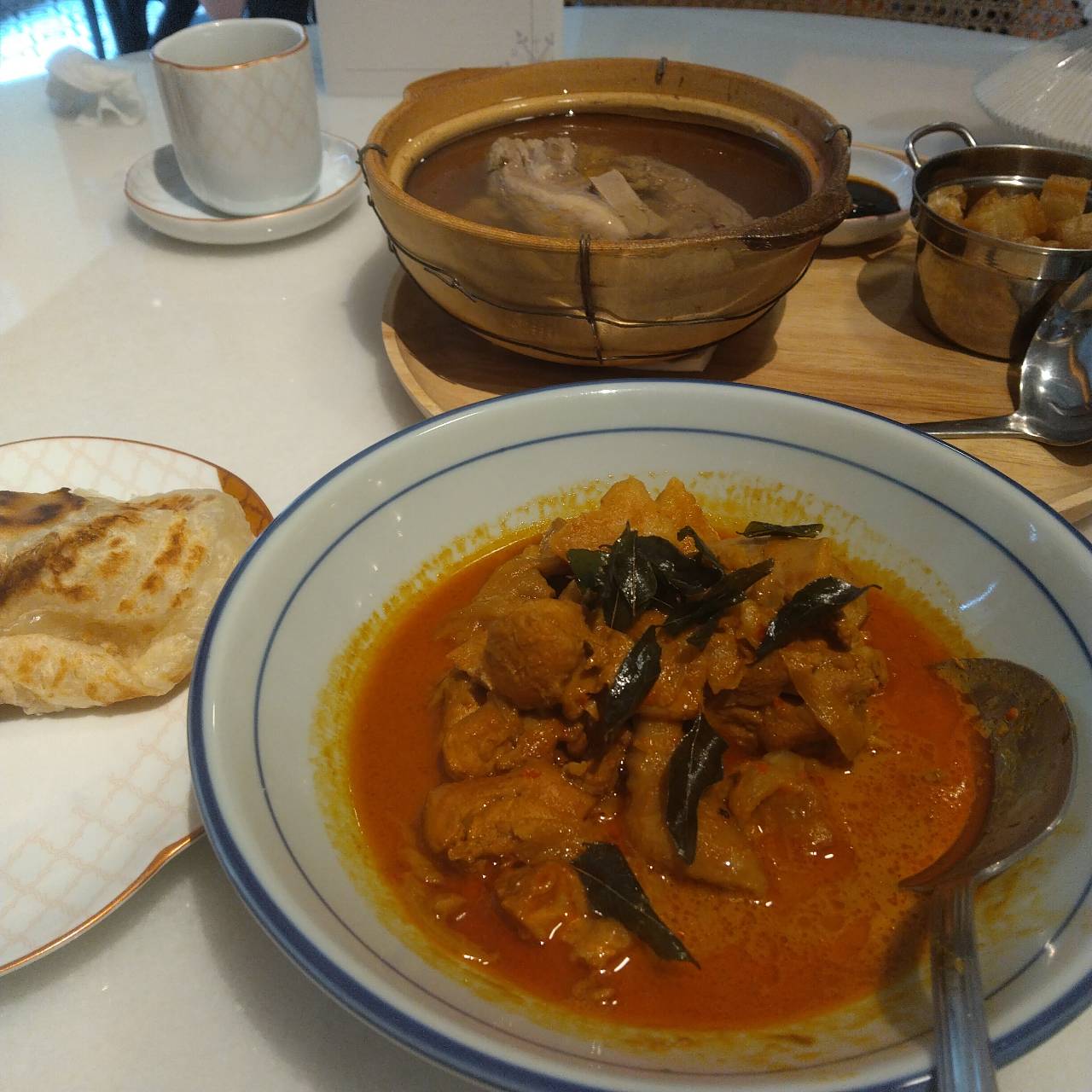
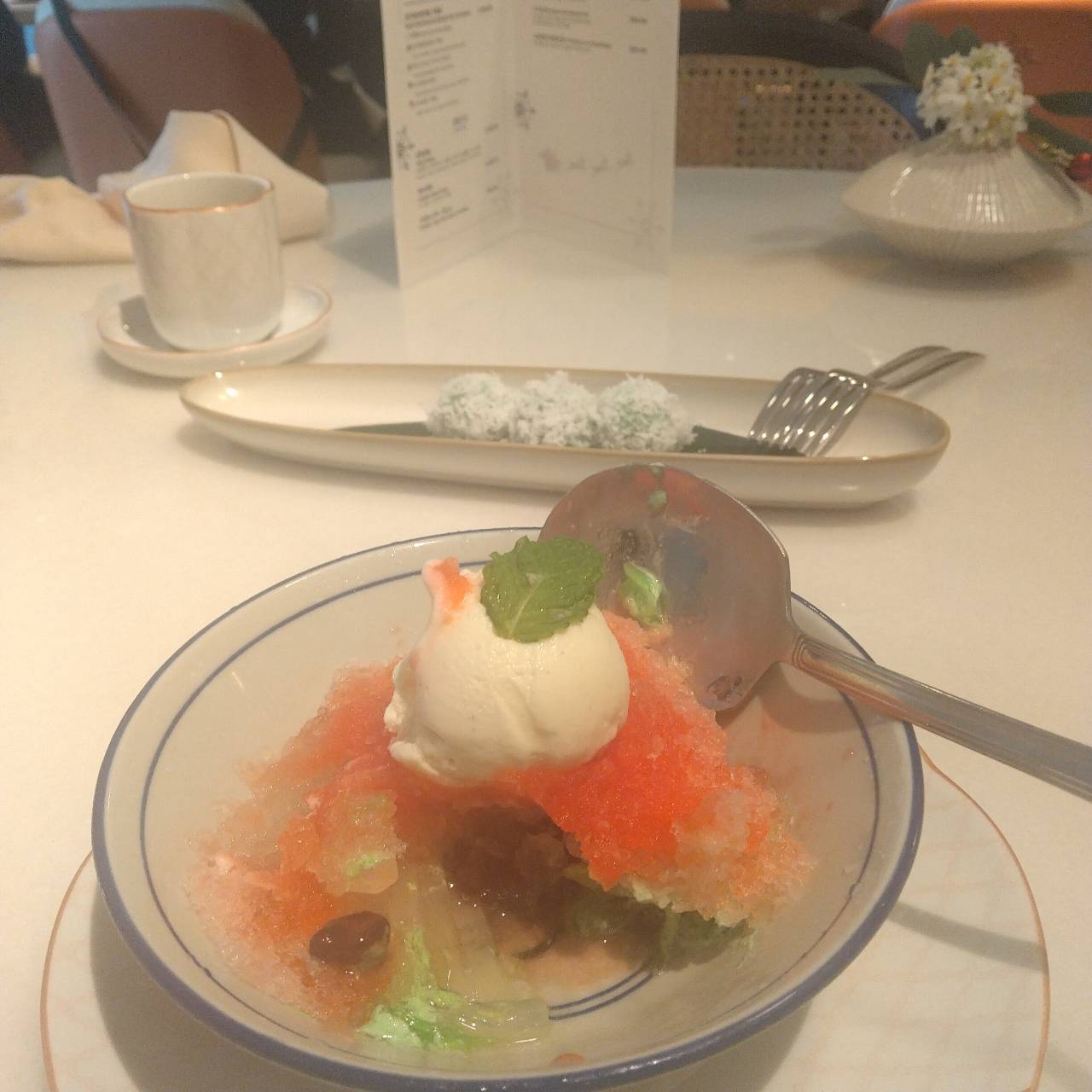
Young Malaysians?, well went to have nice S’porean lunch today at lincoln continental hotel here in KHH. (Very nice, bit expensive photos below) Had some staff from Malaysia (as well other cafes here in town). Sometimes my co workers (Taiwanese) do not understand them 100% but better than English ha. I heard some talking to each other in mix on Chinese and Bahasa (could be various accents besides Malay).
The 印度餅 ( Roti canai, or roti prata) got translated a lot, until to me just used roti haha (In my days in S’pore always thought it was odd in Malaysia it is called Roti canai. They also called it bread.
I will be in KL this weekend (stopover) flying to the Baltics, I will try pay attention what languages people out on the street speak more.
How do those things equate? Most Taiwanese parents are unable and unwilling to speak just English at home. So Taiwan actually need more English exposure to get more people to comfortably converse in English.
Also, Taiwanese people have different relations with English and Mandarin than Singaporeans. Frankly, if Taiwan has to be a monolingual country, I would rather it be English than Mandarin.
But why do people need to learn English if they barely interact with English speakers, and do not work jobs requiring English fluency? I don’t think people need to learn English if they don’t need it, anymore than airline passengers need to learn how to fly a plane.
I don’t know. This was discussed on anither thread, and some posters pointed out that in the provinces there are plenty of people without much English…
I lived in Singapore for 9 years while working for a Taiwanese company. For the most part, my Chinese Singaporean colleagues seemed to have a solid Mandarin foundation but rarely used the language. They were even intimidated by me since they knew I was always around the Taiwanese who spoke more fluent Mandarin. I rarely heard they speak Mandarin but if a little older (I mean in 40 - 50 range) they would speak to each other in Mandarin. Of course, could hear the dialects from Malaysia…especially since so many Malay Singaporeans around. As for the Indian Singaporeans I could not get a read on their level as they were not going to reveal to me. But in general my feeling while living there was that those who had an interest in doing business in China put in the effort and were quite capable in Mandarin…succeeding in living and working in China.
As a sidenote I had an fun experience in an elevator at my office building. I was alone with two women who were speaking Mandarin. One started speaking about the new dress she was wearing. After some general discussion she turned around and saw me…seeming to just be sure who was with them. She then told her friend that this dress looks better if do not wear underwear. Her friend then say “Then you mean now you…?” The lady glanced again back at me as I just stared at the door. She then confirmed she was not wearing underwear. The number of foreigners in Singapore who understood Mandarin was not high so she figured she was safe.
How come he wasn’t worried they speak Mandarin instead of Taiwanese? I’m all for bilingualism but if they’re to speak just one that is not their historic tongue, it’s best to just speak English. And before anyone starts making ridiculous accusations, no English is not my mother tongue. It’s just the way the world is, English opens doors, for the individual and also for the society at large.
Because he is Waishen Ren born in Hong Kong. Therefore in his view it should be Mandarin. A really bad decision in my opinion .
English not only the international language but also the language that has the largest amount of stored and ever increasing amount of information.
51% of the www. are written in English.
In the future our AI plugins will make this kind of redundant.
But you can switch it off and be the cool grandpop showing the grandkids what it’s like to tap out Morse code from your mouth and understand it back without a universal translator.
My experience with Singaporeans is many business oriented people can speak Mandarin to a certain level , and everybody can speak some obviously since they learn it in school. Malaysian Chinese tends to.be better. Of course Hokkien or Cantonese or Hakka is often their mother tongue if they do speak Chinese.
Older taxi drivers of course they often speak Chinese as well.
I was thinking back when I saw old people tap out Morse code on ham radios and then you get people tapping back in almost realtime.
So cool for my 10 year old self ! I tried to learn Morse code myself and failed as it’s so fucning boring and nobody to communicate with.
Just opening our mouths and talking to somebody else naturally without any aid in their mother tongue could be the cool granddad trick in future. Maybe I’m exaggerating but you get the picture.
Because without a doubt AI universal translators and voice and hearing modulators or even some kind of telepathic devices are going to change things in freaky ways in future.
Will kids learn other languages if they don’t need to? By the way Monolinguisim discussed here is well known in Ireland where English almost completed replaced our native tongue within a final period of about 50 years or so after a long steady decline. The dominance of English is incredible in some parts of the world. You’ve got very strong economic reasons to speak it well and then if you are plugged into the Western world it’s a given you will hear it or use it sometimes.
Now more and more schools are ‘education through Irish’ so we will see if that can be reversed somewhat. It seems it is happening to some degree actually. In Ireland the society now realized it’s better to speak some words joyfully and naturally (cupla focail) rather than trying to force it on people or treat it like a grammar class. Basically using it is better than not using it. I think many minorities or aboriginal people’s ultimately come to a similar conclusion.