Seasta, you can watch 24/7 now. It was banjaxed when you where a kid haha
1 Like

That old man at @5:15 speaks 6 languages.
It is for sure a thing English is priority. It is also a thing that mandarin lessons now are strongly influenced by China, not simply Chinese (Mandarin). The teachers are often from china. By design. We were just having this conversation with a group of close friends visiting us that are teachers in Singapore. The mandarin teachers are very much strictly going the China simplified route. Another issue is how race based things can be. It was good to see that, according to them, there are more and more parents wanting to enroll their kids in lessons of other cultures’ language. Ie. The Han sect learning the more indian and Malay language, and the other way around. But it’s becoming ever more china centric, rather than Mandarin centric. Something to be aware of.
It’s also cool to see immersion schools there. Korean, french, Spanish, japanese, Russian and so on.
1 Like
You know if you think about it on a longer timescale, the “Speak Mandarin Campaign” was just a brief step in the journey to turn the ethnic chinese population into English speakers.
Mandarin lasted what, 2 generations? English will last a lot longer.
In some ways, OK. On a longer scale, also we need to understand there was, and now is undeniably, a push for the opposite. Although today it maybe be a CCP run china, before it was simply different organizations but still a china based push for dominance. Same shit, different smell, let’s say. Singapore never respected the English before. Broad brush, but overtly obvious. Westerners in general more or less. There were also legitimate reasons for that as well. The world has Singlish because of this fact. Let’s say past century accepted some of us white bearded barbarians for cash. a trade middle ground to allow everyone to be as corrupt as fuck and avoid actual ethics and rule of law. That was Singapore. In many ways, not so different than panama except they are ruled by China in an indirect and very much cultural way. spoiler.[/spoiler] I think we (meaning the global community at large) need to be honest about these issues.
The narrative of being rich, organized and less litter can only go so far. Singapore is nearly literally China V 2.0, and it’s a pretty decent attempt to be honest. But, still…they are a tiny place, with all the priveleges the world can grant them! They remain a very literally poor example of what can be done on scale. Taiwan would be a better small scale example of what progress can mean on a national scale that actually has true potentional for also being self sufficient despite oppression. Singapore simply does not have any of these things, probably why they welcome black market styled trade to fund themselves…like various central American governments but with a better marketing campaign. not trying to compare Taiwan to Singapore as Taiwan has so far surpassed them by leaps and bounds, despite both having a hard core Han based population. And both being corrupt as shit. Singapore is really just a pawn in a bigger game. And they know it. Like Switzerland, know their place and be selfishly wealthy.
Lee Kuan Yew’s reasoning was that no matter how well you speak English, you’re not an Englishman. That’s why the English-speaking Chinese he grew up with were all yes-ma’am to the British.
新加破英文挑戰.
Everything in Asia is test based. Want to teach something? Give a half assed lesson then tests every other week.

Lee gave an interview a year after the speak Mandarin project. Of all the people on the panel, only one person sort of challenged Lee’s position… very polite and timidly. The others were pretty much just yes-men.
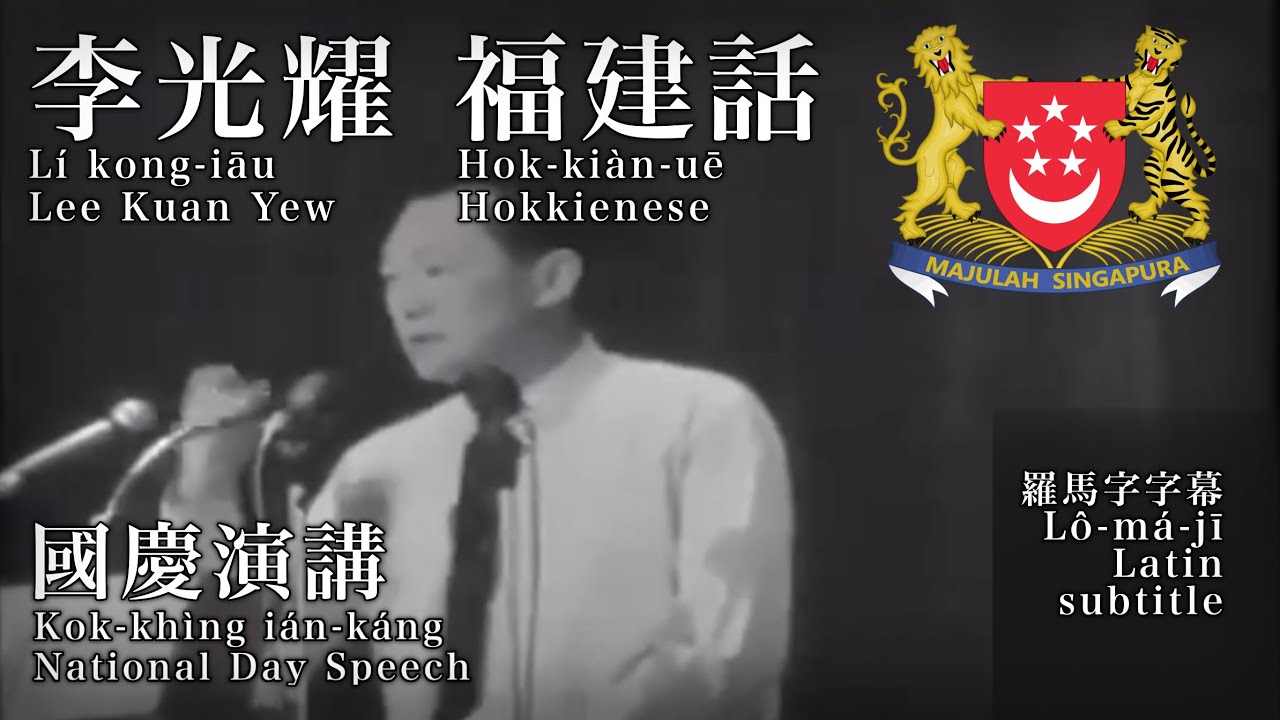
Lee Kuan Yew’s 1966 Hokkien speech. Lee was born to a Hakka family, so he actually had to pick up Hokkien outside of his household, and I think it shows. When speaking Hokkien, he often stumbled on whether to go with the colloquial reading or literary reading, and many words and phrases he ended up choosing are very unnatural, and clearly transliterated from Mandarin off the top of his head. In an interview he admitted his Hokkien isn’t perfect, but then he claimed no one in Singapore spoke Hokkien that can be considered perfect, or standard, and even in Fujian, there isn’t really a standard. That was the excuse he gave to abandon Hokkien.

Compare to speeches he gave in Mandarin, I find was much more fluent in Mandarin, and his English was even better.
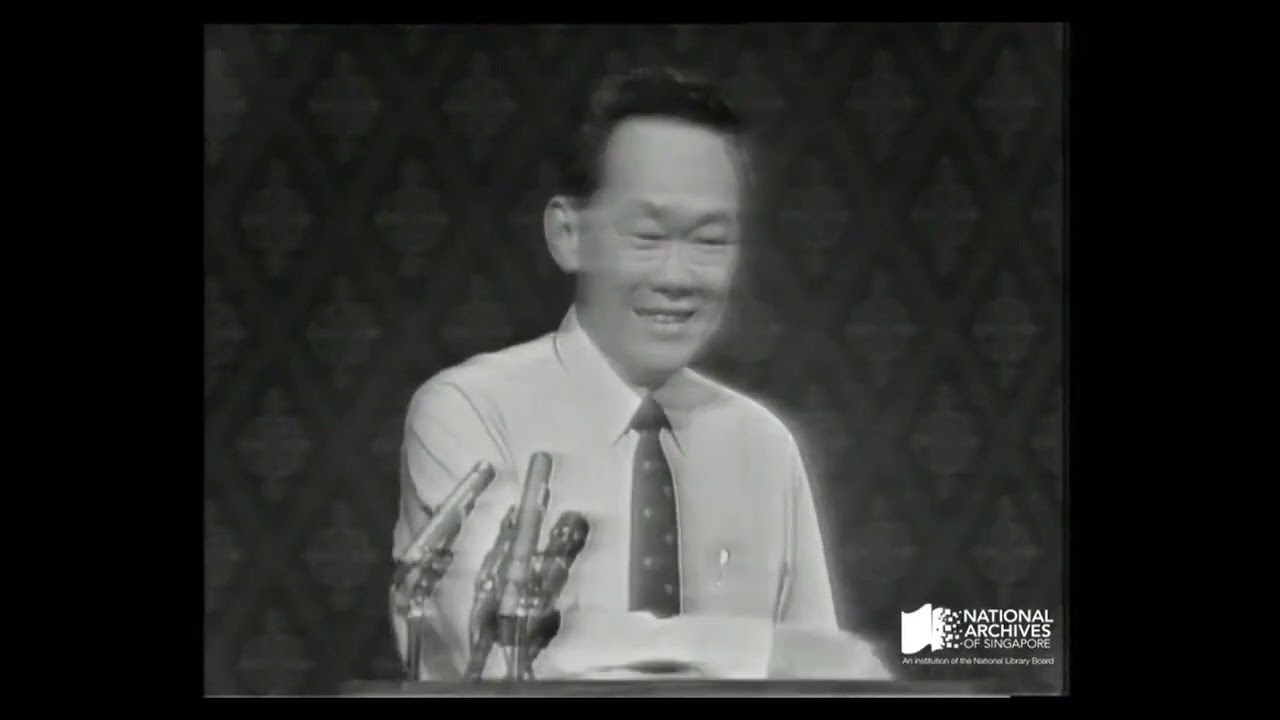
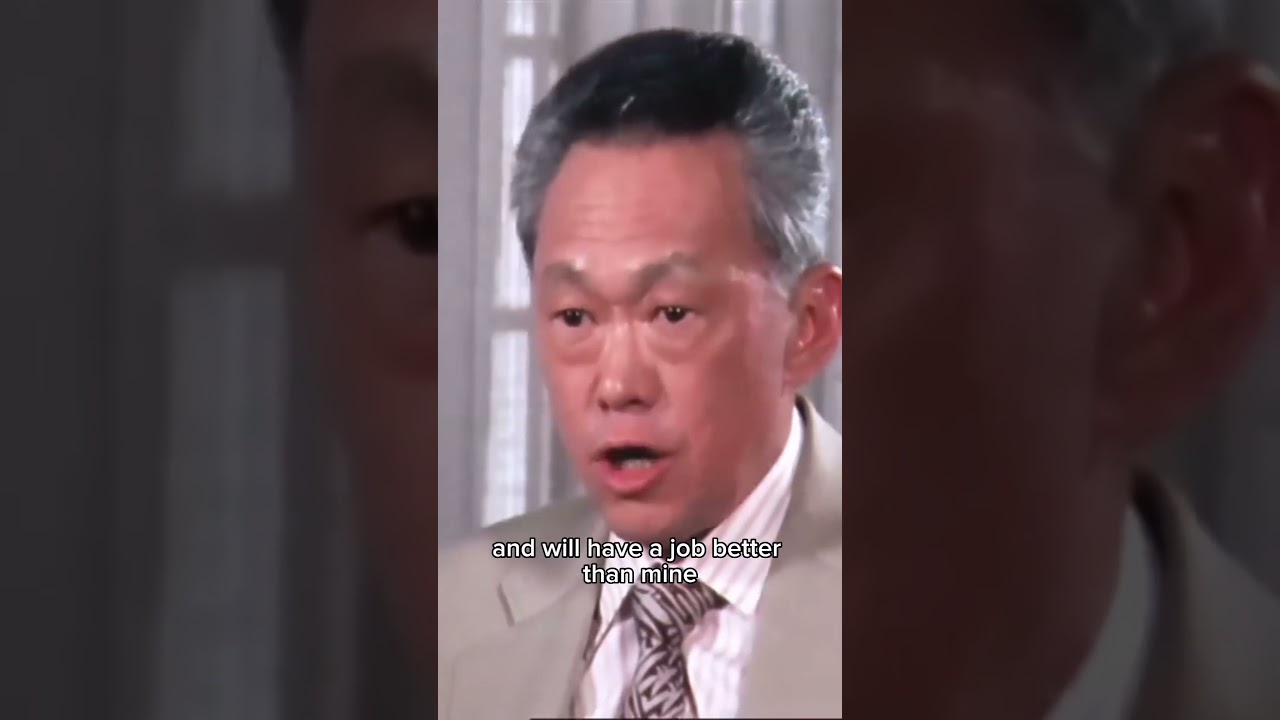
I don’t understand Malay, but I suspect even his Malay was a bit smoother than his Hokkien.
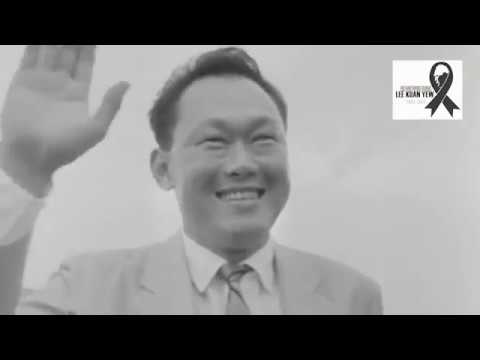
I couldn’t find any video of him speaking Hakka, so not sure how good his Hakka was. I did hear his son spoke one phrase of Hakka. Judging by that, it’s likely Lee Kuan Yew didn’t speak Hakka at home. I also found an article written by him claiming that he started taking Hakka lessons in 1963 when he realized he couldn’t speak Hakka with his Hakka voters, but he stopped in 1965.
一九六三年新加坡併入馬來西亞,行動黨在隔年參加馬來西亞大選,我這才發現馬 來亞半島上各個市鎮裡的華人,其實都說著各種各樣的方言而不說華語。我以客家人的身分參加競選,許多客家鄉親設宴支持我,我卻一句客家話也說不出來,這迫使我開始學客家話。我買了幾本由英國傳教士寫的學習客家話的書,找了一位客家老師來教。客家話與福建話很不一樣,比較接近華語。一九六五年新馬分家以後,我的客家話課程才停了下來。
I think that all shaped his determination to get rid of all Sinitic languages that already existed in Singapore for over 200 years. He had no love for them to begin with.
2 Likes
I simply thought he was committed to creating, through language policy, what he thought would be a unified Chinese bloc, which had heretofore been understandably divided based on the use of different Sinitic languages.
Did I get that wrong?
Guy
PS Did that dude ever visit Taiwan? I wonder what he would have thought.
Guy
In my experience you cannot force people to learn a language they have no interest in.
In Wales only 4% of people can actually speak Welsh. Even children who go to Welsh only schools forget it later in life because all Welsh universities teach in English and their future employers use English only.
For example, I worked at the UKIPO in Newport South Wales for 8 years. They accept patent applications in Welsh, but they’ve never had one.
I also never had to speak Welsh, ever, in all the years I lived there.
I think learning English as a 2nd language is certainly useful for a lot of people, trying to force people to make it their first language is pretty much impossible.
I don’t believe it is possible to make Taiwan bilingual as 97% of the population is 1st language Chinese, and I can’t see that ever changing.
2 Likes
By “Chinese” I presume you mean “Mandarin Chinese,” right? This was definitely forced from the top, at great cost.
It likewise could be possible to force all young people to switch to English and thereby make it a dominant language in Taiwan. That would again, like the forcing of Mandarin onto a non-Mandarin speaking populace, be an extremely violent process and almost certainly impossible in a democratic polity (as I am sure you know, Mandarin was forced onto people here by a dictatorship which did not hesitate to murder, imprison, or disappear its opponents).
Guy
2 Likes
Yes, but we’re not talking about the past we’re talking about the future.
Indeed. Such a future would likely require an anglocentric dictatorship as ruthless (willing to kill and imprison opponents) as the sinocentric dictatorship on this island post-1945 which created the “97%” category you invoked.
Guy
1 Like
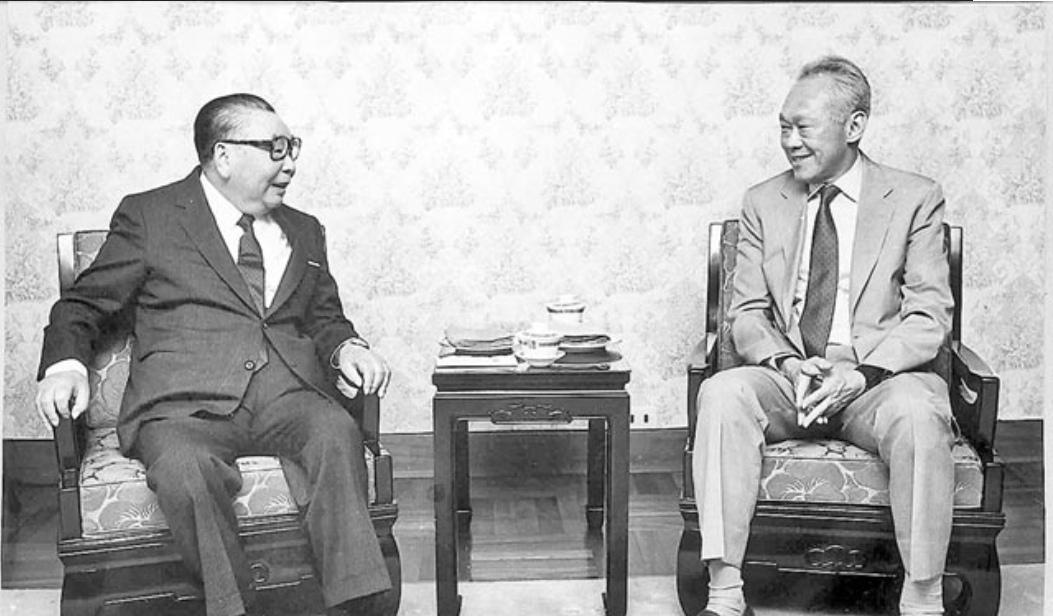
If you mean Lee Kuan Yew, he visited Taiwan more than 25 times. Singaporean army used to be trained in Taiwan, even after official relations ended.
3 Likes
Singaporeans cannot even speak english good. The accent is unique and then lots of local or native languages slang words thrown in.
A generation ago and before lots of people still spoke their native language at home but that’s kind of fell off and Singlish is now predominate.
1 Like
You say that like it’s some kind of bad thing. I like it!
Think of street speech in Taiwan, which throws in loan words like tien bu la or olen (drawn from Japanese) or uses Taiyu mixed with Taiwan Mandarin (pai se! pai se!), or uses simple English words like “Hello!” to mean “Excuse me!” (OK I admit that last one is annoying  ).
).
Guy
I’d say, since Singlish existed back when the British was in charge and is now probably spoken at home and have generations of Singaporeans growing up speaking it as their first language, that it really is a language all on its own.
From my experience though, plenty of Singaporeans, like many AAVE speakers, live in a diglossia environment where they can easily switch between English and Singlish depending on the social situation, not just switching the vocab and grammar, but also pronunciation too.
1 Like