I’ve been watching the board to see if this would be discussed. Since it hasn’t been brought up, I’ll post about it.
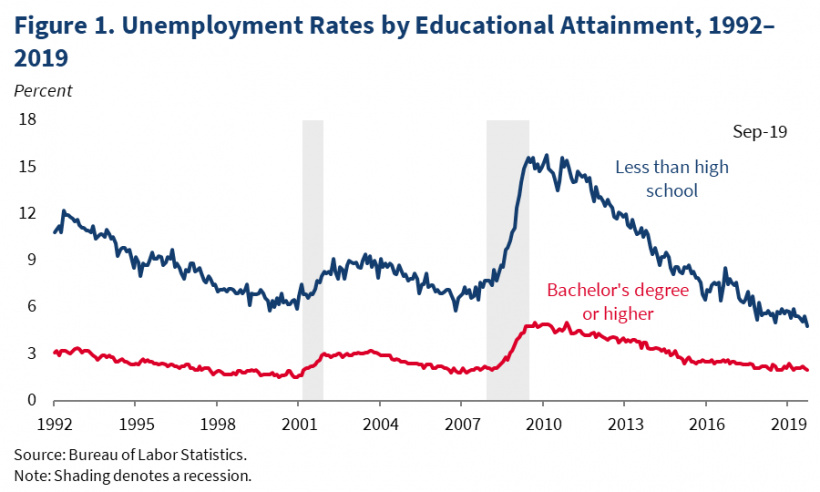
The Trump administration, brushing aside tens of thousands of protest letters, gave final approval on Wednesday to a rule that will remove nearly 700,000 people from the federal food-stamp program by strictly enforcing federal work requirements. The rule, which was proposed by the Agriculture Department in February, would press states to carry out work requirements for able-bodied adults without children that governors have routinely been allowed to waive, especially for areas in economic distress. The economy has improved under the Trump administration, the department argued, and assistance to unemployed, able-bodied adults was no longer necessary in a strong job market.
While it’s good to reduce means-tested welfare programs, it should be replaced by non-means tested programs such as the UBI to reduce impact to those in need of help. While there are always going to people who elect not to work and scrap by on welfare, way more people are losing the ability to sustain basic living due to automation.
The way employment is counted right now, U-3, doesn’t reflect the truth about people unable to find jobs. Currently people unable to find a job for more than 4 weeks are excluded from the unemployment figure. It is technically claimed that those who stopped looking for a job for more than 4 weeks are not counted as unemployed.
I think it’s definitely time (maybe past time) to begin a serious, national discussion about establishing a vigorous social safety net for American workers whose jobs have been automated.
It’s time to start defining the attributes of eligibility as well as the nature of the safety net itself. Using 19th century terms of factors of production, the US economy has always expressed a preference for capital over labor in that the US has always preferred investment in capital over investments in labor.
This is one reason Andrew Yang is so important, imo. He’s kicked off a discussion we Americans need to have very quickly.
If you automate away truck driving jobs and most retail and call center jobs without doing anything to prevent social changes that comes with eliminating the majority of jobs available in the US, you can bet those millions of Americans wouldn’t be able to find a job and would soon give up looking for one. Honestly, where are they going to find one with most jobs taken over by deep learning neural networks?
The U3 unemployment number would look even more impressive then, but it won’t stop social unrest on a massive scale.
When NAFTA was signed and the US joined the WTO a quarter century ago, a similar safety net should have been established to help middle-class Americans whose jobs were exported as a result.
We didn’t do that, of course, which explains in significant part the occupation by President Trump of the White House in 2016.
Problems that are ignored tend to turn into crises. The US cannot ignore the impact automation will have on the American workforce.
This isn’t a problem of automation.
This is just a problem of not giving a shit that some people and kids are going to starve. It’s an issue of values.
For me I see zero reason to pay people for nothing indefinitely. I support Trump’s changes to SNAP wholeheartedly. Long overdue, and very warmly welcomed. A decidedly positive outcome of very low unemployment in the US.
How would removing SNAP resolve the employment issue? The issue is that there is a shortage of jobs for traditionally middle-class Americans, and that will continue to worsen for the coming decade.
Many of the people dependent on their jobs are in their 40s and 50s and there is no retraining them for jobs extremely unlike what they are used to, and jobs similar to what they are used to don’t exist anymore.
If this is directed to me, then I don’t understand since I do not think removing SNAP would resolve “the employment issue,” which I’m also not sure the meaning of.
To me making cuts to SNAP helps resolve the deadbeats-on-the-dole issue. No apologies from me on it, either.
As for older workers, I suspect they’ve retained more plasticity than you imagine. It’s also likely that making the dole more difficult will foster said plasticity, too, although I’m not sure if this is anything but tangentially related to what you may, or may not be saying.
Back to automation, though, for a sec. We need a national conversation about UBI asap, imo.
I agree that means-tested welfare tends to be extremely bureaucratic, but if you are going to remove it, you should provide an less bureaucratic alternative to cushion the blow.