For the contract teachers, no , it’s the same situation .
Yes and no. The schools don’t really see them much differently, but the local teachers see themselves differently. I’m talking about private day schools, not cram schools. The local teachers stay for years because they know/assume they won’t get anything better elsewhere they won’t stick their neck out or fight because they don’t think it’s worth it. The foreign teachers are willing to hop around because they know they can get something better elsewhere, but there are always enough uninformed foreigners to keep the system working horribly
Tried to say that a couple of times.
They might be the most replaceable of all, since any opening will get tons of qualified applicants from all over the world. I’ve known quite a few people who have worked at those schools for 15-30 years, though.
At least they get paid VERY well. Beyond what even most Americans dream of making. Work for a year at TAS and take the next 3-4 years off and financially you come out the same as a typical teacher anywhere else…
For some reason they think teachers = fun happy young forgeiner. Not someone that actually teaches and give a shit. I have kids literally calling chips “cookies”. If I correct them they’ll say but Taiwanese teacher told them it’s cookies so it must be right.
A lot of English speakers are hella judgemental and will give them a strange look if they use the wrong word. I feel bad for them but when they don’t listen because they’re taught Taiwanese are always right well 
ETA: I’ve also had parents complain because they don’t realize you can say the same thing multiple ways. Ex. “How are you doing?” “How are you today?” “How are you?”
That’s a stretch. It’s not 4-5 times what qualified teachers make in the US. It is probably double or more, though, especially compared to some of the lower-paying states. US teachers are notoriously poorly paid, though. It’s more in line with what professionals in other fields earn in the US.
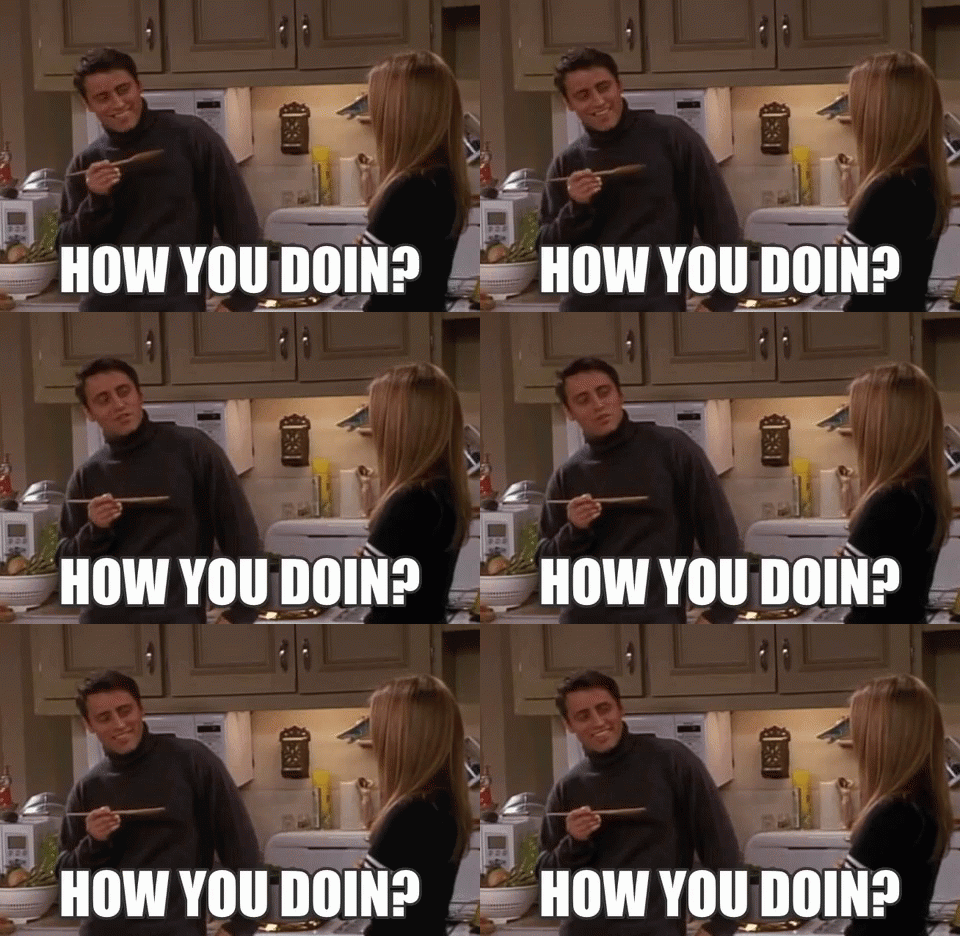
This is not exclusively a Taiwan problem. Many people, globally, are generally massive pricks when it comes to language. We use language to create a sense of order and when anyone upsets the apple cart…. Woah there horsey.
Yeah, but a tortoise is not a turtle, a gorilla is not a monkey, crisps are not cookies and “f” is not pronounced “efu”. This isn’t grammar Nazi territory. It’s just plainly wrong.
Jimi, I’ve changed. I really think it’s not important to worry about such things.
Children should learn these things instead…
Why is a turtle not a tortoise?
How do apes and monkeys differ?
If crisps and cookies are different, what exactly is a cookie crisp? (Ok that one was just for fun.) There’s little point rote learning labels with no core understanding of the label.
Inspiring minds into learning to root out knowledge is the fundamental point of educating people, not learning labels. Otherwise you drive yourself nuts. Speaking of which, classifications of nuts, seeds and drupes is mind boggling. Practically nothing we consider a nut is a nut. I digress.
I live in a multicultural society, I have no problems listening to all manner of fancy pronunciation. In fact, I love it. The sheer diversity of human communication is a joy to my ears.
Legumes! Will nobody think about the legumes?
Say courgette one more time. I dare you, I double dare you.
I’ll raise you an aubergine.
One is zucchini and one is eggplant, right? I can never remember which is which though.
 Promises, promises.
I’ve got a feeling this section is heading for the bin. 
Chips can’t be cookies, but fries can be chips, chips can be crisps, cookies can be biscuits, and crackers can also be biscuits. That’s gotta be confusing.
A turtle and tortoise shell are the ribcage of that animal. They can feel you touching them. That’s super cool. Whereas a snail’s shell is not. A snail is like a toe wrapped in a toenail.
Hope this helps you with your move to Taipei, brother!
I agree wholeheartedly. The problem is not day-to-day communication, though. It’s when you’re TEACHING someone a language. When little Andy comes to your class and says the correct pronunciation of “orange” is “olangee” because that’s what his second-grade teacher at school told him, and you are wrong, it’s like sticking an ungreased cactus up your arsehole.
What’s the difference between a braai and a BBQ, then, because I’m often told the braai is superior in some way.