In this image, there are 9 dashes. The ROC’s eleven-dashed line includes two additional dashes in the Gulf of Tonkin where China and Vietnam meet up.
[!info] According to AI
Difference Between Eleven-Dash and Nine-Dash Lines
The eleven-dash line and the nine-dash line are both used to demarcate China’s claims in the South China Sea, but they differ in the number of dashes and the geographical areas they cover.
Eleven-Dash Line: This line was first introduced by the Republic of China (ROC) in 1947. It includes two additional dashes in the Gulf of Tonkin, which borders Vietnam and China. The ROC, now based in Taiwan, still uses this eleven-dash line to assert its claims over the South China Sea. SOURCES:Wikipedia, MOFA Japan
Nine-Dash Line: In 1952, the People’s Republic of China (PRC) reduced the eleven-dash line to nine dashes by removing the two dashes in the Gulf of Tonkin. This change was made during a period of improved relations between China and North Vietnam, leading to the transfer of territorial claims over the Bach Long Vi Island to Vietnam. SOURCES:Wikipedia, MOFA Japan, The Geostrata
The exact location of these dashes seems pretty arbitrary to me, but what is important is that they are supposed to be flushed up against the coasts of the countries around the South China Sea / West Philippine Sea / etc
[!quote] Philippine Defense Secretary Gilberto Teodoro
"No ASEAN country accepts the legitimacy of that 10-dash line, because that is the biggest fiction and lie that can be sold to any right-thinking person,” Teodoro told Filipino forces
He was referring to the Association of Southeast Asian Nations, a 10-nation regional bloc that has been negotiating a nonaggression pact called the “code of conduct” with China to prevent the territorial conflicts from spiraling out of control.
This is a very difficult topic, much more difficult than determining the sovereignty of Taiwan, Senkaku islands, or even Dokdo/Takeshima.
Qing had expressed ownership of the atolls as far back is 1883, to the Germans, the French, and the Japanese. The treaty between Qing and the French excluded Paracel Islands from Vietnam, and by extending that line, it would exclude most of the Spratly islands from Vietnam as well.
However, the Japanese basically took over most of the atolls by the 1920s, and the French drove the Japanese away from the Spratly islands in 1933. Then WW2 happened, all the islands were under Japanese control, and most of them were placed under the administration of the Takao (Kaohsiung) City.
When the war ended, since the KMT was tasked by General Order No. One to accept Japanese surrender in Northern Vietnam, Nationalist forces gained actual control over most of the islands. When the CCP won and gradually built up their naval strength in the 60s, Taiwan ended up only controlling just the Pratas Islands and one of the Spratly islands.
I mean, with that history, how do one determine who deserves what?
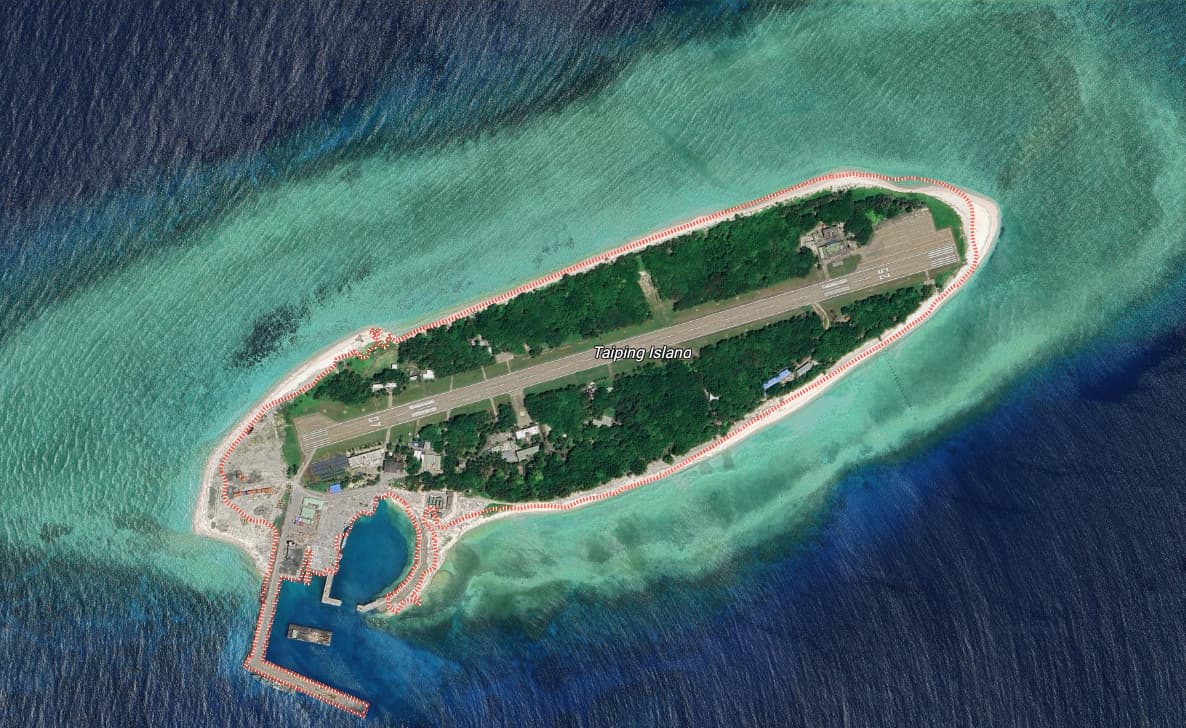
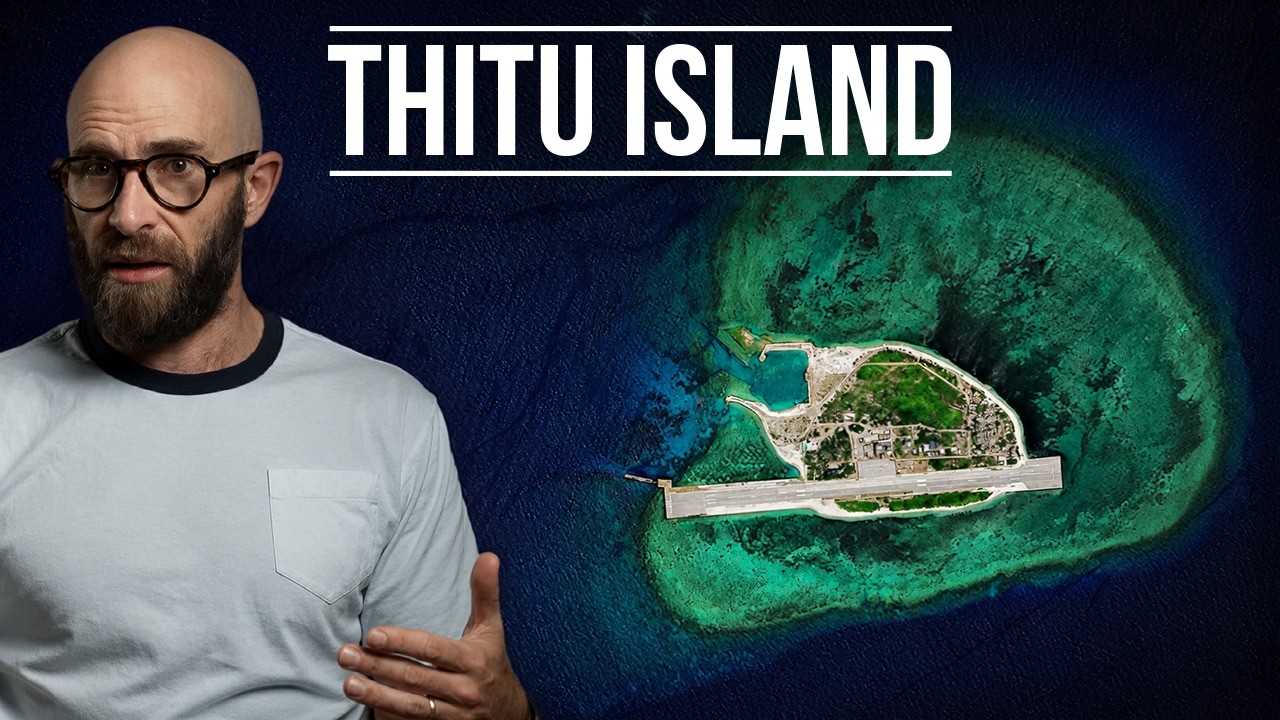
For Taiwan, it’s best that things be determined by the UNCLOS, even if it means Taiwan has to give up its base on Taiping island, the largest of the Spartly islands. However, right now every country claiming the region occupied at least 1 island to secure their claim. It’s a mad free for all, with China aiming to push everyone out.
Didn’t the Republic of China (ROC) once claim Mongolia? I learned from my NTU Taiwan law class on Coursera that, even as recently as 2017, Taiwan still had the “Mongolian and Tibetan Affairs Commission” (蒙藏委員會).
The KMT was instructed by General Order No. 1 to takeover Taiping Island from the Japanese, as a result, its international status is actually exactly the same as Taiwan, not to mention it was placed under the administration of Kaohsiung in the Japanese era. Technically it is a territory trusted to the Allied Powers, which operated under the rules of the UN post war. The government of Taiwan could give the islands and the base to the primary victor of the Pacific War, the US. If the US doesn’t want that responsibility, Taiwan could give it back to the UN Trusteeship Council.
The only main difference between Taiwan and Taiping island is that since the Permanent Court of Arbitration in The Hague ruled back in 2016 that none of the “islands” in the South China Sea are actual islands, but just reefs, shoals, and atolls, they can’t be claimed as territories, and the EEZ can’t be allied to any of them.
That will make the entire South China Sea international waters. That ruling is both good and bad for Taiwan. The bad is that Taiping island has water. There are 3 wells on the island that when tested are over 96% freshwater. So it would have made Taiwan the only country to occupy an actual island in the region. Also, Taiwan can use Taiping island to illustrate the actual status of Taiwan’s sovereignty.
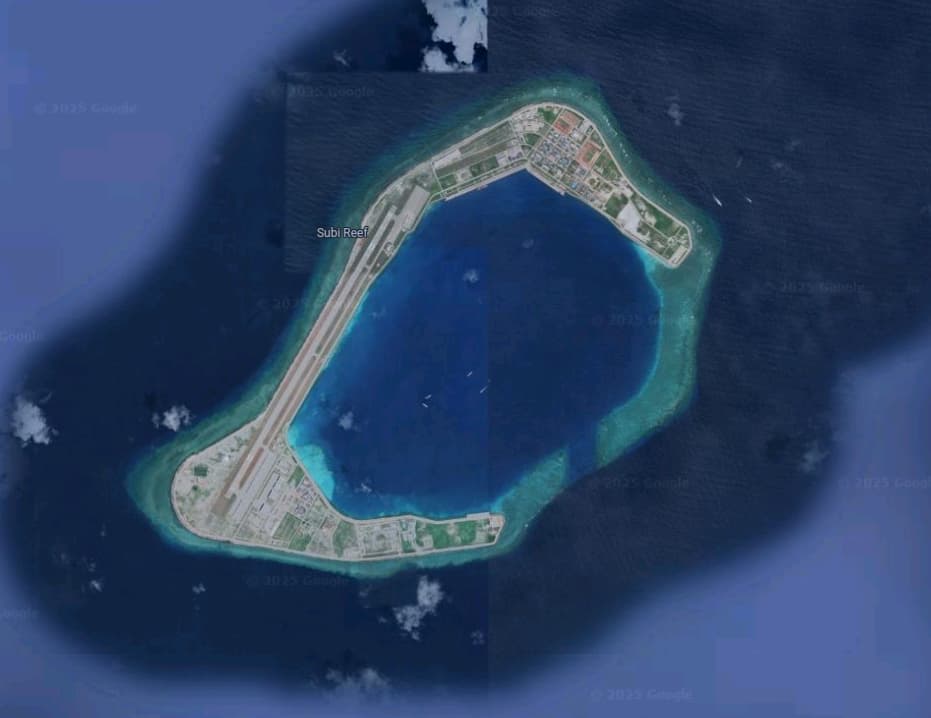
The good is that at least the ruling denied China or any other countries claim in the South China Sea. However, China is ignoring the ruling of PCA, not only continues to claim ownership of the islands, but rapidly expanding its military installations on those reefs. They goal is turn the entire South China Sea into a Chinese lake, thus gain the ability to cut off Taiwan, Japan, and Korea from global shipping. So having a base in the region could be useful if it does come to war, provided allies in the region would band together and kick China out.
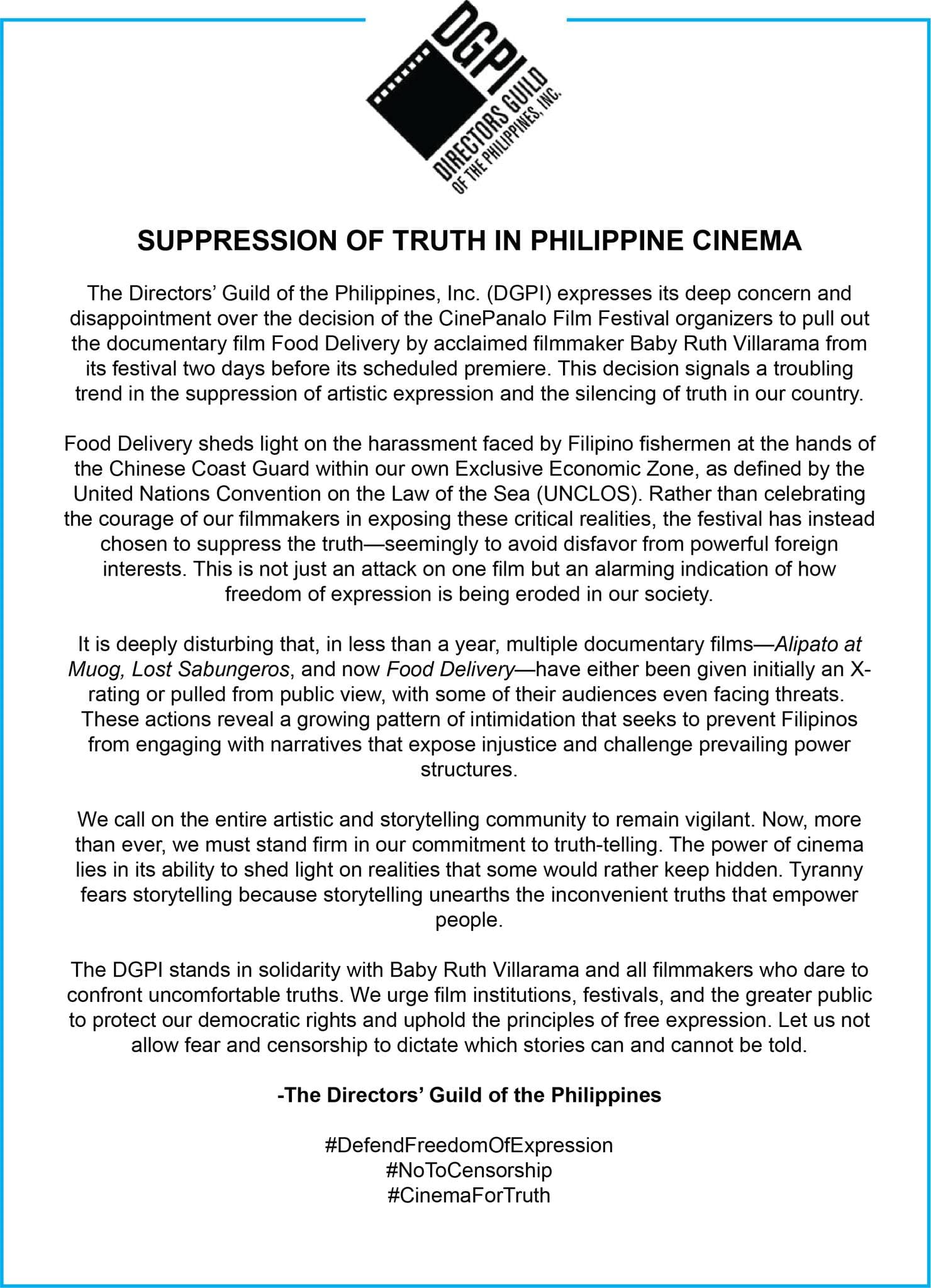
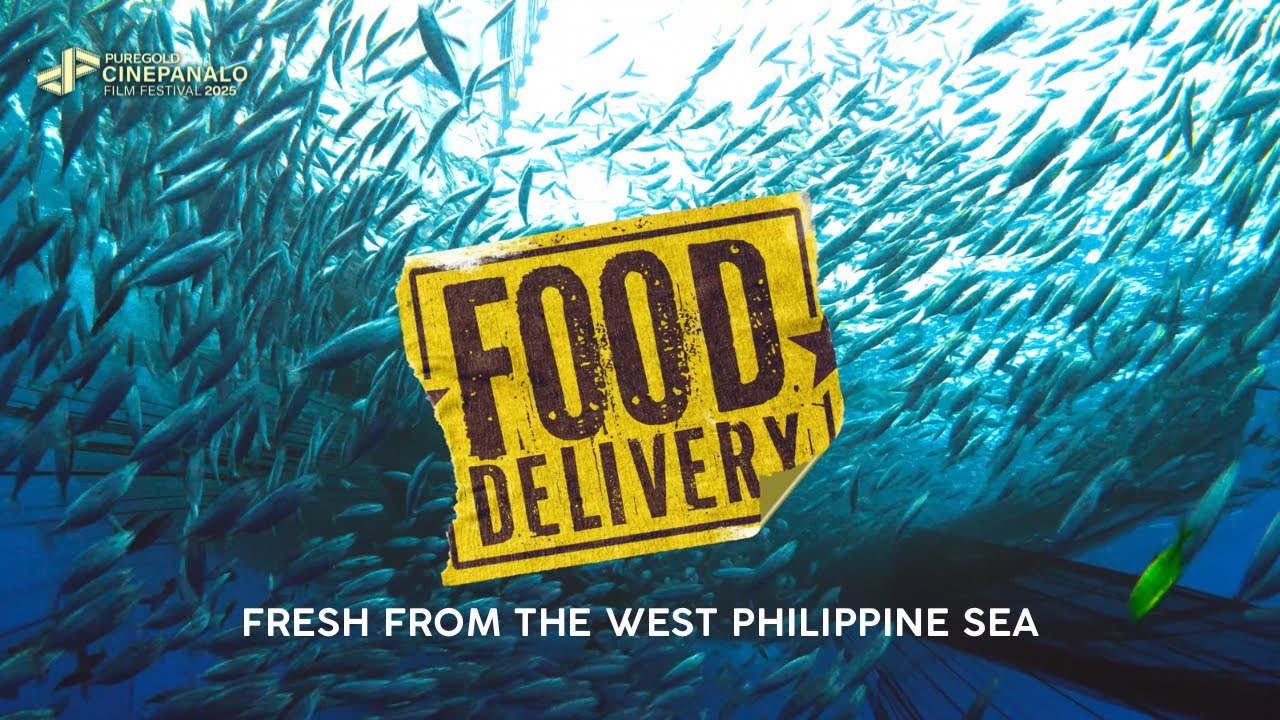
… and the subject of this issue, the film “Food Delivery” is about the Philippine’s South China Sea (West Philippine Sea) situation
I don’t quite connect all the dots since the powers that be in the Philippines seem to lean anti-China, so why would they suppress a film that is critical of China. I haven’t looked deeply at the film yet, so maybe there is more for me to learn
[!question]- I asked AI what seems to be the issue
The suppression of Food Delivery: Fresh from the West Philippine Sea at the CinePanalo Film Festival appears to stem from complex pressures, potentially tied to geopolitical sensitivities and corporate interests, rather than a simple pro-China vs. anti-China stance.
Key Reasons Behind the Suppression
Geopolitical Sensitivity
The documentary highlights the struggles of Filipino fishermen and military personnel in the contested West Philippine Sea, an area claimed by both the Philippines and China. While filmmaker Baby Ruth Villarama emphasizes that the film is about empathy rather than antagonizing China, its subject matter inevitably touches on sensitive political issues, including China’s harassment of Filipino fishermen within the Philippines’ Exclusive Economic Zone (EEZ) as defined by UNCLOS65. This makes the film politically charged, even if it avoids overtly anti-China rhetoric.
Corporate Interests and External Pressures
Puregold, the corporate sponsor of CinePanalo Film Festival, is owned by the Chinese-Filipino Co family. The decision to pull the documentary was reportedly made by Puregold’s board of directors, citing “external factors”59. While specifics remain unclear, speculation suggests that concerns over offending Chinese interests or jeopardizing business ties may have influenced the decision10. This aligns with broader patterns of self-censorship by companies wary of upsetting China9.
Pattern of Censorship in Philippine Cinema
The Directors’ Guild of the Philippines (DGPI) has pointed out a troubling trend of censorship targeting films that challenge power structures or expose injustices. Other documentaries like Alipato at Muog and Lost Sabungeros have faced similar suppression, signaling a broader issue of intimidation against narratives addressing sensitive topics68.
Economic and Political Calculations
Puregold’s decision to pull the film may also reflect a calculated effort to avoid controversy that could harm its business reputation or operations. As a corporate entity with significant stakes in both local and international markets, Puregold might have opted for caution to maintain favorable relations with influential parties10.
Is It Pro-China vs. Anti-China?
While geopolitics undoubtedly play a role, framing this solely as a pro-China vs. anti-China issue oversimplifies the situation. The suppression seems driven by a combination of economic caution, corporate interests, and fear of backlash from powerful foreign entities rather than outright allegiance to China310. Villarama herself clarified that her film does not contain anti-Chinese statements but rather seeks to foster empathy for Filipino fishermen navigating difficult circumstances35.
[!caution] Implications
The controversy highlights deeper concerns about freedom of expression in Philippine cinema and society. It raises questions about who holds influence over artistic narratives and whether corporate or foreign interests can dictate which stories are told610. For many observers, this incident underscores the need for stronger protections for filmmakers tackling critical social issues.
In conclusion, while geopolitical tensions are central to this case, the suppression reflects broader issues of censorship influenced by corporate caution and external pressures rather than a binary stance on China.
Not so sure they are that anti China to be honest, perhaps more just not as pro American as some might like to think? They seem more like wanting to use anyone for personal gain. Some true psychopaths there. My take with my experiences there are they are iut for themselves, and have very shallow morals outside of religious extremism. Even then, justification ain’t that hard to find.
Talking about the government obviously, not the people.
I guess the US doesn’t fuck with their fisheries like china does. That does seem to be an issue for a lot of the people, understandably in a nation of tropical islands.
China has seized a disputed reef just kilometres away from the Philippines’ most important military outpost in the South China Sea, raising the risk of a new stand-off between the two rival claimants
The sea-level is rising, but yeah. When climate change submerges the islands, I guess a new glacial period would be upon us, and most of them won’t be islands anymore either.
Sea level rise is also a natural thing…one and the same. Plus, if water levels rise, that’s not what sinking means. In terms of down, below. Islands dont sink. They erode or become submerged. Those folks trying to trigger people and get clicks need a dictionary and some elementary science classes to be able to make a more logical case
Either way, they cna just keep making more islands . It’s not like they have all of a sudden stopped trying to make man made islands and claiming territory to oppress other nations. This is ongoing, and no reason to think it won’t keep on continuing.
By the way, there were 2 kingdoms that were established on Taiping island.
Founded in 1956 by Filipino admiral Tomas Cloma and 40 teachers from a naval academy in the Philippines. Freedomland had stamps, passports and all that stuff.
CKS sent two naval ships to Taiping island, and Tomas declared the Free Territory was dissolved. However, Tomas kept trying do repeat the effort till the 70s.
Tomas was likely inspired by Morton Meads, an American living in the Philippines, who also established a kingdom on Taiping island just 2 years prior.
At first it was called The Republic of Morac-Songhrati-Meads and the later Kingdom of Humanity. Morton Meads claimed that his British ancestors claimed the islands back in 1877. Anyway, the Philippines arrested Meads, but decided to try the same trick themselves.
There were a couple of more sucessful ventures of british individuals creating their own personal fiefdoms in Asia…
The Kingom of Sarawak
Ruled by the Brooke Family, as Raj of Sarawak from 1841 to 1946 then ceded to the UK, then eventually becoming a part of Malaysia.
Cocos (Keeling) Islands
Settlement establish by John Clunies-Ross with a private a harem of 40 Malay women, and workers.
Annexed by the UK in 1857 and eventually sold to Australia in 1955.
However, the Clunies-Ross family continued essentially ruling island via private property ownership, being described at the time as akin to a feudal system, until Australia forced the sale of the family’s holdings in 1979.
On the night of 8–9 May 1942, 15 members of the garrison, from the Ceylon Defence Force, mutinied under the leadership of Gratien Fernando. The mutineers were said to have been provoked by the attitude of their British officers and were also supposedly inspired by Japanese anti-British propaganda. They attempted to take control of the gun battery on the islands. The Cocos Islands Mutiny was crushed, but the mutineers murdered one non-mutinous soldier and wounded one officer. Seven of the mutineers were sentenced to death at a trial that was later alleged to have been improperly conducted, though the guilt of the accused was admitted. Four of the sentences were commuted, but three men were executed, including Fernando. These were to be the only British Commonwealth soldiers executed for mutiny during the Second World War.[33]
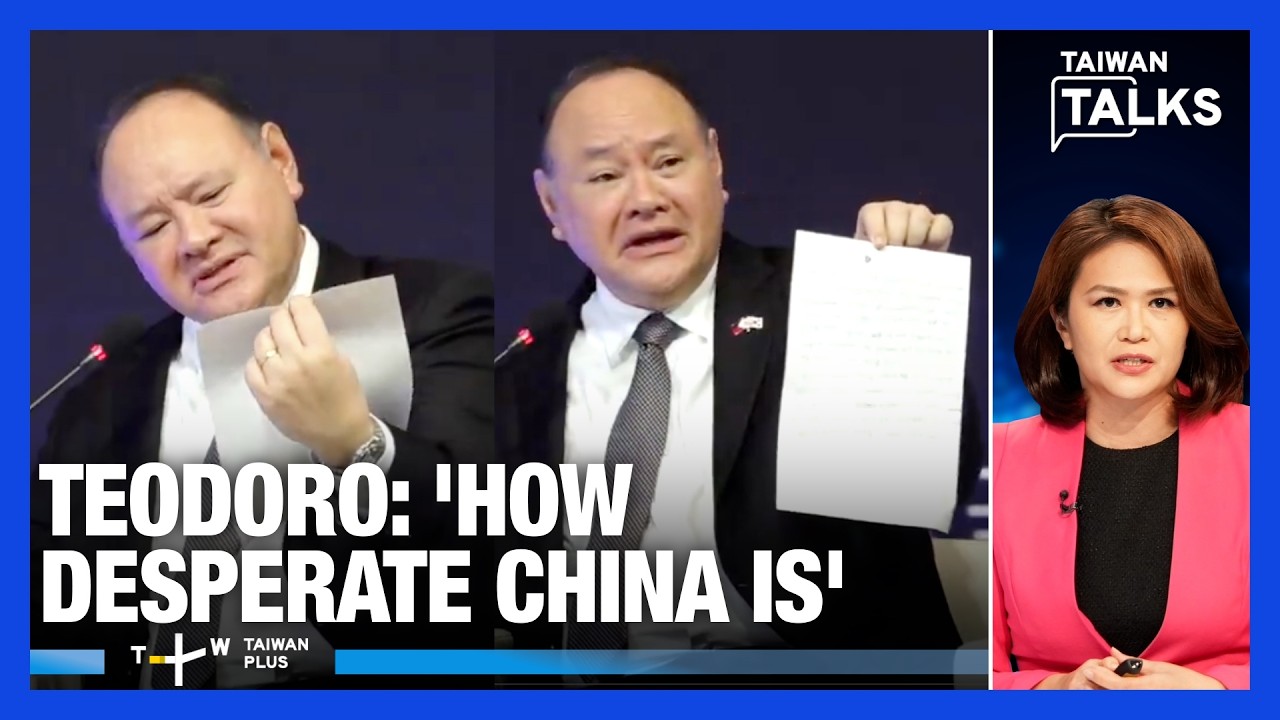
Over the weekend, some reaction on TaiwanPlus to Philippine Defense Secretary Gilbert Teodoro’s sharing of the Chinese delegation’s note to him while he was on stage on a panel at SDD2026
SUMMARY
Philippine Secretary of National Defense Gilberto Teodoro went viral after a powerful moment at the Seoul Defense Dialogue, where he confronted an on-stage attempt by the Chinese delegation to silence him with a note objecting to the 2016 South China Sea arbitral ruling (0:00 - 3:15). Instead of backing down, Teodoro read the note aloud and dismantled its claims point-by-point, turning an act of intimidation into a masterclass on standing up for Philippine sovereignty and international law.
Panelists, including Philippine Coast Guard spokesperson Jay Tarriela, praised this response as a vital assertion of national interest against China’s continued maritime aggression and contradictory attempts to rewrite international norms (4:50 - 9:47). The discussion highlights that while China often disregards the UN Convention on the Law of the Sea (UNCLOS) when it suits them, this incident demonstrates the importance of regional leaders standing together to push back against such coercion and protect the rules-based order (27:30 - 32:39).