Discussions please in the appropriate threads:
1 Like
Sept. 29
- raising the weekly inbound passenger quota to 60,000
- on-arrival saliva test will be discontinued, passengers will instead be handed four rapid antigen test kits
- visa-free entry will be restored to all reciprocating countries
Oct. 13
- “0 + 7” system will be implemented
- raising the weekly inbound passenger quota to 150,000
- expand visa-free entry to more countries
- ban on tourists groups will be lifted
The question will of course be, whether the +7 has to be spent under the same conditions as the current +4 is - in that separate bedroom/bathroom need to be available if not the only occupant?
Time will tell I guess.
Sounds great but they should clarify what exactly you are allowed to do during 0+7.
I finished my quarantine and currently on self-health check management and still can’t go to school until it is finished.
But you are allowed to go outside to get food, and visit tourist places? If the answer is yes, then that’s really weird as in you can’t go to school, but in the meantime, feel free to do whatever you want.
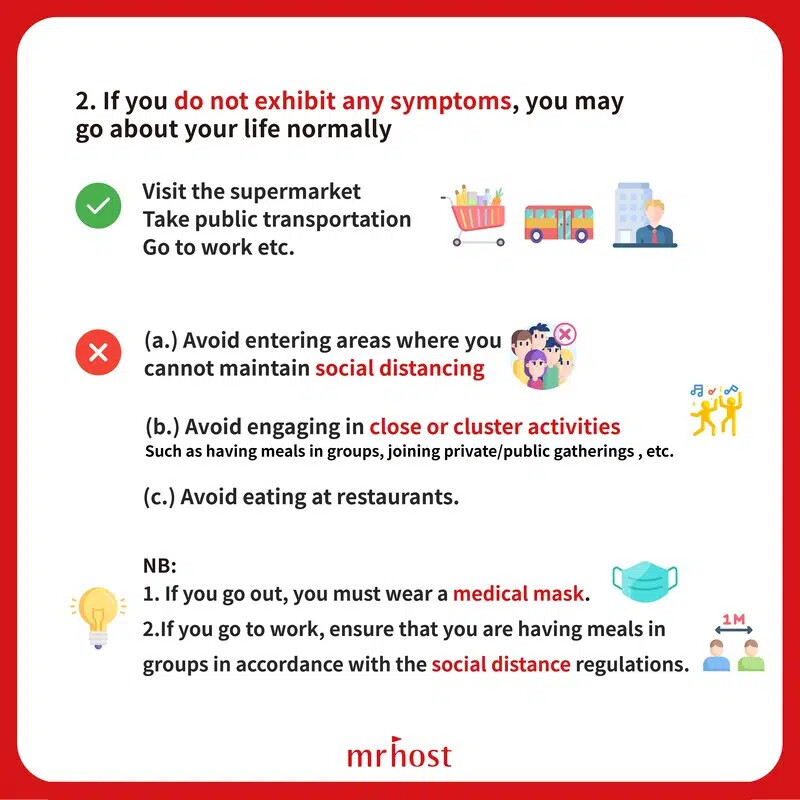
Yes, I go out to do my shopping, meet friends but my school told me that I am not allowed to go back now. I have to wait until my 4 days of self-health management is finished. I proved that they are wrong, but they didn’t change their mind that is why I think clear rules are needed to avoid misunderstandings.
I did show them that piece of information, it didn’t help 
Your work may have their own rules.
Looks like it but I think they should comply with the rules introduced by the government.
Welcome to Taiwan!
Maintaining social distancing in a supermarket can be challenging especially during busy hours.
I would assume one can look at going during a less busy time? Like at night?
Sure I am just saying the way the rules are written, they give the impression that it’s always ok to visit a supermarket anytime.
I’ve found the whole “self-management” period extremely frustrating from the get go. It seems the rules were intentionally worded ambiguously in order to discourage people from going out, yet at the same time there are potentially serious financial consequences for the “wrong” interpretation.
The rules should be crystal clear: “You are prohibited from doing A, B, and C during this period.” Otherwise, drop it.
Sure, but I lived my life normally during Self Health Management except going to restaurants.
I grabbed stand food instead.
Or ubereatsed it to the office.
Similarly, it does not say prohibit. It says avoid. I can’t avoid the bus being full.
Agree, clear rules and explanations are needed, and they have to make sure that the rules are obeyed by both parties.
They’re more guidelines. They say avoid, but not prohibit.
Right, but who determines whether enough “avoidance” was exercised? Should you wait for a bus that’s less full? Should you skip an important meeting that happens to be at a restaurant? Should you immediately exit the supermarket if enough people enter?
Guidelines that could get you fined if someone’s “avoid” doesn’t add up to your “avoid”.
Well… I would go under the word ‘reasonable’
This isn’t just a Taiwanese thing. Rationality is the basis of law in many democracies.