Nobody has said that China “invented sodium-ion batteries”, because it would be a meaningless statement. Or as ChatGPT would put it:
Naïve / binary
Outdated and too categorical.
Oversimplified
Your classification of “invention” and understanding of batteries are still wrong. There isn’t a single thing called a sodium-ion battery that one person/country once discovered and everybody else has been merely developing since. That’s not remotely how battery/technological research works.
There are many, many different types of sodium-ion batteries that have been “invented” using different combinations of novel materials, with different properties and in various stages of development. Some of these were absolutely “invented” in China.
The concept of using sodium as the charge carrier isn’t even the novel part. It’s an obvious follow-up to prior art on lithium-ion batteries using the next-lightest monocation. Whichever country happened to establish a working system to do that first doesn’t mean very much at all. The novel and difficult part is all of the materials and processing research that needs to be done to turn that concept into practical batteries, which requires a load of additional “inventions”.
Yeah, people tend to think that when they refuse to adjust their wrong opinions based on someone telling them new info they were ignorant of. It’s a common thing, no worries. We’ll have to agree to disagree then.
As well as AI shorts doing the rounds where it is difficult to figure out if the footage is real, there are loads of AI versions of songs on YouTube now. Not just mainstream pop songs. For example, funk versions of Megadeth and Slayer songs.
I think a good rule of thumb when it comes to AI is the more boring your job is the more vulnerable it is to AI - and vice-versa.
And the best way to insulate oneself from the ravages of AI on the job market is to have at least two acres of arable land with adequate well water and woods.
In a newly announced partnership with Advanced Micro Devices, the Department of Energy (DOE) will build two of the world’s most advanced AI supercomputers—Lux and Discovery—to accelerate research across fusion energy, national defense, and cancer treatment, according to a Reuters report. Energy Secretary Chris Wright told Reuters the machines could, in “the next five or eight years,” help turn “most cancers, many of which today are ultimate death sentences, into manageable conditions.”
For scientists like Trey Ideker, who leads a precision-oncology program at the Advanced Research Projects Agency for Health at the U.S. Department of Health and Human Services, the claim is both exciting and incomplete.
“Can we make a massive dent in cancer with AI and big data in the next eight years? Absolutely,” he told Fortune . “Is AI alone going to solve cancer? No.”
I didn’t read this entire thread so I don’t know if this has already been brought up, but why does Google put AI results first, when it seems at least half the time they’re wrong? At least that’s been my experience.
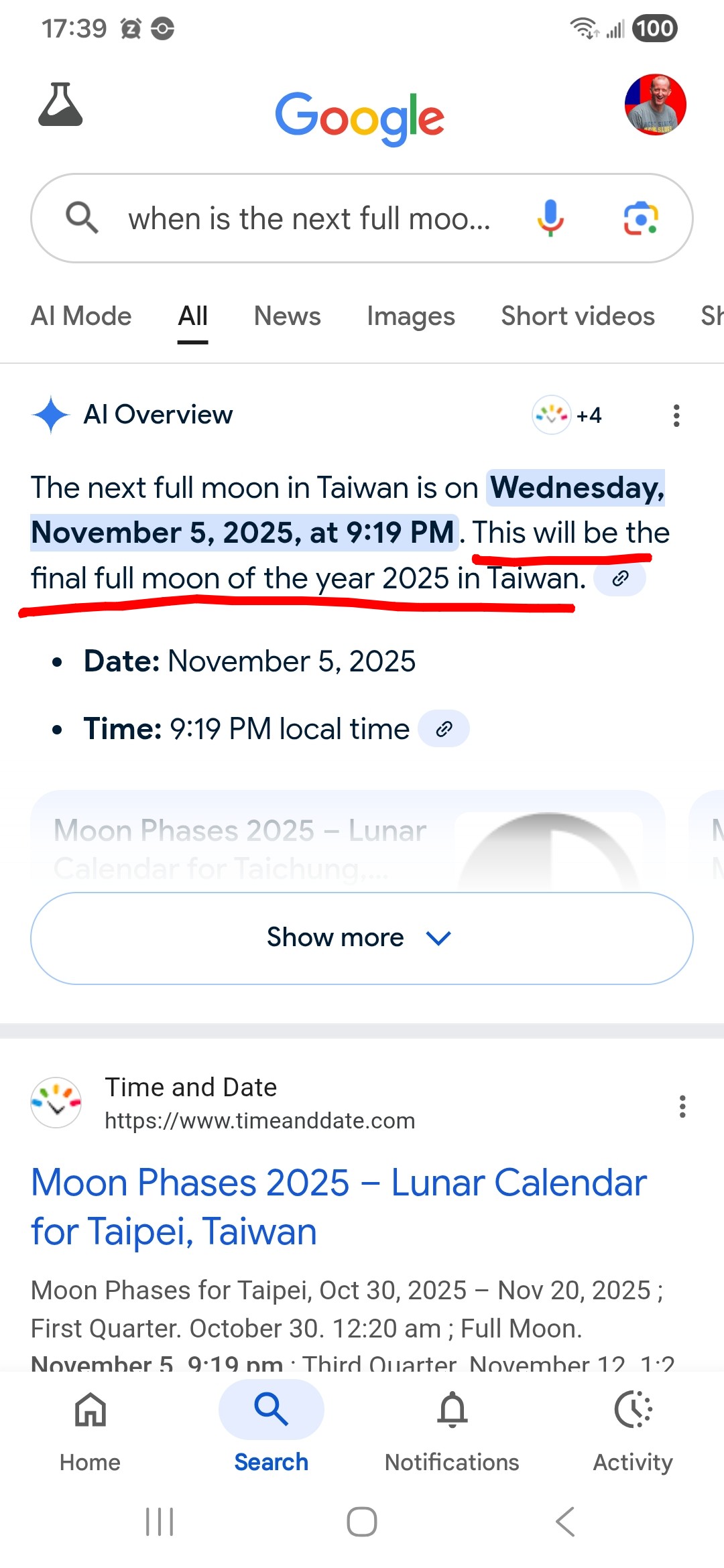
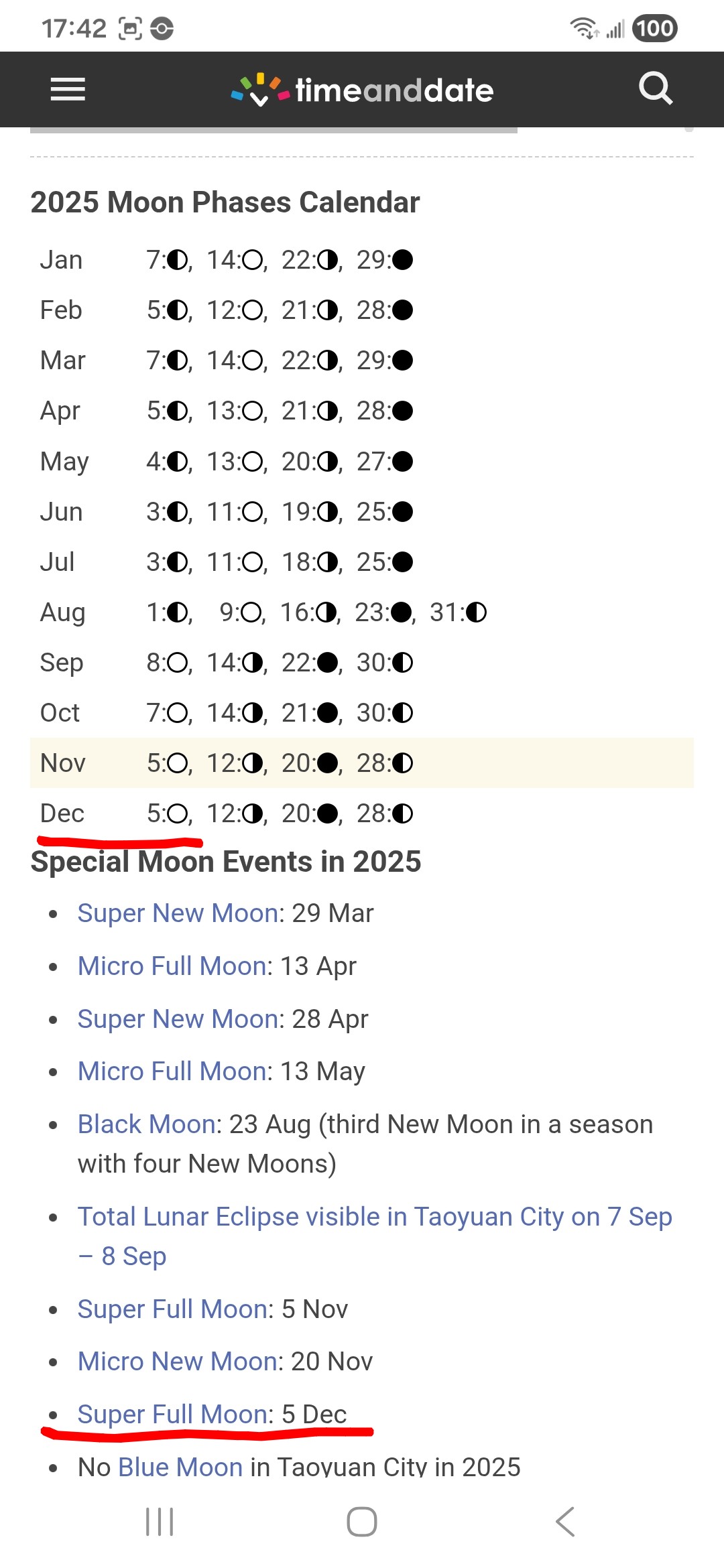
For example, I just looked up when the next full moon would be in Taiwan. Google AI says November 5th and that it would be the last full moon for 2025.
Good point, they also are copying and pasting a lot of information they scraped from other websites without crediting them or pointing back to the source.
I just asked it when was the last full moon and it knew well it was Dec 5th. Funny how it gets confused sometimes.
It depends what angle you are looking at it. If you created some original works and then AI companies are reworking it slightly or just summarising and not even referencing their sources and all that without paying anything I think that’s parasitic .
Now if you use AI and it helps you with any task in an economic fashion that wouldn’t be considered parasitic.
Another way AI could be considered parasitic (and it goes for all intelligent creatures including humans) is how much resources it’s grabbing to power itself. All that thinking requires massive amounts of energy, water, metals and land.
I think in the future all boring work – which is most jobs – will be done by expert machines and the only humans who will have jobs will be creatives. Such an economy will create so much wealth that jobless humans will be given enough money to live on comfortably. Most jobless humans will occupy their time engaged in activies that are unprofitable but that improve the quality of life
Outdated and too categorical.