I’ve downloaded a VPN to watch videos from Amazon and Netflix of other countries. But I wonder how anonymous does it make you? Could Amazon not figure out I’m using the same device? If I say Xi looks like Winne the Pooh in China can they still track me somehow?
For your purpose of watching video streams you don’t need to be anonymous. Amazon and Netflix won’t do anything. You will get an error message if they detect a VPN though. Most VPN’s avoid being detected by those streaming sites.
Just using VPN does not make you anonymous. It gives you a different IP which can be from a different location you currently are at. To be anonymous you have to do much more (avoid cookies, browser fingerprinting, etc.). Easiest way is to use Torbrowser and don’t use any nicknames or other information that can be linked to your person. (Tor will be detected by those streaming sites.)
I was just reading the other day a group recently hijacked up to a quarter of all Tor exit nodes. The exit nodes are the point where traffic leaves the Tor network and hits the public internet. The group was doing man in the middle type attacks.
So even on Tor anonymity is not certain.
I cannot watch movies on Netflix with my VPN on, they won’t let me, I have to disable it (PIA VPN).
Using a VPN will get you around may sites that Geo-Restrict their data, Videos and Live-TV being one common one. Even then, many sites dont like a VPN being used to get past the restrictions, and thus block known VPN’s.
On the other side, in some cases you MUST use a particular VPN in order to access sites - thats usually when you are Working from Home - and the VPN is associated with the company concerned.
We can’t do prime video or Dis+ w/out Vpn. It has helped with bills in the US, some banking, and YouTube videos when the channel leaves content unavailable outside US

Love Tom Scott’s video on VPNs.
No, a VPN it does not make you anonymous, and it is a technology that is not created or used to make people anonymous.
This is a fairly common misconception that a lot of people have.
The initial goal of a VPN was to extend a private network across a public one.
Internet is an example of a public network, while your office LAN/Intranet is an example of a private one.
That is why when you work from home, you often have to use a VPN client in order to access certain resources.
What has happened then, it was that VPN was not only used for the purpose above, but also to add a security layer to the communication - this was not done from an "anonymization’ standpoint, but from an encryption standpoint (if we are talking about IPSEC).
The discussion can be built up from there, I am purely a sales engineer and nothing more, I know in the forum there are a lot of proper IT consultant who can explain more and better 
Quick question: Anyone using a VPN in Taiwan noticing better connection quality when accessing websites in Europe or in the US? Especially using video conferencing software or VOIP-services?
That’s sometimes another claim these VPN providers make (because they might reserve dedicated bandwidth on some underwater cables).
That would be the major reason for me to get a VPN. But not sure if it really does make a difference.
But privacy? If those VPNs would really guarantee privacy without limitations, they most certainly would be illegal in most countries nowadays, I guess…
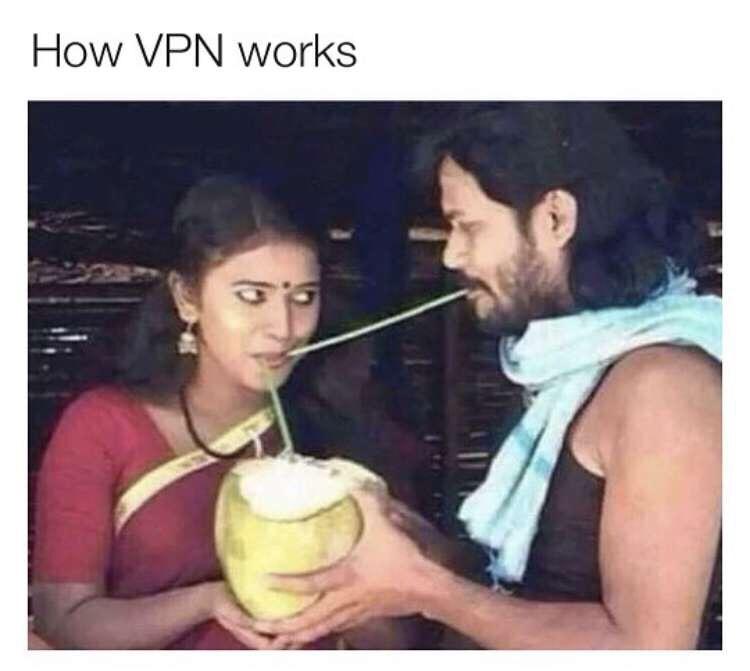
My home router in the US has a built-in VPN, so I can tunnel my traffic and it appears I am surfing from home. No anonymity though. For true anonymity from a commercial VPN company, you would have to ensure they do not log traffic (https://www.cnet.com/news/why-you-should-be-skeptical-about-a-vpns-no-logs-claims/) or get hacked (https://www.comparitech.com/blog/vpn-privacy/ufo-vpn-data-exposure/).
A VPN also encrypts your connection so your IP and anyone monitoring the coffee shop wifi router can’t see what you’re doing.
Tor has never been secure. It’s better than nothing, but it’s not the best choice.
The connection to most websites nowadays is encrypted by default - even without a VPN. So the VPN doesn’t really add any security (besides also encrypting DNS lookups). It’s not like coffee shop owners can actually „see“ what people are seeing in their browser.
AFAIK Tor is a US-government-funded project, and as such needs to be treated with a certain amount of suspicion. As mentioned, it’s completely dependent upon the trustworthiness of exit nodes.
If you wanted to post anti-Xi messages and started attracting attention, the Chinese government might put in a bit of effort to track you down, but I doubt it. “Anonymous” all depends upon how much money someone is prepared to spend to blow your cover.
I tried to print out something and the printer didnt allow me to print out… found out it was the VPN was the culprit.
Hiding the DNS lookups is kind of the important part. And some of us use software we don’t want anyone snooping on. Even in browsers, I don’t trust the websites to securely hide all information.
All VPN does is make your IP match the VPN provider’s IP. BUT however, most streaming services like Netflix or Hulu has gotten wise and blocked known VPN providers because they are committed to geoblocking any viewers that may possibly not be in the US.
So if pooh wants to snoop on you bad enough, they can just get your information from the vpn provider or from the sites you are accessing. Tor is more anonymous but if you are looking to do illegal activities there are ways law enforcement can still track you down even if you only ever use tor.
It will encrypt your connection, but you will not be anonymous!!! If for some reason you really want to be anonymous, you shall use TOR protocol.
Why is someone posting the same thing twice, from 2 accounts? Did I miss the advertisement clink they tried to hide in their post?
Anyway, this is fishy.
@olm I merged the two threads.