Left stamp
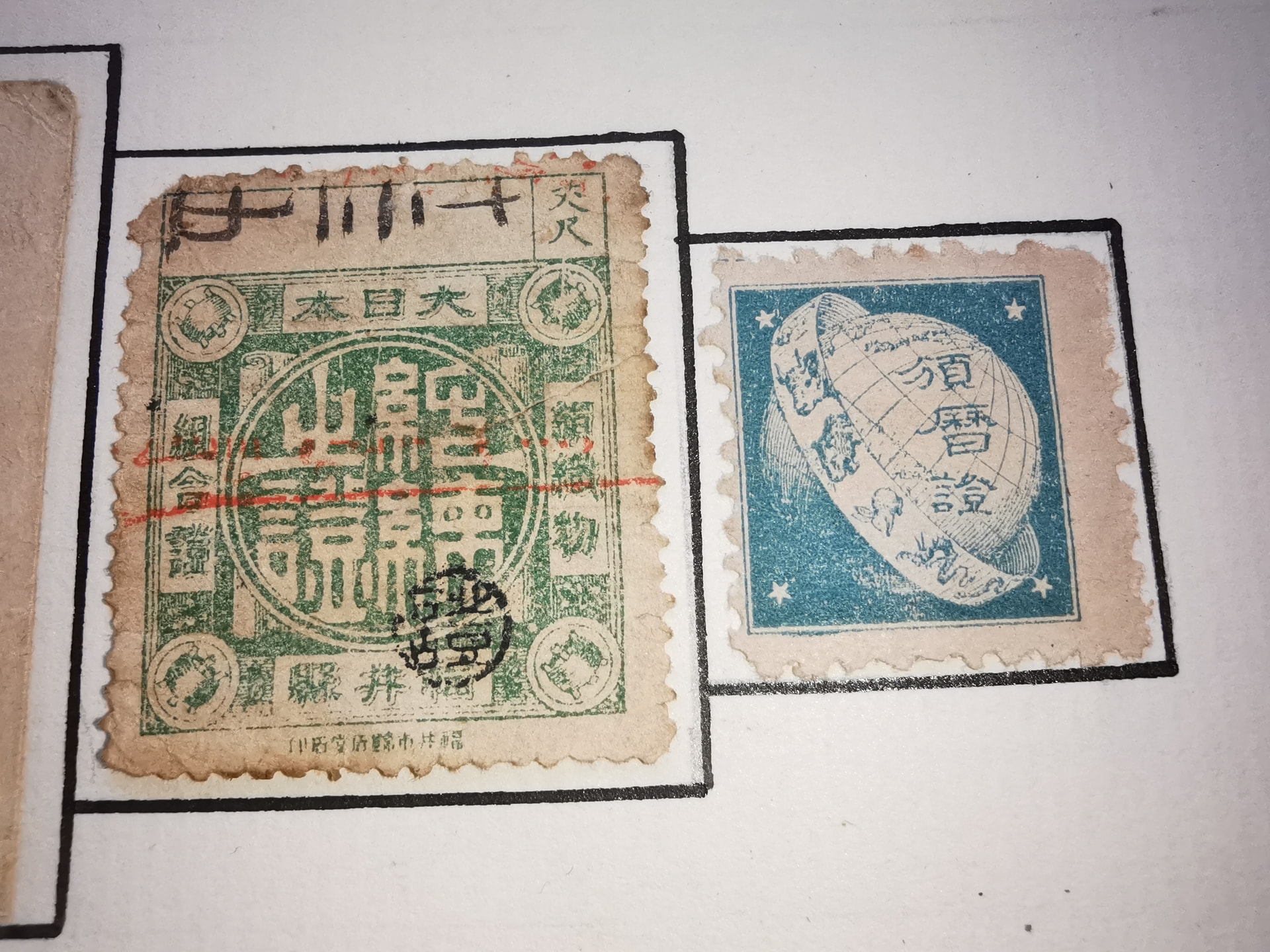
丈尺 十二二五
大日本
絹織物 組合證
絹練之證
福井縣
Seems more like a trading stamp for how much textile one bought.
Right stamp
頒曆證
No idea why you’d need a stamp for a calendar
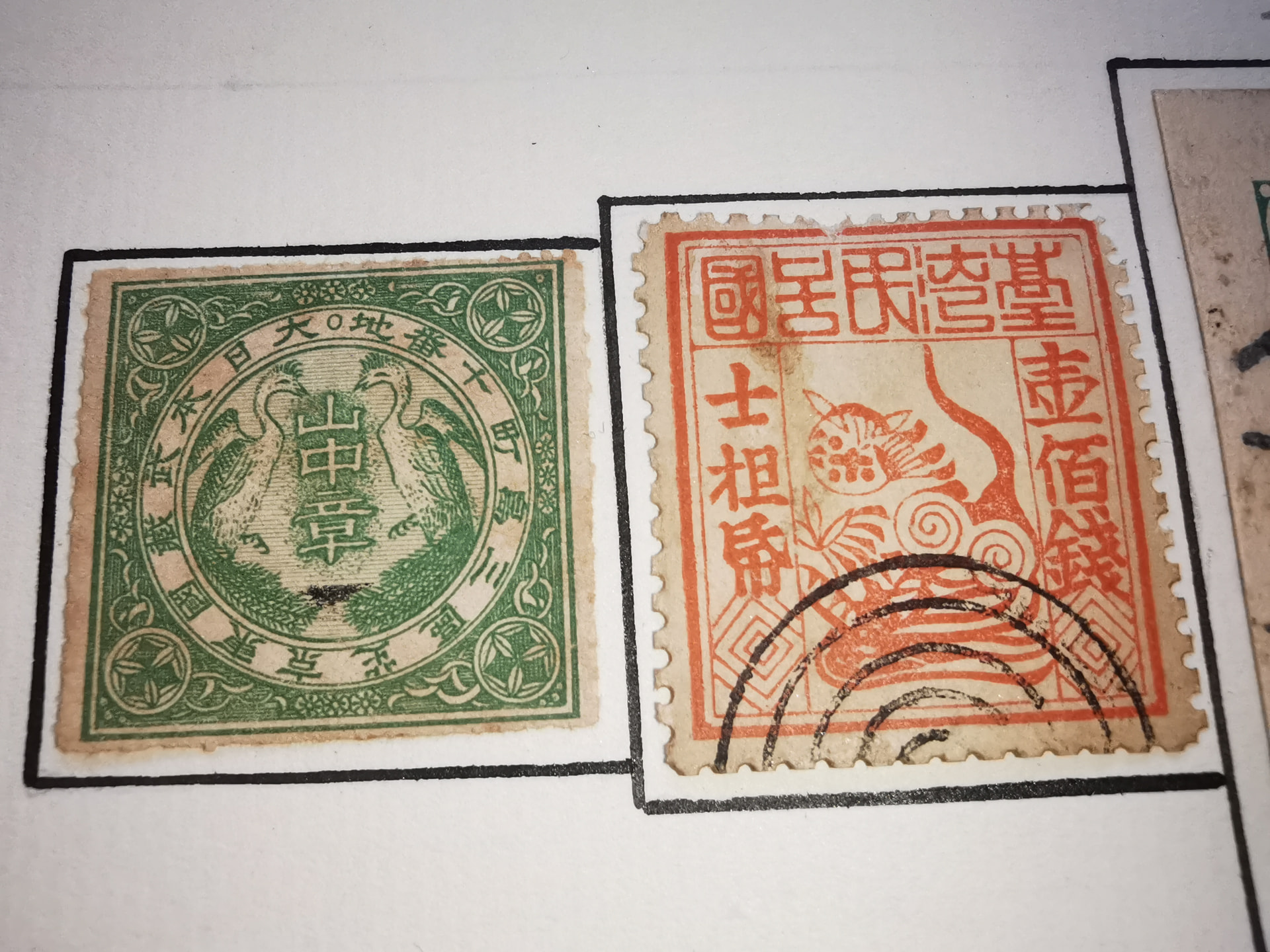
Left stamp
大日本武藏國東京北區三島町十番地
山中章
Right stamp
台灣民主國
壹佰錢 士担帋 (stamp)
That last one is precious.
If you actually have a real physical copy of the 100 dollar stamp from the Republic of Formosa, it’s probably worth some money. However, the tiger in the middle doesn’t look like the ones they put on display in the museums. I can’t be sure how authentic this one is.
AI told me this:
“Banli” refers to the system in ancient China whereby the imperial court promulgated the almanac for the coming year to the entire nation and its tributary states; it served as a symbol of the central government’s sovereign authority and its status as the legitimate source of the calendar. Originating in the Western Zhou dynasty, this practice persisted throughout successive eras and was regarded as a political symbol of “respectfully imparting the seasons to the people” and upholding political legitimacy; it was not discontinued until after the First Sino-Japanese War (1894–1895).
Probably most people here are familiar with the role of almanacs in regulating people’s daily affairs even in traditional Taiwan folk culture today. It’s easy for me to imagine the importance of that in more traditional times.