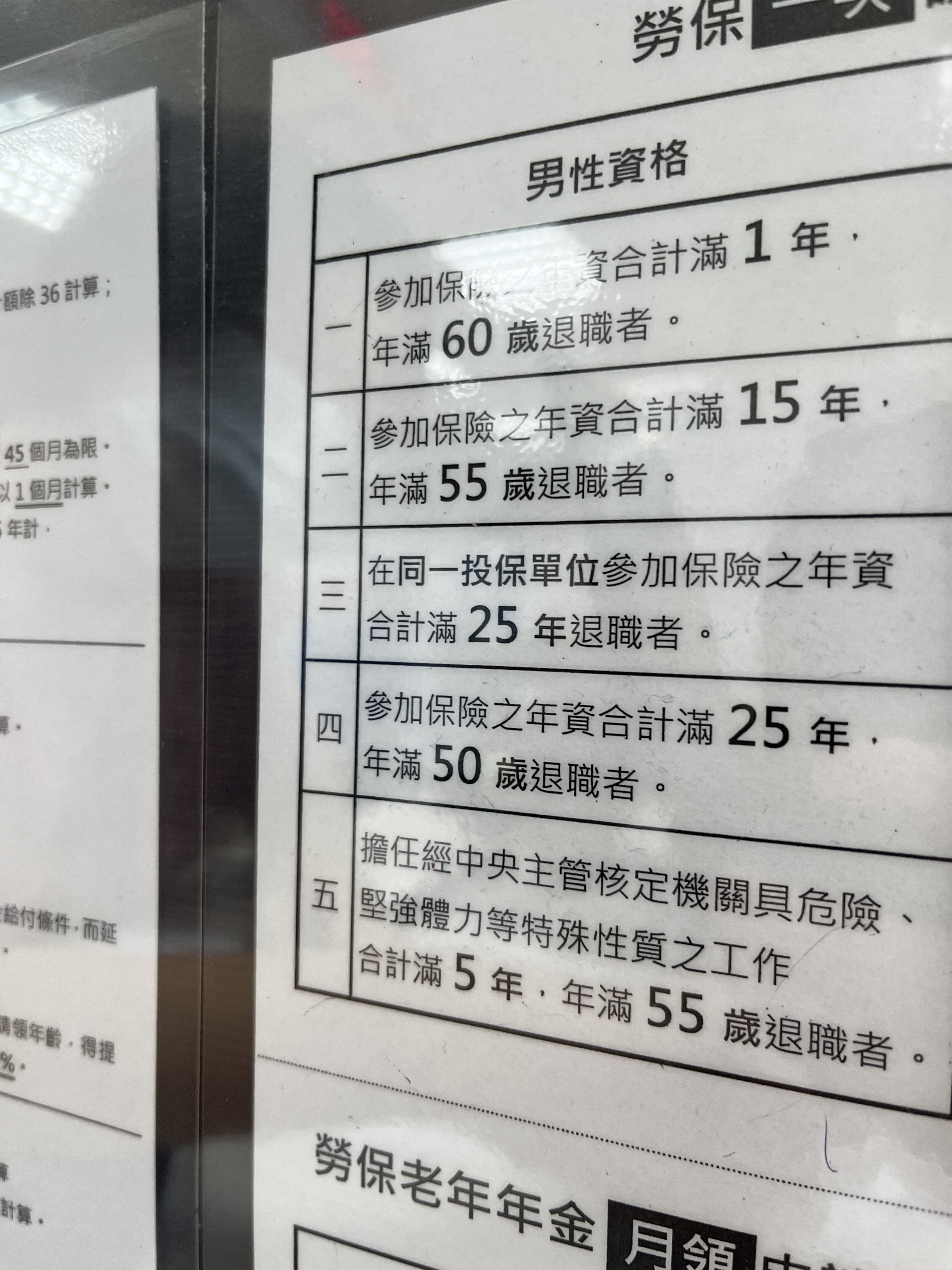
While NT$30k might be enough for a frugal Taiwanese pensioner to get by, there are some major issues for foreign nationals. Taiwan basically assumes that you own a house or will be able to live in a relative’s property.
As we all know, it can be tough for an older person to rent housing. And rents are increasing although still very reasonable. Older Taiwanese can reasonably expect to be able rent social housing or at least receive rent subsidies through the government’s managed leasing program.
For example, a one bedroom apartment in Bade (Taoyuan) in social housing can be rented for NT$2,500 to about NT$ 7,500 over the next few years.
But foreigners are not eligible for these programs. We are also not eligible for long term care or discounted public housing. We don’t get the Elder Day little cash bonuses. We may not be able to eat at discounted communty kitchens. There are a lot of little perks for older citizens and they add up in their totality.
We are not eligible for welfare (income lower than 20k). We are also not eligible for the 4,000 NT$ subsidy that a senior 65 or older in Taipei City would get with the hypothetical retirement income of $30k, less than NT$2.5 million in savings etc and no more than NT$9.4 million in real estate.
In short, if you are going to try to live on what the state provides in retirement income and managed savings, it would be a lot easier if you are a citizen or maybe at least married to one.
I wonder if push came to shove and a foreigner didn’t have anything for retirement and had PR. Would the government just let them starve or be homeless? Wouldn’t look good internationally if it hit the news
I also wondered if they would just pack you up and ship you back to your home country to deal with in that case. They did that to a Japanese old guy that had dementia but he had no legal status and had overstayed so they shipped him back to Japan
Yes in Taiwan you would starve and be homeless. Or you could ask your own government to bring you back to where you came from.
It would only make the news because someone didn’t prepare for retirement. In a few years I can get the Old Age Pension in Australia it will be paid into my Australian account. Atm its about NT$41k a month.
I won’t get anything from Taiwan. My wife will own the company soon and I will just be the pauper husband.
I don’t see it as a government’s job to fund retirement. I think it’s great if they have programs that help but ultimately individuals should adequately prepare. Governments should provide appropriate education though
Also no one is forced to remain a PR in Taiwan. These people could become citizens and receive all the benefits that come with that should they choose to.
I salary sacrificed 6% for a total 12% into my Taiwan pension account. Now I’m in Australia I salary sacrifice 5% for a total 16% into my super account.
I’m only 31 so often get asked ‘Why are you worried about your retirement now?’ Answer ‘because I don’t want to work forever.’
I agree of course that we must take responsibility for ourselves the best we can. One reason that it is a very good idea to have these programs is that many people like me were far too feckless at age 31 (or even 41) to even think about planning for getting too old to work. Education seems like a good idea, but I doubt very seriously it would have had any effect on me. It’s good that the government has a default program in place to catch people who work but didn’t understand. It should be very bare bones. My sense is that a lot of thought went into Taiwan’s programs for this and they more or less serve their intended purpose.
Yea, most of us were that way when we were younger. I think even a little education in personal finance can go a long way. I’m so surprised that very few high schools here offer even a basic class on personal finance.
I kind of got lucky in that years ago I read an article in some magazine that said you should aim to try and maximize your 401k contributions. So when I started a “real” job in my 30’s I blindly did just that. At first it hurt since my paycheck after taxes, social security etc was so low. But after a couple of months it became the new normal and I just lived with what little I made. Years later I discovered the power of compounding and I’m very grateful.
There’s too old to physically work (which can be a fairly late age) vs too old to be given any opportunity to work (this is usually around 65 years of age, it’s assumed that you will not work, and few will hire you at all at this age, even if you’re perfectly capable of working).
There’s also the fact that fewer will rent to you past a certain age. Lots of homeless are old for a reason.
People born here and with citizenship are allowed to starve and become homeless. Par for the course. Not unique here either. That’s the wrong angle. The difference is that long term residents, even many that were born here, are not allowed to play with Taiwan norms. They are told, with a smile, to fuck off. That’s an issue.
This is the key regardless of your salary. You earn more, you spend more. Making your employer invest for you saves you from yourself. Making life adjustments isn’t that difficult when you don’t have a choice
I’m not sure how 401ks work but if it’s anything like super in Aus the money is locked away until your 60~65 saving yourself from other stupid purchases like a new car you don’t need
Taiwan’s New Pension Scheme is similar to a 401k. Your employer contributes an amount equal to at least 6% each month. You can contribute up to another 6%. Those contributions are not taxed in the year they are made. They probably won’t be taxed when you withdraw them after 60 unless you have an unusually high income in retirement (by Taiwan’s low standards).
Currently the five-year investment return is an average of 4.76% although that is skewed by a very good year last year. You are guaranteed the two-year cd interest rate on your account.
In general, it seems like the Australians have a better deal. If I understand correctly, your employer contributes 11% of your salary. So that’s at least a guaranteed 11% “return” on your salary.
What are you allowed to invest in with those funds? Stocks, bonds, real estate?