I have been trying very hard but unsuccessfully making you tiao (油條)
Those things you buy from breakfast shops that is basically some kind of fried dough and as you know they are very crispy with lots of air pockets. From what I see at those places they make a dough, roll it flat, cut it into strips, and then drop it into the fryer. When they do that they expand dramatically and the result is a strip of dough that is extremely airy and crispy.
I followed recipe that I find online and it all tells you to use baking powder. So I get the necessary ingredients, mix it, and all that. But instead of getting a dough that expands dramatically as soon as it enters the oil, mine does not change in size at all, in fact other than very little expansion it does not expand. The result I get is something with the texture of biscuits, though the outside is somewhat crispy it completely lacks the crunch that the breakfast store has.
I know you can buy it from breakfast shops cheap but I need to know the secret, because some day I may be in a country where such things simply can’t be bought and so I must figure out how to make it. I tried everything, eggs, baking soda, etc. and the result is the same. I tried letting the dough sit for a day or so in the fridge (some website says this is critical) yet the result is no different… I even tried adding more baking powder (perhaps it won’t expand because there isn’t enough) and it does not change the result either.
The baking powder isn’t bad, I just bought it and when I toss it into boiling water it fizzes like alka-seltzer. So it’s not the baking powder.
I’m at my wit’s end here. The only thing I’ve yet to try is use yeast… I do not know if this will change anything.
I googled the recipe like mad and everyone is the same.
But not the result. It would not expand at all. Or if it expanded, it didn’t expand near the same way as it shows in the picture.
What did I do wrong?
I did this at a range of oil temperature, from fairly low (no evidence of smoking) to high (a hint of smoke), and it did not change the result except for the speed at which the dough darkens. However they do not expand either.
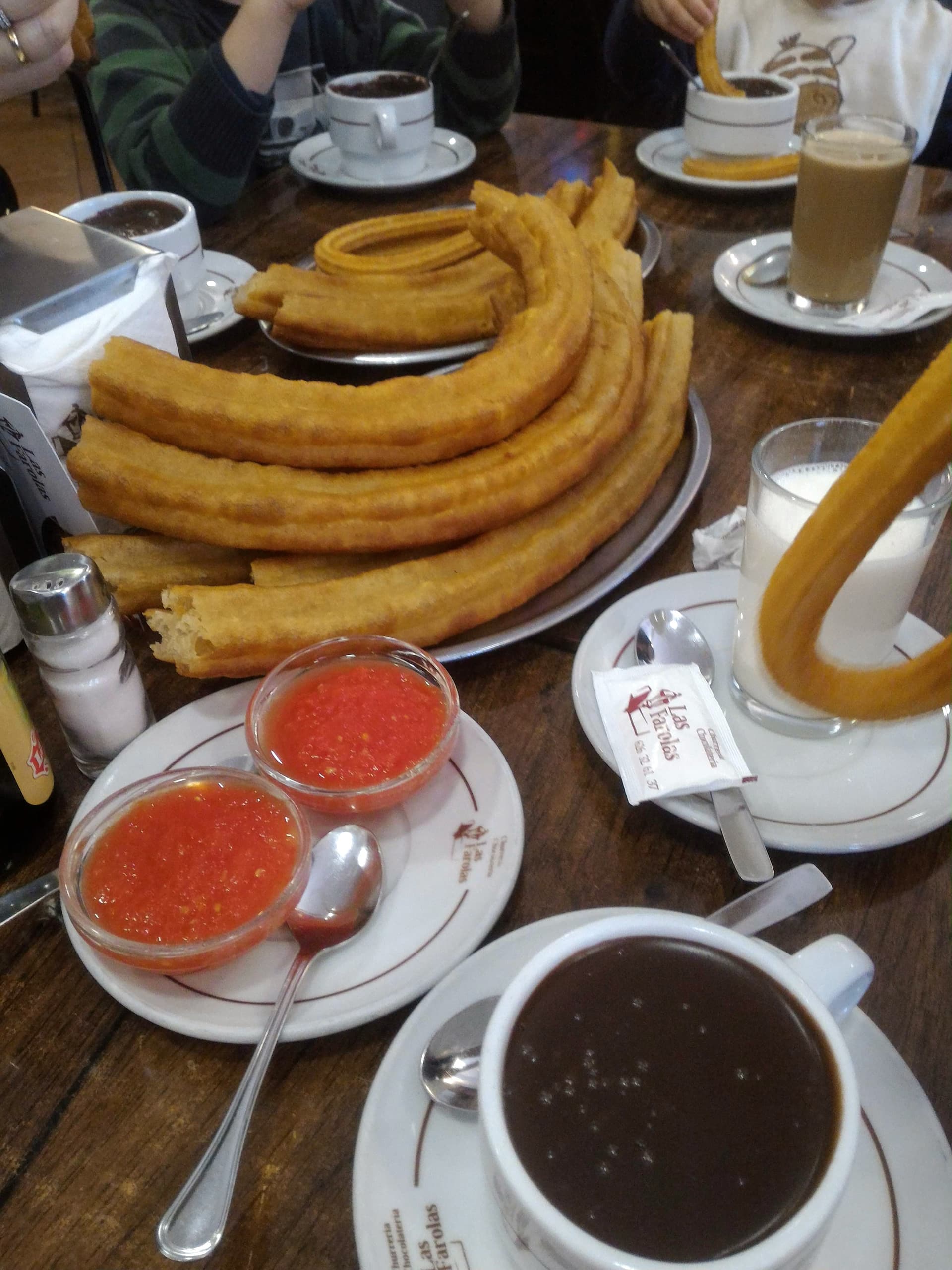
If you ever go to Spain (Madrid is best) you should have porras for breakfast. They are like 油條, but well made. Also they are freshly made, we will never serve you something made hours (days?) ago
Maybe you should post the recipe(s) you’re using. It’s hard to know what you’re doing wrong, but you seem to have tried a few different things, and if even pre-made mixes aren’t working for you…
I’ve never tried making youtiao, but I do make other bread-y stuff fairly often, and if (i) the oil is hot enough, (ii) you’re using enough baking powder, and (iii) the consistency is broadly suitable for trapping the gas, it’s hard to see why they wouldn’t expand. Usually the reaction is pretty immediate.
You are using baking powder rather than baking soda, right?
I don’t think yeast will produce the result you want. No idea whether they usually use it in youtiao for the initial fermentation, but it seems like the expansion comes primarily from the baking powder. I guess you could try it if you want, as long as you don’t squish the dough too much immediately prior to frying (to keep the small air bubbles inside).
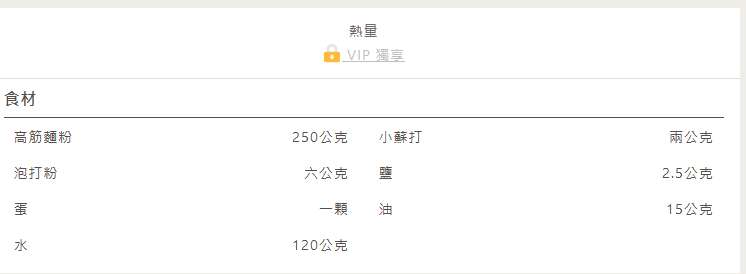
This is the recipe I tried to use, there are other recipe but it is little different than this.
The ingredient from top to bottom, then left to right, is:
Bread flour
baking powder
egg
water
baking soda
oil
I have been wasting flour, oil, egg, baking powder, etc. trying this over and over again and the result is very different.
Refrigerating the dough and then bringing it back out to warm up next day makes the dough more elastic and they can stretch more.
It seems there is a very fine line with the amount of dough in the oil. Too thin and it doesn’t expand much, too thick and the expansion gets choked. The instructions ask for a 3cm wide strip of though that.s 5mm thick. You are supposed to stretch it prior to frying (and this is what I see breakfast stores do).
However I find a dough oversaturated with egg work the best, however too much egg and the dough is too runny to be workable.
Baking powder seems to only provide minimal expansion.
I have no idea what yeast does.
It’s REALLY hard to not disturb the air bubble. You have to roll it flat anyways.
It seems that the recipe is telling you to use baking soda and you’re using baking powder - is that right?
I never really use baking soda, but google says that you should multiply by three if you want to use baking powder in place of baking soda. Have you been doing that?
Sorry, just ignore all that - I misread. I see the recipe uses both.
Yeah, that’s how it looked to me, and that’s why I said I doubt yeast will help much. The point is that baking powder doesn’t really produce much gas until it gets hot.
@hansioux’s recipe has baking soda (bicarb) too [ edit I see yours has it - whoops ] . I think it is bicarb that gives crumpets their bubbles, so maybe that will help? I wouldn’t bother with adding milk personally, it never would have been in the traditional recipe. But with the right baking powder it should definitely puff up. The thing with baking powder is I believe it acts instantly, so you need to incorporate it as late as you possibly can.
The key to bubbles is the amount of gluten and the escape of gasses trapped in these proteins. In most pastry, layers of butter and dough work as the water content from the butter evaporate and get trapped by the gluten. Although pastry dough is low in gluten, the layers of dough and butter work to compound the effect thus resulting in delicate pastry like layers.
In bread, the flour has a strong gluten structure. Kneading dough toughens the structure while yeast eat the sugars in the flour, releasing ethenol which flavors the dough and carbon dioxide which is trapped by strong gluten structures like a balloon. For yeasted dough, it’s important to let yeast rise for enough time to pre stretch the gluten. Usually this is a period of 24 hours.
In any case, all dough relies of gluten to rise. If you use milk as the leavener, you will get smaller bubbles since less gas escapes. Yeast produces the greatest bubbles.
Be careful though, because overworking dough (too much kneading) can overstretch the gluten, tearing it and resulting in flat dough as well.
To sum up, I think you’re using too much flour and not enough leavener. This results in bread like texture. Try making a thinner pancake like dough, putting that into a pipping bag and squeezing that in long strips into preheated oil (when frying, oil temperature is really important). If the dough is too wet, add a bit more flour until you get the desired consistency. It’s always better to have too wet dough than not wet enough, since it’s very difficult to properly incorporate more wet into a dough
Stretchy, as in easy to stretch, or springy, and goes back to what it was when you pull it? If it springs back more than you want, more hydration, or a longer rest helps…and vice versa - if it stretches too easily, less hydration and / or working it less might help…
When working with doughs, you can usually deal with something a little too wet by folding it a couple times. As long as you have a workable dough, it seems like you can hardly ever overhydrate or.let it rest too long - it just generally seems to improve (you can, but seriously,.it’s difficult to).