So I just learned that aside from the fact that they are so expensive, there is another drawback:
If the controller board for whatever reason malfunctions, it’s a 16,000nt replacement cost assuming it’s even available at all (meaning the unit isn’t out of production). Since inverter AC uses fancier electronics to convert the electricity into 3 phase, it uses a computer to do so. Unfortunately that computer is also designed and programmed specifically for that model of AC. So your only choice for a control board replacement is either buy a used unit that has a functioning controller that is the same model of your AC, or replace the whole thing as you can get them brand new for about 20-30,000nt including installation. A friend found that out when his inverter AC had busted controller…
Controller for normal AC is only about 800nt… because they are nothing more than a relay, temp sensor, etc. whereas for inverter AC they need those fancy electronics to vary the cooling load.
You can try running an inverter compressor using a VFD and using a standard controller to start them, however this would involve a lot of hacking as I would have no idea where the controller power input is, and if the VFD for that particular model is sealed inside the compressor shell. You’d then turn the AC into a standard AC.
In short, inverter AC is not only more expensive, they are more failure prone. If you size a standard AC properly for the cooling load you would not see much energy saving compared to inverter. Compressors rarely go bad anyways…
But usually those really big industrial units are rarely inverter. Mainly because big inverters costs a LOT, and if you are installing big AC units for the entire building, the sizing is determined by a HVAC engineer to match the expected cooling loads of that building, so it is almost pointless to use inverters for those. Then there’s repair and upkeep. If the inverter controller fails then it could be a major repair, while normal AC is fairly easily repaired by a HVAC guy.
If your office has one of those mini split unit, then it could have it. But you wouldn’t know anyways as inverter AC has no bearing on how cold it is. It might make a difference in terms of electrical consumption but that’s assuming the AC is grossly oversized for your cooling load. I personally think it’s complete hogwash given how much they cost and people have reported that they still use the same amount of electricity.
I just had to pay for this on my home’s AC unit. they replaced the controller board (PC) and a power board all for 10,000. This is the biggest unit we have in the house that cools the kitchen, dining room and living room. I thought the price was fine. The brand is Hitachi btw.
Yea, except the AC itself is about 30-40k brand new including installation. You could have gotten a fixed frequency (normal) AC unit of that size for probably 20k or less brand new… and if the controller board goes dead you can get a new one for about 800nt. And unlike inverter boards, which contains computers, controller board for normal AC don’t die because of a power surge.
Again, if the particular model is out of production then you are SOL, you’d be looking at full replacement even though the compressor is still good.
This is true, but aren’t there significant power savings from using inverters? I don’t think you’ll be able to buy direct AC later on due to regulations, no?
yea I have no idea how that works but it’s BS regulation if it’s there. Seriously, direct AC works if they are sized properly. Inverter AC is better if your cooling demand is variable, like for example in a lecture hall between empty and crowded. But even an inverter won’t save you energy (if anything it will increase it) if your AC is grossly oversized for the room.
But consider the carbon footprint of buying new AC units every now and then not to mention risk of freon leakage during installation…
That’s great. Anything they can fix without a remove and replace is a good thing in my opinion. It’s rubbish that is made to fail and not worth opening up to repair that I am against.
There have been fixed AC units that have been in service for several decades. If they are good, why replace them? I know there’s the whole argument about energy savings… but if there’s no need to replace, then don’t replace it.
Especially newer units with fancy electronics are designed to fail.
I ran an old energy hog here, I didn’t replace it for the reason you mentioned, can’t bring myself to throw away something that works. But it has recently bitten the dust.
Honestly even if the compressor bit the dust it can be repaired, if you open the unit up and redo the wire coils… whether that’s worth it to you or not is another story but the materials can still be recycled. I mean 9 times out of 10 when something fails it’s a 50 cent component that is easily replaced. But on a lot of newer stuff with fancy electronics it’s more complicated than that because they require parts that are often out of production by the time they fail, and at that time your only option is replace.
What they need to do is produce standardized inverter electronic/control circuits that works for all units of a certain tonnage.
It continues to run with no cool air. My guess was the coolant has dried up from a leak. I heard that trying to replace the coolant is difficult and dangerous, so I just gave up.
It cost me 1000NT to have mine replaced and he gave it a service while he was doing it, he said it may leek out again but it lasted over a year till I moved out.
Right, I think the proper way to fix these leaks is using a tracer to find it, which becomes quite expensive. Sounds like your guy just topped it up and hoped for the best. Don’t even know if they bother to trace leaks with domestic units.
Yes but he told me beforehand this is what would happen and asked if I wanted to try or not. he topped it up a little first from his gas bottle and put soapy water all over it, he didn’t see any bubbles so just went for it. at a grand it was worth the punt.
I don’t know but perhaps there was a leak that stopped, or in the initial install there was not enough charge to begin with. I mean if there is any leak at all it would become nonfunctional within a week or so, even if it’s a slow leak. The AC I have has its evaporator coil ice up if it runs for too long and according to the AC guy, the charge is slightly low. But he determined that by measuring current draw on the compressor (which I heard is not the most reliable way to tell). However it seems to function very well now, hasn’t like gone bad or anything.
You should know though that freon charge has a specific amount, too little or too much will make the AC nonfunctional. Keep this in mind if you ever decide to charge them yourself… I heard on the better meters they have a sight glass, and you would watch for bubbles in the liquid freon. If it’s bubbling it means it’s undercharged. But I read the PROPER way to determine this is to read the pressure on both the high and low side, AND correspond this with the temperature of the tubing on both side, and this would somehow get you the supercooling, and there’s a specific value you are trying to reach. Somehow I don’t think the average HVAC person here is that sophisticated.
I think HVAC guys here get a ton of work… I mean it’s hot here. I’d do it if I wasn’t so heat adverse…
Charging freon isn’t really dangerous but the gases can either be flammable (some freon is basically propane) and/or ozone depleting, meaning it isn’t particularly toxic (apart from it displacing oxygen) but it is against the law to release the stuff. Not to mention you must charge them just right. Too much or too little is bad. On the condenser unit it will tell you how much freon it’s supposed to have as well as the type of freon it uses.
But what do you suppose happened in Shaun’s case above then? It was topped up and then it worked, can’t really be due to anything else but a leak can it?
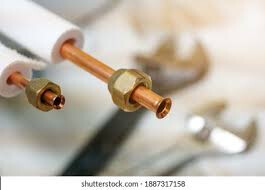
No clue… maybe there was a micro leak and then somehow it got plugged… but you know these AC lines are connected with connectors. They first flare the copper pipe then a connector is screwed on. It’s possible it leaked from the connector. That is usually the likeliest place for leaks to happen.
He did check and tighten everything up then pressurise it a bit first. I think if there was an obvious leak he would have gone down the fixing route.
I don’t know how much a fix would have cost, but I’m sure it wouldn’t be too expensive as you can get reconditioned units for a few grand.
Get someone to come and have a look, there are AC repair shops all over, almost as many as scooter shops.