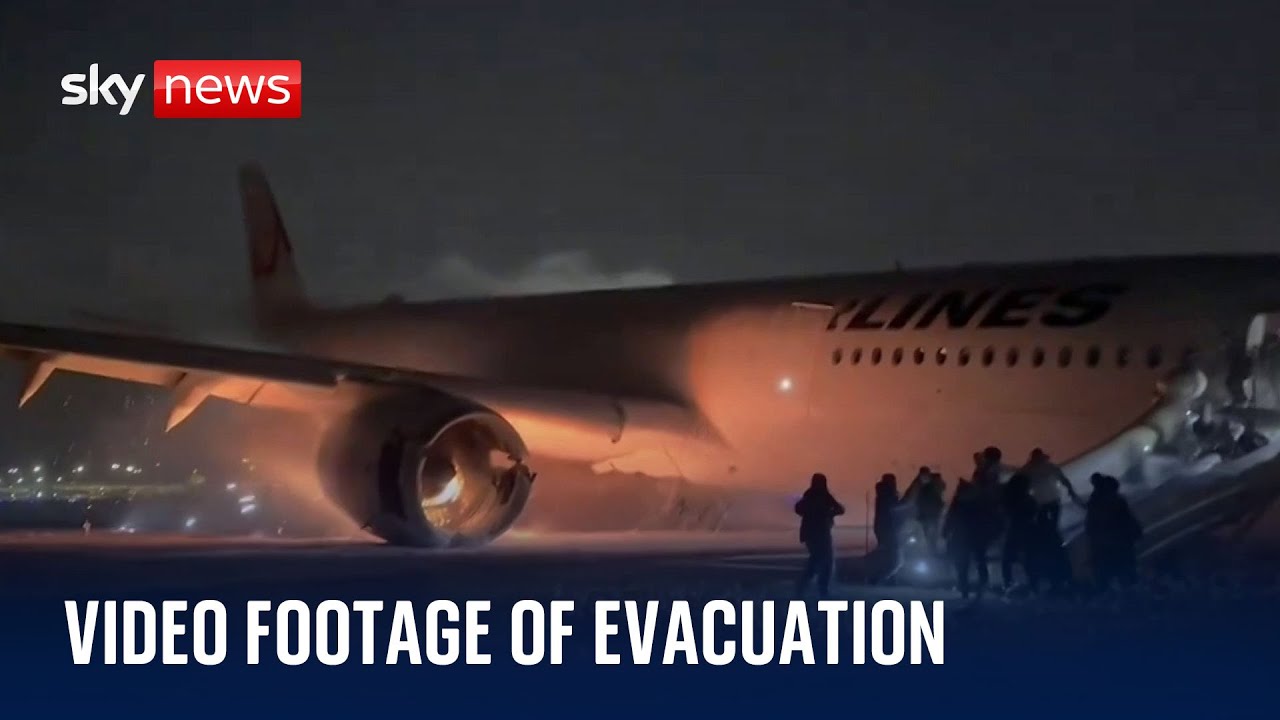
JAL plane bursts into flames at Haneda Airport (flight 516)

it’s why i have such a hard time with people who are scared of flying. i just can’t rationalize it at all lol. I know the insane things pilots can recover a flight from, and I know that if it’s to be your last moments, most of the time it’ll be a quick trip into the ground during which may or may not pass out. idk.

planes cool

Well, most phobias are not necessarily rational. I love to fly, but I am scared of heights. You could put a 3 ft wide beam on the floor and I will walk across it. Place that beam across the Grand Canyon, and it ain’t gonna happen.

I think it is fortunate that the majority of the people on the aircraft were Japanese, and simply followed the instructions. In many other places, you would have a load of numpties trying to get their hand luggage out of the overhead lockers.

apparently it is said to be the coast guard plane mis reading ATC instructions to hold short but interpreted it as cleared to take off. So he was on the runway possibly beginning take off roll when the A350 landed on him. A350 was able to pretty much complete landing roll out when it went onto the grass and people were safely evacuated due to good action by cabin crew. The Coast Guard plane was instantly aflame and its amazing the captain was able to get out but he is badly burned and frankly if one is badly burned there is only a small chance of recovery.

You’re far more likely to die on the way to the airport than a plane crash, seriously.

Given traffic in Taiwan, doubly so.

It’s obvious someone at the tower fucked up.

They never are. Fear of nuclear power is one, and that’s really cost us dearly. In all the years of nuclear power usage since like the 50s, only people to ever die from a nuclear incident was Chernobyl, and the death toll isn’t even that bad considering. There are a few other nuclear incidents but all in all, very few died from nuclear power.

Try that with any other power source, let’s not count all the lung cancer from breathing fumes from coal burning plants, and miners dying from black lung disease, or people dying from extracting oil. Not even wind power is that safe, and definitely a lot more died from dam failure than nuclear meltdowns.

or with all the speed at which instructions are barked on the intercom, perhaps the coast guard dash 8 mis heard instructions.

at any rate two planes on the same runway at the same time is not a good thing

Pilot to tower communications follow certain protocols, the weird gibberish they say isn’t just for shits and giggles, it’s to prevent misunderstanding, especially when instructions are given quickly with not a lot of time to follow them.

I see on Taiwanese media that the police in Japan is investigating this as negligent manslaughter.

ATC may have fcuked up on this one

Report seem to say that the coastguard captain claims he had permission to take off, ATC says he was told to hold short. Given that no-one in ATC has come out bowing and apologizing I’m leaning towards the coast guard was in the wrong. Presumably the tapes have already been pulled, be surprised if there were no plane spotters who were listening live. Perhaps they’re waiting to see how things go with the captain before releasing initial results?

If NHK’s sources can be trusted, you may be onto something. They are apparently reporting that the JAL flight was cleared to land—and that the JCG Dash 8 should not have been there.

Guy

A cat died though…

You think that coast guard plane was in such a hurry that they forgot to follow instructions, or got complacent? I think a lot of professionals get this way and then something goes really wrong.

Bloomberg has an update (paywalled, so presented here below the line).

Japan Crash Probe Points to Taxiing Plane Out of Position

By Nicholas Takahashi, Danny Lee, and Siddharth Vikram Philip

January 3, 2024 at 11:13 AM UTC; updated on January 3, 2024 at 1:39 PM UTC

Summary

A Japanese coast guard plane didn’t have permission to take off and was asked to hold short of the runway before colliding with a larger Japan Airlines Co. passenger jet, based on a transcript of Tuesday’s incident at Tokyo’s Haneda Airport.

The readout of communications just prior to the crash was released Wednesday by Japanese officials in Tokyo. It appears to contradict the coast guard captain, who reportedly said he had “obtained permission to take off.”

Transcript from Japan’s Ministry of Land, Infrastructure, Transport and TourismSource: Bloomberg

The De Havilland Canada Dash 8 acknowledged instructions to taxi to holding point C5 at 5:45 p.m., eight seconds after receiving the request from air traffic controllers, according to the transcript.

“Taxi to holding point C5 JA722A No. 1, Thank you,” the flight crew responded, according to the transcript. It hasn’t been confirmed yet whether the captain or his co-pilot, who died in the crash, was speaking with the tower, officials said at a news conference.

Adding to the intrigue is the fact that the so-called stop-bar lights on the intersections onto the runway, which provide a visual indication to pilots whether a runway is clear or not, have been out of service since Dec. 27. The lights on all intersections onto the runway in question are out, according to a so-called Notice to Air Missions, or NOTAM, that runs through Feb. 21

Given that the unserviceable lights had been widely circulated to pilots as part of the NOTAM process, the coast-guard pilots should be have been even more cautious about entering an active runway, according to several pilots, who asked not to be identified discussing procedures.

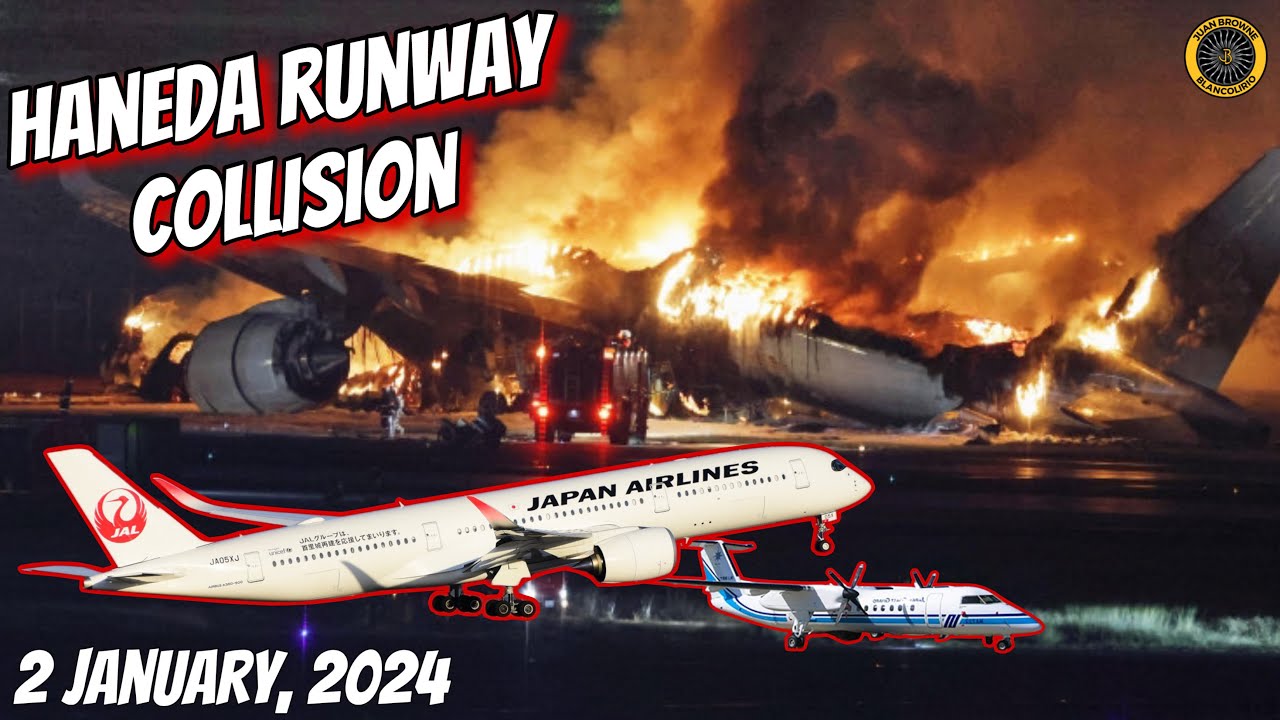
At about 5:47 p.m., JAL Flight 516 touched down, striking the much smaller propeller airplane, which erupted in a ball of flames on the runway. Five of the six people aboard the coast guard plane were killed. The captain and all 379 aboard the airline’s Airbus SE A350 widebody managed to survive.

The transcript suggests the coast guard plane didn’t have permission to be on the runway prior to the crash, while the JAL passenger jet was cleared to land, as Bloomberg reported earlier.

At a news conference on Wednesday, coast guard officials avoided saying whether the captain could have misunderstood instructions from the tower, saying they would leave findings to the investigation under way. They said there could have been other interactions besides the recorded exchanges with the control tower.

Read More: JAL Flight 516 Was Cleared to Land Before Fiery Tokyo Crash

While ground collisions are rare, they can be as deadly as ones that occur in the air. In the US, airlines have had a number of close calls in the aftermath of the Covid-19 pandemic, as a surge in travel coincides with a shortage of air traffic controllers. The Federal Aviation Administration last year ordered more training for controllers after a spike in near-collisions.

Previous fatal crashes that occurred on the ground include the 1991 collision between a US Air 737 jet and a Skywest Airlines turboprop that killed 35 people, and the deadliest disaster in aviation history: In 1977, two Boeing 747 jumbo jets collided in Tenerife, killing 583 people with just 61 survivors.

The transcript of the ATC interactions with multiple aircraft was submitted to investigators, Tetsuo Saito, minister of land, infrastructure, transport and tourism said at a press briefing.

Investigators were seen around the crash sites at Runway C at Tokyo Haneda Airport on Wednesday. Footage showed the Airbus A350 as a burnt out carcass, with only the wings still somewhat intact.

The coast-guard plane was destroyed beyond recognition, with investigators sifting through the mangled wreckage. The Dash 8 propeller plane was being used by the coast guard to delivery emergency aid to victims of the Jan. 1 quake in northwestern Japan.

(Updates with details of runway lights being unservicable in fifth, sixth paragraphs.)
Guy

There’s quite a few youtube aviation channels playing and analyzing the recording of the ATC and aircraft interactions, perhaps it’s a question of not been used to the style of communication but based on the few I listened to it is very difficult to understand that ATC is asking to hold short at C.

Garbled communications with ATC, plus the fact that this was a strange unusual circumstance, where a plane was holding short, about to get into an active runway, but not from the beginning of the runway, but partially down from the beginning of the runway this is not normal normally a plane would be holding short at the beginning of the runway, and this may have contributed to the accident in the sense that the plane about to takeoff was not facing in a direction where they could even see whether any planes were coming down or not if they were on a regular runway where they were coming upon the runway in about to make a left-hand turn, they would possibly be able to see the landing lights of incoming aircraft, but the way they were facing, they were facing away from the incoming aircraft. Therefore, they were unable to see headlights, the landing lights of incoming aircraft. All these things contributed to the disaster as it unfolded in my opinion.

seems to be the case indeed

article more to the point version: https://edition.cnn.com/2024/01/03/asia/japan-plane-crash-transcript-intl/index.html

partial transcript: Japan plane crash: Full transcript of air traffic control moments before collision revealed | World News | Sky News