Really? Everyone over the age of 60 seems to be using 大陸 still in my experience. When I say 中國, I feel like I disrupt their entire sense of existence. Some people who are trying really hard to not be KMT but seem to have a difficult time actually breaking up with them will “correct” themselves, but when they’re not paying attention, it’s 大陸 all the way.
On the outlying islands, it’s “本島”
But doesn’t 本 signify that you, the speaker, are in it? So 本島 technically would refer to Penghu, if the speaker is in Penghu.
Pretty common way to address waitresses pre-2000. I heard it frequently in rural parts of Yunnan in the 2000s. China is a big place though.
Here’s a guide to Chinese/Taiwanese usages probably for use by tour guides (pdf download).
Ah ok, when I was there in the 2010’s the default term there was 服務員 but you could say other words like 美女 師傅 先生 etc.
I wonder where 大陸 originated, wouldn’t surprise me if it was KMT. I know the government do use it in China too though: I have a vague memory of it featuring in the budget speeches as 中國大陸
I remember a poster complaining before about the nefarious CCP referring to all Taiwanese aboriginals as 高山族 but of course that was the KMT term, not the CCP.
Nice list, however I would propose that the split there into a venn diagram of two non overlapping sets is not valid. Most of those terms are in the middle. Look at the example of 國語 it’s the most frequent word for mandarin in Taiwan, however in my example of Guangdong people say 國語 about as much as they say普通話. So presenting it as being the Taiwan term for Mandarin is correct, just it is also the Chinese term for mandarin, so like 
Edit: The list has some funky stuff going on too. For example 同志 that means ‘comrade’ and ‘gay’ in China. I think they mixed it up with 同事 for coworker?
Interesting list though, there is a lot to explore there!
In this context, it means “comrade”. There is no direct Taiwan equivalent for that word, hence the translation is given as “一般稱呼” meaning “a general way of addressing someone” (so, just call people by a normal name).
That is not correct. To this day, KMT party officials use the word tongzhi meaning comrade at party conclaves.
Surely 同事 fills the gap there, unless you happen to be a LGBT parade or a communist / KMT party meeting. And they are bringing it in as their sixth word, after Hello, spouse, and girlfriend/boyfriend. It’s like they are imagining the conversation as ‘Hello Comrade’ which just supports my impression that this construction of lexical splitting includes politicisation of language.
What I mean is the term “comrade” as used in China doesn’t have a direct translation in Taiwan (since, going by your description, the word is used differently here). Hence the translation is just given as “a general way of addressing someone”.
Sure, but they are defining the word 同志, so 同事 isn’t relevant here.
And people generally address each other as 同志 in China?
I feel a venn diagram coming on 
Yes. It is one of the many general ways of addressing someone who doesn’t have a more appropriate title in relation to you.
Ah right, I guess I learned a new one then. I don’t ever remember hearing that one, I’ll include it in my bag of tricks. Could be good for confusing people who ride bicycles on the footpath. I could get a little red whistle perhaps to reinforce the effect.
It’s useful for addressing strangers in the street where “sir/ma’am” is a bit too formal in most cases, and “my friend” is a bit too presumptuous. It’s mostly used by older people, to convey equality.
Ok, I am working on an analogous list here:
| England | Ireland |
|---|---|
| Hello | How’s it going |
| Goodnight | All right, I’m off |
| Spouse | The Missus |
| Girlfriend | Lady |
| Boyfriend | Fella |
| Gay communist lover | Just call them by their name |
Dalu doesn’t mean mainland, Dalu means continent. In every other context when talking about mainland from the perspective of an island that’s a part of a larger country, the word bentu (本土) would be used. Like when talking about Hawaii’s, the term 美國本土 is used by the MFA.
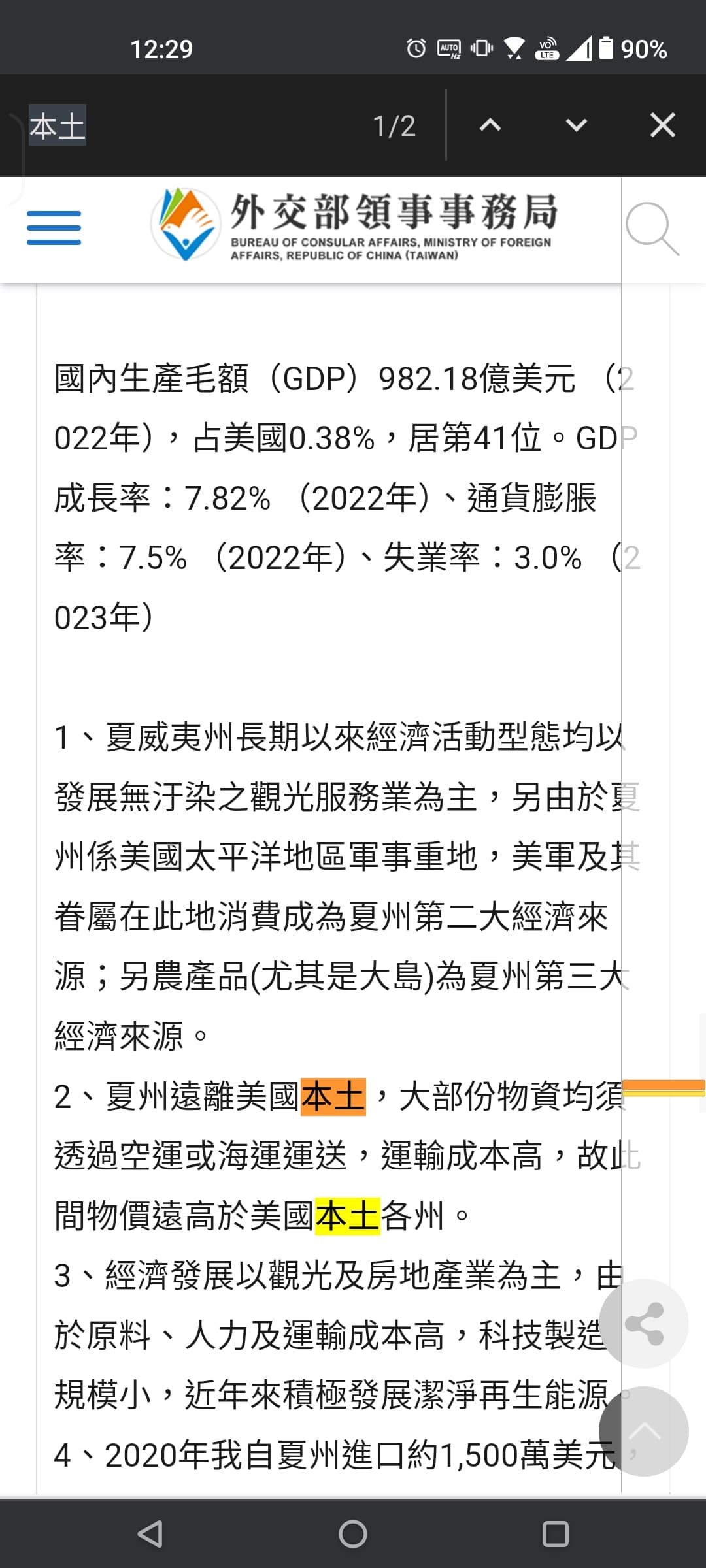
Dalu would instead be used for example in the perspective of Britain to continental Europe. Since there is no continent called China, the term Zhingguo dalu, literally China continent, is completely nonsensical.
To use Dalu to refer to China is a purely political construct, and the people of Taiwan were forced to use it during the Chiang family dictatorships. China only started using it when they realized it was a great brainwashing tool.
Ah ok, so “Mainland China” should really be translated as “Continental China”.
And Taiwan can’t be 大陸 because you wouldn’t say “Continental Taiwan”. Got it.
It would be fine if the usage of continental xxx is a thing in Mandarin. It isn’t though. Or it is only created for the sole purpose of referring to China as China.
Just as I suspected, its an ROC term, ha!
So if 大陸 means continent, not mainland, what is the correct Chinese term for translating the English word ‘mainland’?