It’s lasted over a week. Just weighed myself at the gym. 76.5kgs, same as yesterday.
You’re right that there are a lot of things Covid doesn’t do, though
It’s lasted over a week. Just weighed myself at the gym. 76.5kgs, same as yesterday.
You’re right that there are a lot of things Covid doesn’t do, though
Hopefully it doesn’t come back, but everyone in my family lost 2-3kg that returned within 3 weeks.
I’m definitely gaining some weight now because I’m inactive due to my retinal detachment. I’m actually off my quarantine today and waiting to see the doc now. I hope I can have surgery this afternoon and get this nightmare over with.
I’ll need to get back into shape once I recover, but I won’t go on calorie deficit with an injury.
That would be Biggissimus Dickus, IIRC.
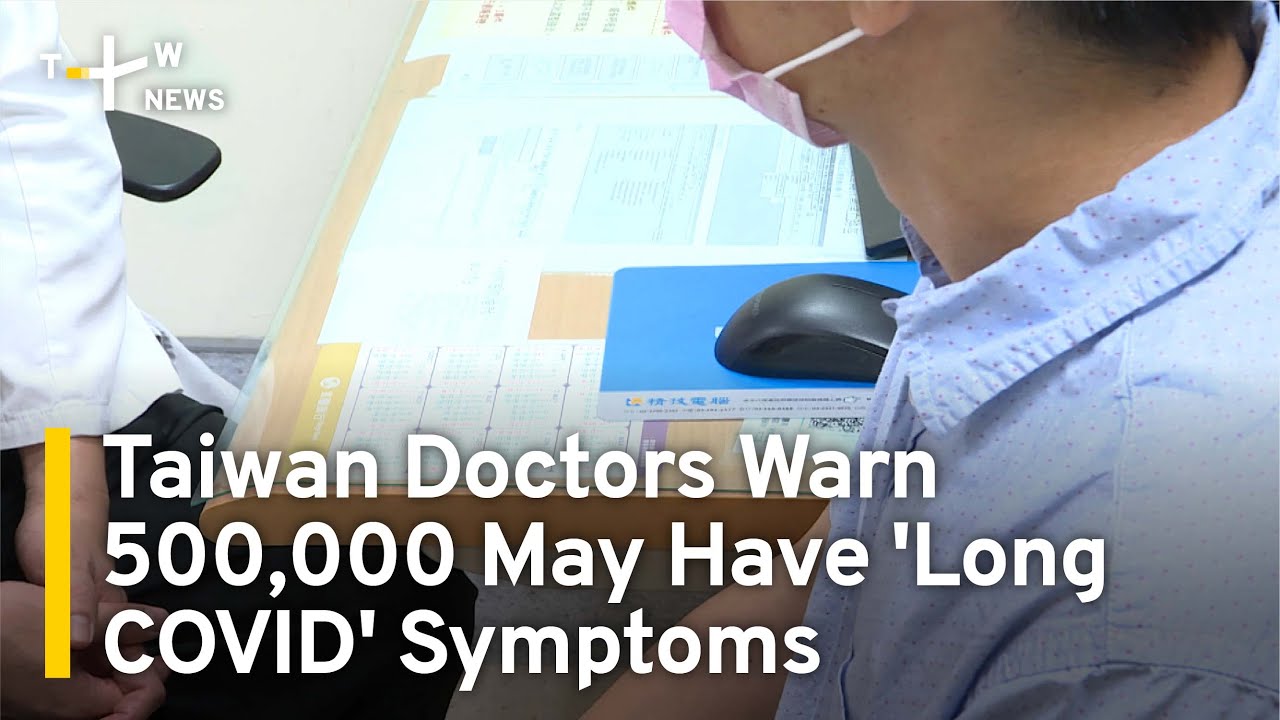
Doctors in Taiwan say up to half a million people – that’s 1 in 10 of confirmed cases in the country – could have symptoms of ‘long COVID’, such as coughing, shortness of breath, and heart palpitations.
A serious economic impact in addition to the impact on the individuals who have Long Covid.
This June, the Census Bureau finally added four questions about long Covid to its Household Pulse Survey (HPS), giving researchers a better understanding of the condition’s prevalence. This report uses the new data to assess the labor market impact and economic burden of long Covid, and finds that:
- Around 16 million working-age Americans (those aged 18 to 65) have long Covid today.
- Of those, 2 to 4 million are out of work due to long Covid.
- The annual cost of those lost wages alone is around $170 billion a year (and potentially as high as $230 billion).
And that’s just in the US.
In January 2022, Brookings Metro published a report that assessed the impact of long Covid on the labor market. Data on the condition’s prevalence was limited, so the report used various studies to make a conservative estimate: 1.6 million full-time equivalent workers could be out of work due to long Covid. With 10.6 million unfilled jobs at the time, long Covid potentially accounted for 15% of the labor shortage.
So there’s no data, just some wild guess that a thinktank pulled out of their ass. It’s supposedly a rampant problem, but nobody has bothered to actually come up with some diagnostic criteria and find out how prevalent it is. Oh…kay.
Now the Census bureau has asked people to self-diagnose whether they have “long COVID”. That sound like a super reliable method.
So there’s still no US data.
And curiously, no other country on the planet has managed to identify what “long COVID” is, what causes it, or how many people have it. Even more curiously, no other country seems to have anything close to the scale of the US problem with … whatever-it-is.
More research is required, as they say.
I sure hope they can at least come up with some semi-believable excuses for this. That’s freaking Orwellian. I mean, only a sci-fi writer could come up with shade like this.
I’m speechless.
Someone please provide some scientific reasoning why this is sound before my head explodes.
I tend to believe long Covid is just laziness the vast majority of the time. A good excuse to get on the dole.
Frankly, I’d like to see their bank statements, particularly any accounts they might have in Switzerland. I read somewhere that Taiwan paid about US$25/dose, on the average, for its vaccines, which seems a bit steep to me; and like most countries has secured far more than the country could conceivably need. So one does rather wonder what handshakes were exchanged and whether that bundle of taxpayer’s cash included 10% for the big guy.
I’m sure there are some genuine cases of common-or-garden postviral syndrome. I know COVID can drag on for a few days or weeks after viral clearance. But there could be any number of reasons why people feel like shit (or are pretending that they do). The problem is that they’ve already slapped this label “long COVID” on it - it’s just taken as read that COVID must be the cause.
“People are now basically living life, saying, ‘Oh, Covid’s just a cold.’ But it’s not. We still don’t know enough about it, and we are still getting just as many referrals for patients who have gotten Covid during Omicron as before,” said Nikki Gentile, an assistant professor in family medicine at the University of Washington School of Medicine who cares for patients at the medical school’s long Covid clinic. “I wish there was more talk about it on the federal level.”
Physicians who see long Covid patients say the condition underscores the fragility of the American health care system, including how difficult it is for people to access care and how hard it is for doctors to learn about emerging conditions.
Not sure why physicians don’t just come to Forumosa health threads, some posters have all the solutions to any Covid problems. 
I’m surprised those doctors haven’t been fired already for contradicting official advice.
This isn’t news, btw. The FLCCC has a whole bunch of information on both long COVID and post-vax syndrome, which they’ve been working on for at least a year now.
Yup. There’s a reason the European Medicines Agency warned that repeat COVID-19 booster doses could adversely affect the immune response.
Also, as a general reminder on the business of Long Covid  , the below-mentioned article was previously referenced in this thread, but it is still eye-opening and relevant. Worth a read for those who would like to hear the actual origin story of ‘Long Covid’ :
And, apparently, they still can’t even define so-called “long Covid” yet, either 
And, it has over 200 symptoms? Wow. Can’t wait until they ‘settle’ that science. Likely need to conduct some more studies, tests, research, spend some taxpayers’ money to sort it out.
The only person I know who complains about long Covid is also on medication for anxiety disorder.
might throw in the hypochondriacs into that pile
The question is are we doing more harm than good. It’s definitely a tricky question.
As a complete amateur I’m of the view that post viral fatigue syndrome is real in some cases. I don’t see why Covid would be any different. Telling potentially vulnerable people that they are likely to have it is unlikely to help them.
It’s a tricky balance that has been made considerably trickier with the fear mongering.
The thing is, a certain subsection of the population have always suffered long after-effects from all sorts of illnesses and diseases. This is nothing new.
For example, this study found that people who have fallen ill with flu can suffer long-term symptoms in a similar way to long Covid.
That Oxford University research analyzed health records of people diagnosed with flu and Covid, mainly in the US.
The two groups - both with just over 100,000 patients - included people seeking healthcare for symptoms three to six months after infection.
These included problems such as anxiety, abnormal breathing, fatigue and headaches.
Akiko Iwasaki an immunologist at the Yale School of Medicine, said that while there’s no doubt long Covid is a real condition worthy of diagnosis and treatment, “this isn’t unique to Covid.” Covid-19 appears to be one of many infections, from Ebola to strep throat, that can give rise to stubbornly persistent symptoms in an unlucky subset of patients. “If Covid didn’t cause chronic symptoms to occur in some people,” PolyBio Research Foundation microbiologist Amy Proal told Vox, “it would be the only virus that didn’t do that.”
Doctors have noticed long-term illnesses after an infection since at least 1889. Said Megan Hosey, assistant professor at the Johns Hopkins Department of Physical Medicine and Rehabilitation: “It has always been [and] is the case that patients who get sick experience high levels of symptoms like those described by long-Covid patients,” she said. “We have just done a terrible job of acknowledging [and] treating them.”
Chronic symptoms, especially fatigue, have lingered after the typical recovery periods for viruses as varied as West Nile, Polio, Dengue, Zika, seasonal flu, and H1N1 as well as the new coronavirus’s cousins MERS and SARS-1. Run-of-the-mill strep throat can develop into rheumatic fever, which can cause fatigue, painful joints, and fluid buildup around the heart. Mononucleosis, caused by the Epstein-Barr virus can lay one out for weeks, with no appetite.
The phenomenon, sometimes called “post-viral syndrome,” has been documented for more than a century, as far back as the 1918 Spanish flu, when there were Spanish flu long-haulers — scores of people who survived the deadly virus but had long-term symptoms, including depression, sleeplessness, “loss of muscular energy,” and “nervous complications.”
Even “Covid dementia” isn’t really new: According to a recent historical review, early reports of the “common symptom of altered cognition” surfaced during the Russian flu pandemics of 1889 and 1892.
Yep, just like chickenpox can lead to shingles later in life. All illnesses have probabilities of having negative impacts later in life. My back surgery sure does. Sometimes I feel the broken foot I got when playing basketball in college a bit differently.
When does society stop worrying about “long” anything? [rhetorical]
There are not 30,000 people in Taiwan getting back surgeries every day.
If they did, I suspect we would be concerned about the impact.
Guy
We can talk about cancer patients who recover, traffic accident victims who recover, people with heart disease who recover, etc. What makes supposed long COVID people any worse off or better off than anyone else in the world with some problem that continues to afflict them?
Guess which one is easier to get and harder to avoid - “traffic accidents, cancer, heart disease” or COVID?
There’s your answer