Resources for learning/using Taiwanese/Taigi/Holo/Hoklo

There is a serious textbook out there called Southern Hokkien: An Introduction, by Bernhard Fuehrer and Yang Hsiu-fang. I’m not sure how easy it is to buy: there is a pdf (well, three pdfs, one for each volume) floating around online for free, presumably pirated, and its extremely extensive audio should be available too.

It says: We apply a descriptive approach and give priority to the fused dialect most frequently encountered in Taiwan. This dialect variant derives primarily from the Zhangzhou dialect but integrates some characteristics of the dialects associated with Amoy and Quanzhou.

That means it teaches the Zhangzhou-derived dialect preferentially, but identifies the Amoy and Quanzhou alternatives throughout.

It uses a version of POJ romanisation, which is how dialogues are transcribed. But it shows the relevant Chinese character when introducing new vocabulary (and an appendix renders the dialogues into Chinese characters, for reference only).

Grammar explanations generally compare/contrast modern Mandarin usage with Hokkien usage.

The book was a collaboration between the UK’s SOAS university and NTU. NTU has an online course (delivered in Mandarin) teaching the first half of the book here:
2 Likes

It’s a very good academic class, but sadly, like most English classes offered in Taiwan’s public education, I don’t think any of the students will gain fluency through taking this course.

It’s more geared for people who already speak Taigi and learn about the details of the language from the perspective of an other language…

Interesting to know. I’m moving to Taiwan shortly, for a final six months of classroom-based Mandarin study, but have started - and plan to continue - spending a few minutes each day repeatedly listening to and familiarising myself with the dialogues in the book. Six months of that, and I should be ready to start speaking and properly studying Taigi, if I feel like it.

1 Like

Any good apps to recommend? If I’m going to be here for a few years I should probably learn a bit of Taiwanese Hokkien.

You mean like a duolingo type learning app?

I think Glossika has something similar on Taigi.

I would like to see Pimsleur create a Taiwanese language module. Probably not profitable enough.

Thank you.

Free Taigi learning material: Learn How to Learn Taigi in 9 Days (狗公會曉學台語)

@greves Aiong’s Sushi Taigi IME still in BETA

Android:
https://play.google.com/store/apps/details?id=com.aiongtaigi.sushi

I think the main difference from PhahTaigi would be that PhahTaigi mostly defaults to the MOE’s recommended Hanji characters, while Aiong’s version would use Hanji commonly used during the Japanese era.

Link is not working.

I’ve seen reviews stating that the Hoklo on Glossika is unnatural (and that reviewer felt that the other languages were fine, so it’s not just someone with an axe to grind or something). YMMV.

1 Like

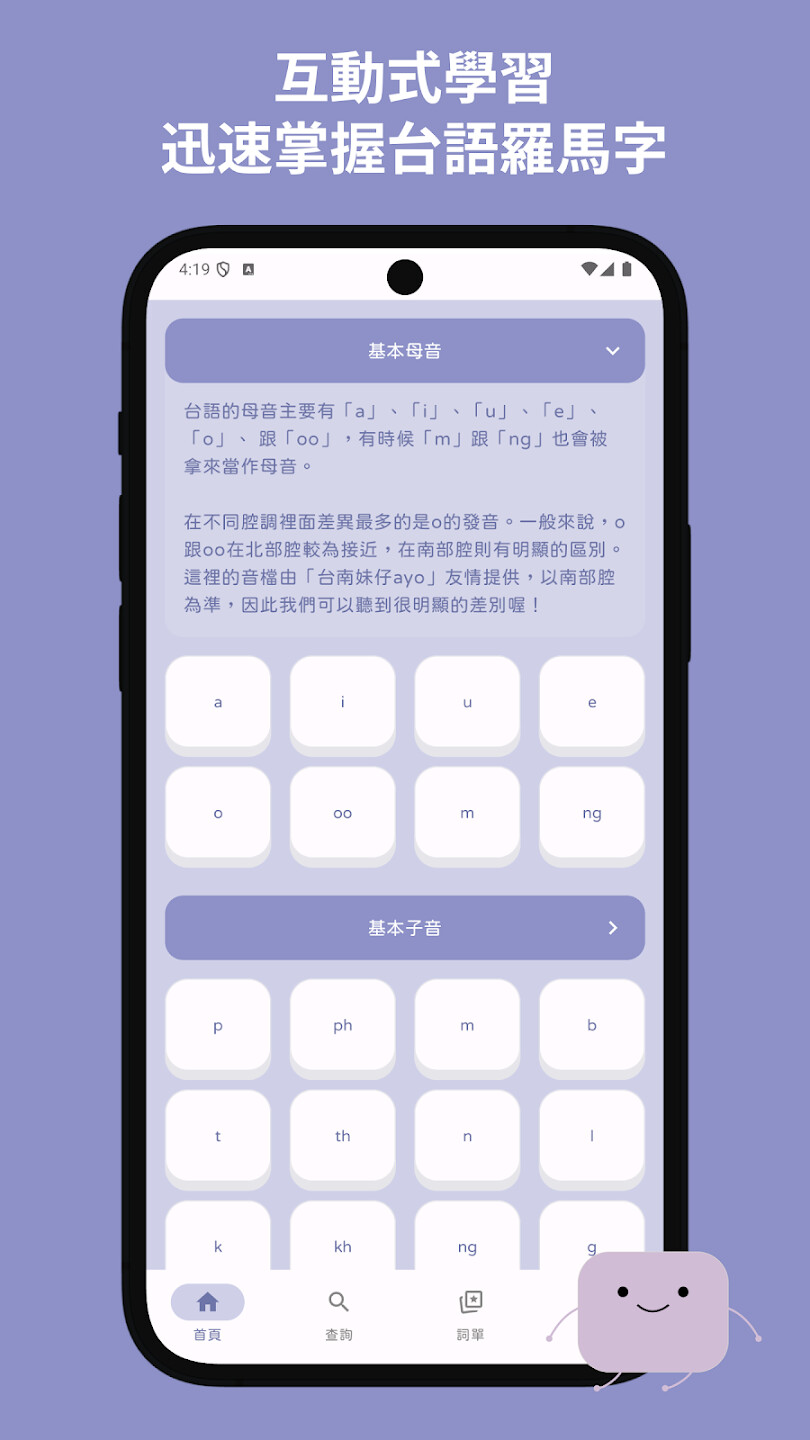
An amazing Taigi learning/dictionary app called Ōo-înn (芋圓)

Android

iOS

I let my kid play with it, and she clicked through all the sandhi examples, and was really into it.

1 Like

The MOE released a new version of Taigi IME for Windows, Mac, Android and iOS.

I don’t use Windows, iOS, or Mac, but Android version did 1 thing that I’ve always wanted to suggest to PhahTaigi, and 1 thing that absolutely surprised me.

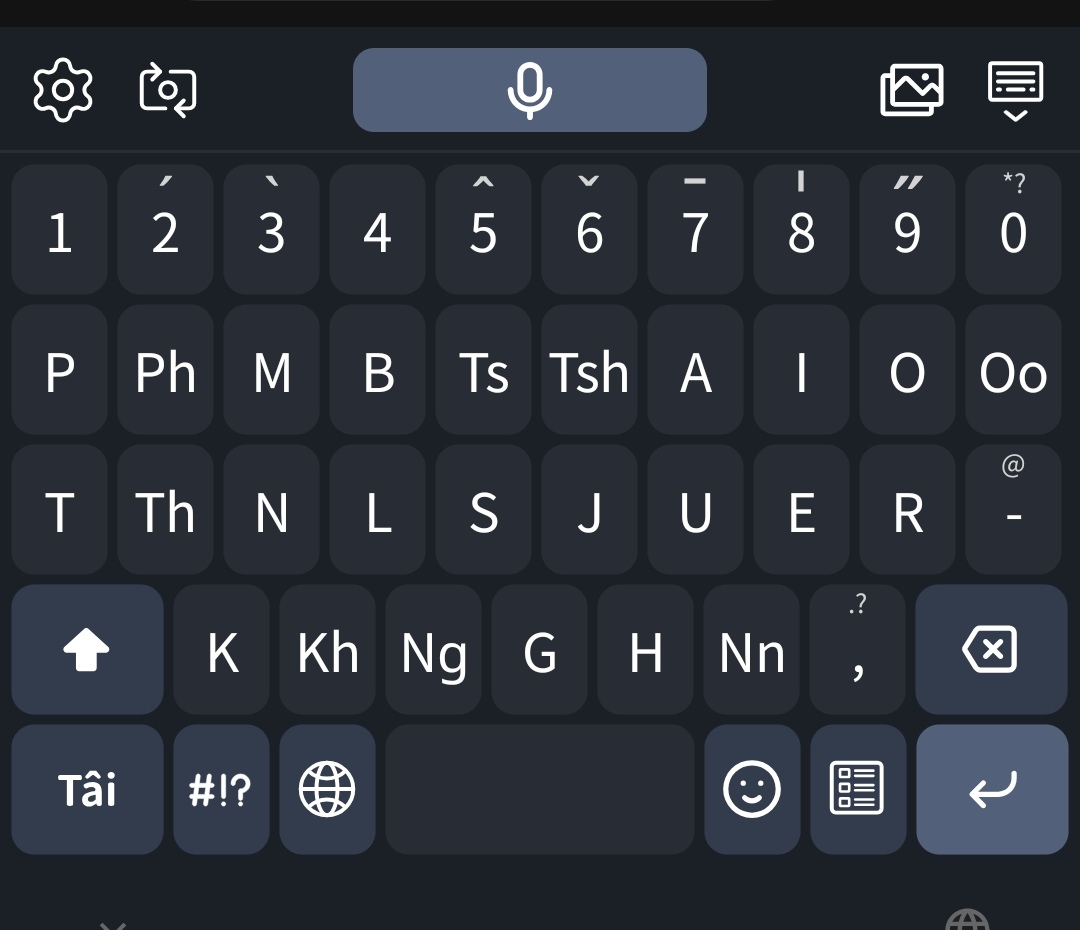
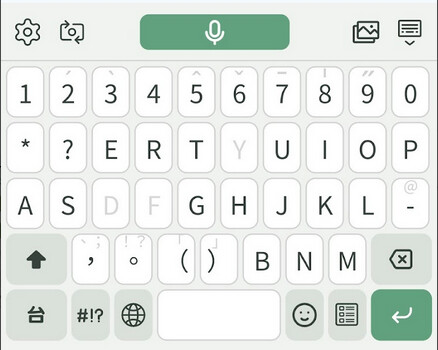
First, is modifying the keyboard so it only shows keys in Taigi on the qwerty keyboard. The MOE Taigi IME implemented that like this:

There is no need for qwydfzxcv when typing Taigi, so why show them on the keyboard?

I personally would have used some of them for tonal marks. For example, if you have zxcv and the space bar all representing tones, you can have the space bar for 1st and 4th tone, Z for 2nd, X for 3rd, C for 5th, and V for 8th. If you need a 9th tone for foreign words, then I guess you can throw D or F into the mix. Anyway, that’s not what they went with, but still way better than the standard qwerty layout.

They also have a second keyboard layout, where ts, tsh, oo, kh, ng, and nn are all given their own individual keys. I think that’s a bit overkill. Maybe just have one for tsh, that’d be good enough.

Now for the magical part… that microphone button at the top. You can speak Taigi, Mandarin, or even English to the darn thing, and it’s fast, responsive, and I haven’t seen it made an error once…

I know that’s common these days for Mandarin or English, but Taigi, Mandarin and English at the same time? That’s some voodoo magic right there.

2 Likes