I always enjoy my brief forays into sake here in Taipei, whether hot in winter or chilled in other times of the year. It’s always at restaurants and yes, usually with Japanese food.
I’d like to get one of those sake flasks and glasses sets, and found some on Shopee, but the next question is where to find decent sake and what to look for in stores and outlets.
I think I’ve tried both sweet and dry sake and seem to like what I’ve had so far, but are there are preferred brands or variations within known brands that anyone could recommend?
I know next to nothing about this, but I’ve been wondering about this sake sampler at Costco, on the basic principle of “Costco stuff won’t be great, but it’s almost always OK, and there’s a range to give me a better idea of what I like”. However, it sounds like you’re a step or two beyond my total beginner stage.
I’ve enjoyed sake for a long time, although not so much in Taiwan. Reason being is that it’s all packaged in japanese or chinese, so I have little clue at arms length if it is shochu, plum wine, or sake.
Also, every time I risk a look at the odd pop-up shop in a mall, I get stuck tasting X bottles of random stuff, until I’ve unintentionally haggled my way into a 2 for 1 deal.
I have this same Costco box set sitting in our cupboard, and I’m halfway through it. According to the general schedule of sake qualities, the swill was swillish, and it’s improved from there. The nicer bottles await my return, but for the point of your inquiry, it’s a safe way to study each variety without spending 100 US on something you have no benchmark for.
I can say unequivocally, if you encounter Ichishima sake, whatever variety, get it. you’ll be quite pleased.
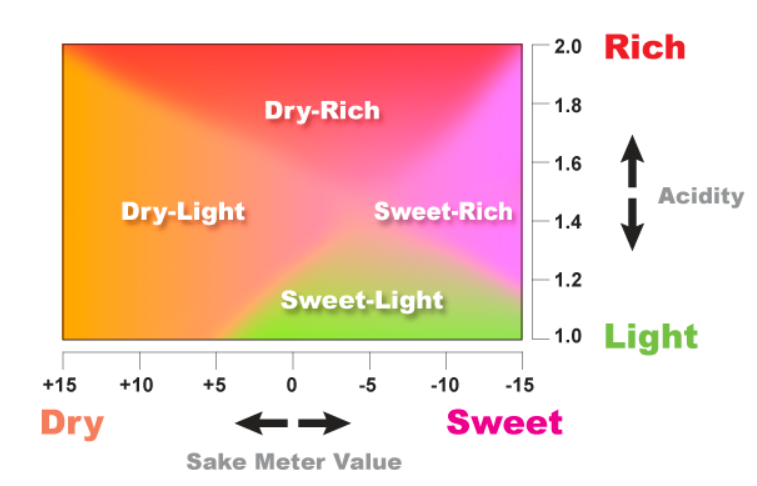
You can check the bottles for certain values, like the sake meter value, which gives you an idea of the sake’s taste. However, some breweries intentionally hide this information to keep it a surprise.
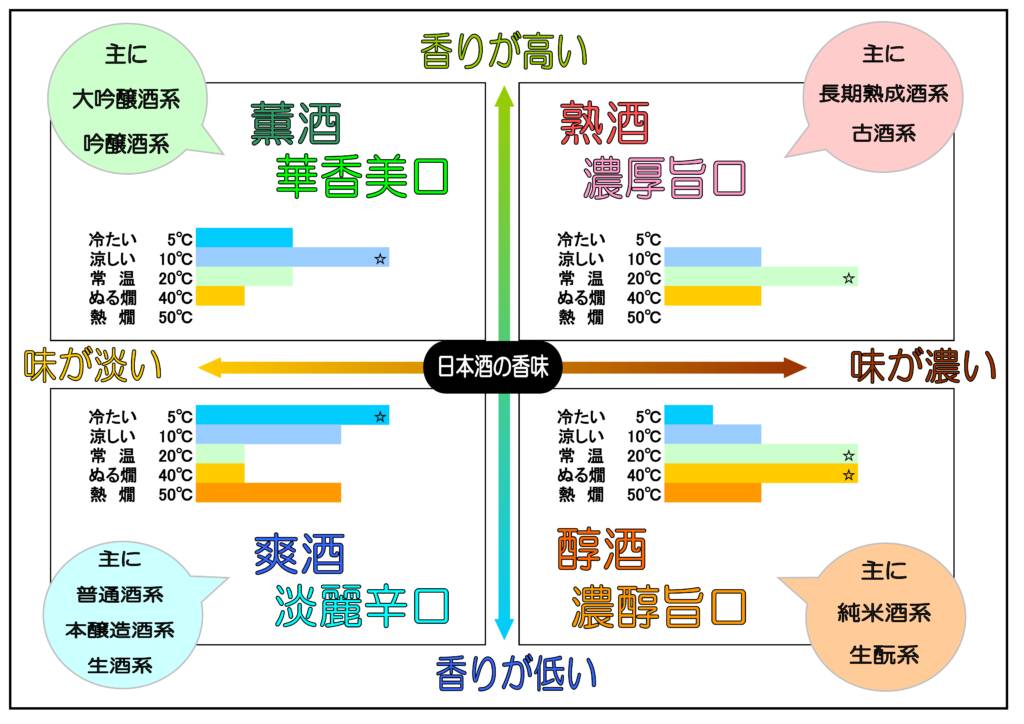
A yellow arrow pointing left indicates a clean, fresh flavor, while a brown arrow pointing right suggests a heavier, more traditional flavor.
A green arrow pointing up indicates a more fragrant sake, while a blue arrow pointing down means less aroma.
Expensive bottles often fall toward the upper left side, offering a clean, fresh, fruity flavor profile with excellent aromas like melon, grape, apple, and floral notes.
Discovering good sake is part of the adventure, much like with wine. With so many bottles to try beyond the common cheap options or supermarket-packaged sake, I’m always pleasantly surprised whenever I come across a new one. As long as you purchase from a specialty shop, it’s difficult to go wrong.