Noop.
I’m way more than fine with that. Let the states decide. If you don’t have a feral hog problem or a coyote problem, you don’t need a fucking AR-15.
Noop.
I’m way more than fine with that. Let the states decide. If you don’t have a feral hog problem or a coyote problem, you don’t need a fucking AR-15.
Supreme Court makes it easier to claim ‘reverse discrimination’ in employment, in a case from Ohio
That’s been a long time coming.
Supreme Court blocks Mexico’s lawsuit against US gun makers over cartel violence
The Supreme Court ruled unanimously Thursday in favor of U.S. gun manufacturers and blocked a liability lawsuit brought by the government of Mexico, which sought to hold the companies accountable for the trafficking of their weapons south of the border to fuel violence by the cartels.
Hmm, and I thought that was Barry*.
Shout out to the late (I learned today) great Tainan Cowboy. Ride hard and rest easy, you grouchy bastard.
The Trump administration says DOGE needs the access to carry out its mission of targeting waste in the federal government. Musk had been focused on Social Security as an alleged hotbed of fraud. The entrepreneur has described it as a “ Ponzi scheme ” and insisted that reducing waste in the program is an important way to cut government spending.
Good, now do Medicaid.
more on the score:
In the House of Representatives, we’ve passed a bill drafted by Rep. Issa that would restrict a federal judge’s ability to issue a nationwide injunction. It’s up to the Senate to send it to the president’s desk. The Judiciary Committee and its Courts Subcommittee, which we respectively chair, have held hearings and done oversight about the abuse of nationwide injunctions. We’ve urged congressional appropriators to use the power of the purse to force the judiciary to make reforms.
Judicial resistance: Nationwide injunctions threaten Trump’s agenda

Misleading headline: doctors and staff can refuse anyone based on personal characteristics not explicitly prohibited under Federal law, which includes Republicans as well. So watch out southpaws and gingers!
You can bet this won’t hold up in the courts.
And that it’s resolved quickly.
Legal experts noted that the ruling will have a cascading effect on other legal challenges to Trump’s policies that have involved universal injunctions, such as his efforts to mass fire federal workers, cut diversity equity and inclusion programs and change federal research grants standards.
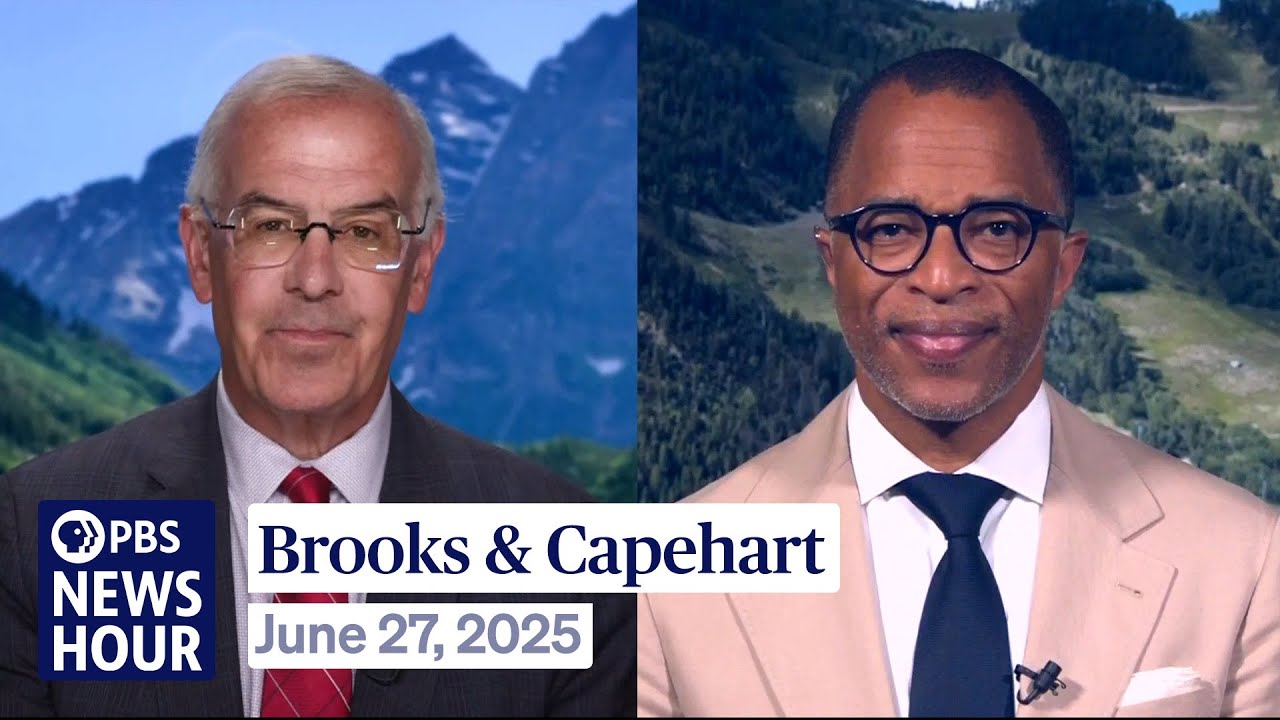
DAVID BROOKS, NEW YORK TIMES: Yes, I think the patchwork argument is the best argument that people in favor of the national injunction have that, where the Constitution is going to be interpreted differently in different regions, that doesn`t seem to make sense.
Nonetheless, I hate to say it. I think the court decided rightly on the national injunctions. I remember, back in the Biden administration, there was a judge in Amarillo, Texas, who decided to ban an abortion pill. And I thought it was just crazy that a single judge can set national policy on a fraught issue that should be settled by democracy.
And Democrats were rightly outraged. Now, I am all in favor of judges stopping what the Trump administration is doing, but you have got to be consistent for both parties. And I think if people want to challenge what the Trump administration is doing or any administration, they can file class action lawsuits.
But we should not have this shopping where liberals go to a Northern California liberal judge, conservatives go to an Amarillo, Texas, judge, and they can set national policy through one person. That just doesn`t seem to make sense.
Looks like yet another win for Trump.
And this bit of fun:
From the looks of it this yet another judge openly flouting SCOTUS with an arbitrary nationwide injunction.
Jackson draws fire for ADA reference in voting case | Fox News
So, being black is a disability in that black voters cannot access the system? is that her argument?
So, my spider sense tingling, I head to Co-Pilot to work out the logic.
Here’s what we came up with:
From what’s publicly known, here’s a simplified version of the argument she may have been making:
Premise 1: The Voting Rights Act was designed to ensure equal access to the political system for historically marginalized groups. Premise 2: Black voters in certain jurisdictions face systemic barriers that limit their access to fair representation. Premise 3: Disabled individuals also face structural barriers to accessing the political system. Conclusion: Therefore, legal protections that help disabled individuals access the political system can be analogously applied to help Black voters overcome systemic barriers.
Then we switch it into standard form and run it through a truth table, and get this:
Yes—the structure of the argument is logically valid. It uses analogical reasoning to suggest that if one group receives legal protections due to systemic barriers, another group facing similar barriers should also receive protections.
However, analogies depend on perceived similarity. Critics may reject the analogy on emotional, historical, or sociopolitical grounds—not because it’s illogical, but because they dispute the equivalence.
But, that’s not the end of it. Just because an argument is valid doesn’t mean it is sound.
Valid vs. Sound: A Quick Refresher
OK, and ?
Justice Jackson seems to be using analogical reasoning:
“If disabled people face systemic barriers and get legal protections, and Black voters face similar barriers, then similar protections should apply.”
But here’s the catch:
So while both groups face “barriers,” the type, origin, and remedy for those barriers differ significantly. That weakens the analogy.
OK, well, yeah, the analogy seems weak to say that a guy in a wheelchair at the bottom of a huge marble staircase is the same as the black mn standing next to him.
“This is unfair to me,” the guy in the chair says."
“Same here,” the black man says.

So, is it sound?
Let’s test the premises:
Because Premise 2 is debatable, the argument is not sound. Your instinct—that she’s chasing a hypothetical cat—is sharp. The analogy may be rhetorically provocative, but it lacks the empirical and categorical precision needed for soundness.
Hmm, who’s smarter than a Supreme Court justice?
The case concerns Louisiana, a deeply corrupt state with a long, as in Earl & Huey, history of institutional racism. If you aren’t well-versed in the history of voter suppression of black votes in the American South, perhaps read up a bit on it. I don’t have time to type out a thesis.
With the amount of stuff you post on this forum, yeah, you have no time for anything 
Believe it or not, it’s an extremely complex subject that can’t be summarized in a meme or a quick snark. It would take a few long-winded paragraphs at least, which most people would TL;DR. But, yeah - voter suppression based on race has a long, long history in the South. Are you trying to argue that the American South isn’t racist?