Joe Studwell, How Asia Works: Success and Failure in the World’s Most Dynamic Region (New York: Grove Press, 2013).
Not only has Japan developed with an impossibly small supply of cultivable land per capita, but large swaths of that land have been relentlessly gobbled up by its urban and industrial development. This trend has long been exacerbated by a cultural aversion to high-rise building. The insistence on low-rise, sadly, has nothing to make modern Japanese construction more attractive.
(p. 14)
South Korea’s capital Seoul, like South Korea generally, is a bit of a mess. the city’s hilly setting gives it a certain topographical charm. But apart from some tidy bits around City Hall, the place has the hallmarks of a job done cheaply, not that cheerfully, and all too quickly. In a very un-Japanese fashion, people are prone to leave rubbish out on the street. In the suburbs, the monotonous high-rises look about right for the OECD country with the highest suicide rate. (p. 108)
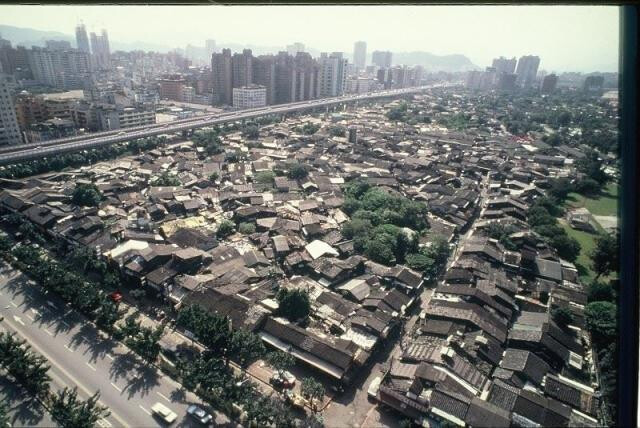
Kuala Lumpur, with its prematurely built luxury high-rises, contrasted powerfully with the capital of Taiwan, Taipei, which according to the Taiwan scholar Robert Wade still looked like a ‘mix of shanty town and transit camp’ in the mid 1980s. (p.196)
Taipei in the 80’s had several large shantytowns all occupied by old soldiers who never bought property in Taipei. Where Daan park now was one vast shantytown likewise the parks near Linsen/Nanjing were shantytowns. Mostly corrugated iron structures and communal bathing facilities.
I rode a bicycle through part of the remains of one almost a decade ago. It was Kaohsiung and the road was pretty wiggley with lots of turns and there was some old dudes about.
You can see how badly they treated their own soldiers , these shantytowns were actually prevalent anywhere they had a large military base. You can still see people living in these tiny little houses just outside some bases to this day.
There was a big area near Taichung airport and there are still some areas that are quite rough and poor looking around there.
Yes that’s right such as Angeles city.
Still I’m not talking about that but actual soldiers lived and still live in these poor or illegal housing communities for many decades in Taiwan , the government eventually provided housing for most of them I believe.
Well maybe but it was a combination of lack of space, funds, rapidly growing population and not giving much of a shit I guess.
I’m no historian but you would see official camps and then you would see illegal ones, often built on government land close to major bases. It just amazes me how long the soldiers lived in those shitty conditions. Now some of them clearly got nice public apartments but some didn’t. Not very clear how it all works.
Often when you see an empty patch of land in the cities or outskirt of towns that was where the camps were located. They cleared the camps but you can still see the trees.
The other interesting back story was that was a park before it was a camp and then reverted back to being a park again. If that is the Linsen bei lu park…can’t remember the story of Daan park.
That’s Daan in the photo, looking south from Xinyi Rd. If I recall correctly, there used to be barracks and a training ground in the northern part, and mostly 眷村 housing in the southern part.