I thought this might be the case. The publishing industry was already struggling but if you’re not a “marginalized” writer you’re wasting your time trying to get published these days:
It’s easy enough to trace the decline of young white men in American letters—just browse TheNew YorkTimes’s Notable Fiction” list. In 2012 the Times included seven white American men under the age of 43 (the cut-off for a millennial today); in 2013 there were six, in 2014 there were six.
And then the doors shut.
By 2021, there was not one white male millennial on the “Notable Fiction” list. There were none again in 2022, and just one apiece in 2023 and 2024 (since 2021, just 2 of 72 millennials featured were white American men). There were no white male millennials featured in Vulture’s 2024 year-end fiction list, none in Vanity Fair’s, none in The Atlantic’s. Esquire, a magazine ostensibly geared towards male millennials, has featured 53 millennial fiction writers on its year-end book lists since 2020. Only one was a white American man.
“The literary pipeline for white men was effectively shut down.”
Over the course of the 2010s, the literary pipeline for white men was effectively shut down. Between 2001 and 2011, six white men won the New York Public Library’s Young Lions prize for debut fiction. Since 2020, not a single white man has even been nominated (of 25 total nominations). The past decade has seen 70 finalists for the Center for Fiction’s First Novel Prize—with again, not a single straight white American millennial man. Of 14 millennial finalists for the National Book Award during that same time period, exactly zero are white men. The Wallace Stegner Fellowship at Stanford, a launching pad for young writers, currently has zero white male fiction and poetry fellows (of 25 fiction fellows since 2020, just one was a white man). Perhaps most astonishingly, not a single white American man born after 1984 has published a work of literary fiction in The New Yorker (at least 24, and probably closer to 30, younger millennials have been published in total).
I don’t think I read that, but have read Kowloon Tong and some other fiction. His fiction in my opinion isn’t great
But his travel books were all fantastic. My first was Riding the Iron Rooster, and hus descriptions took me back in time to when I rode the same trains to the same destinations
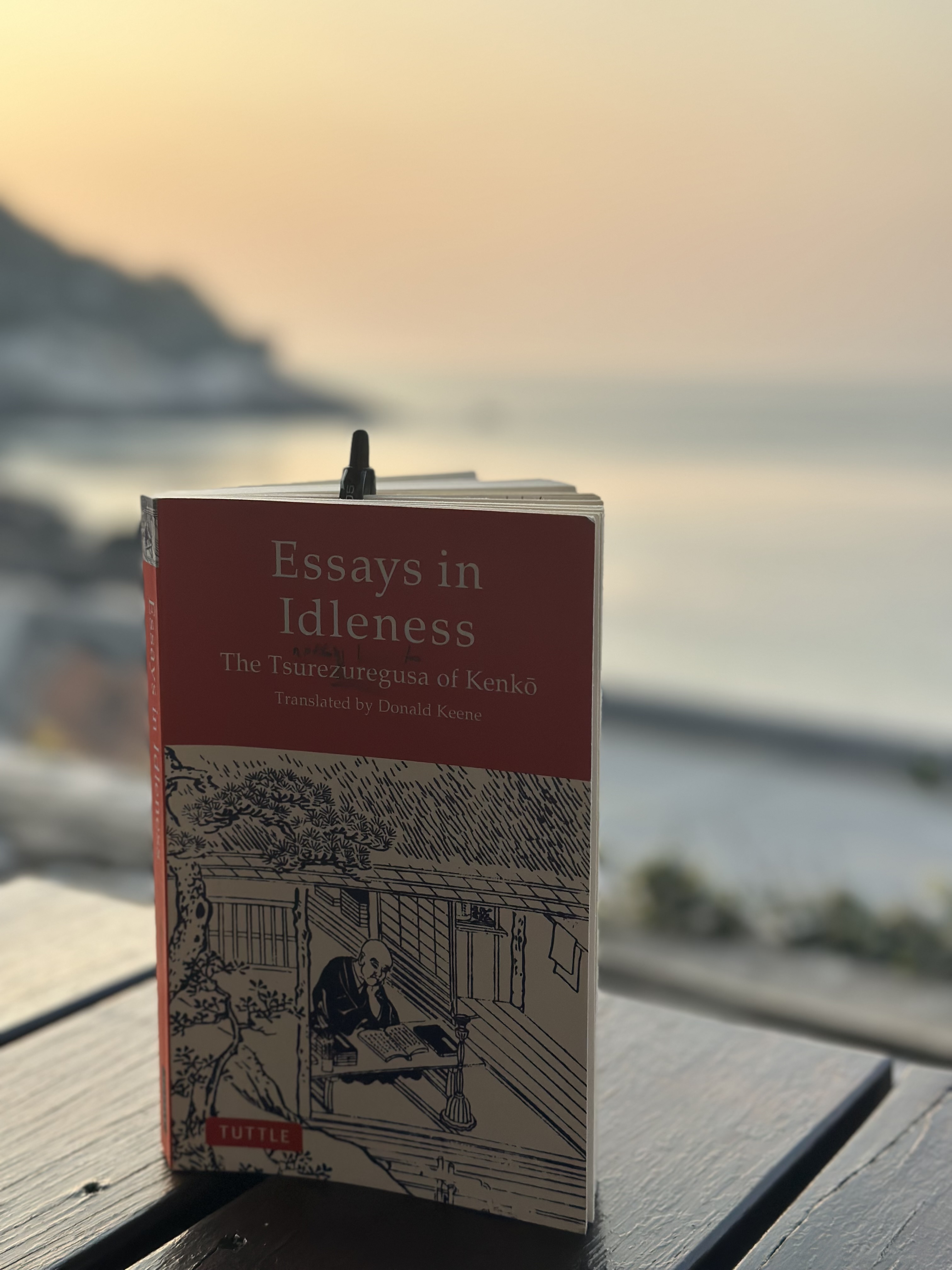
Usually not a fan of translations, but my Japanese is not good enought to read the original. Maybe I buy the Japanese version after finishing the English one.
If you don’t have time for the novel The Mosquito Coast you can spend a couple of hours with the film. It’s very faithful to the book and both Harrison Ford & Helen Mirren are good in it, one of Ford’s best performances. Watch out for a brief appearance of a pre-Seinfeld Jason Alexander.
It’s not the best solution, but you can take a pdf file to any printing outside a university in taiwan and get it printed and bound. The format and size might be different, but it’s physical. I do this often with stuff i want to keep in the library and reference. It’s a good service. Relatively cheap, albeit more expensive than just buying the mass produced book. If anything, at least the A4 standard makes the bookshelves more efficient to build.
Just started. Never been a fan of Klein’s prose, but this book has become “a big deal” among those in the American left, who may split because many centrist Democrats are lining up in support. Progressives are probably donning garlic wreaths.
Klein and Thompson argue that cheap and abundant energy sources are key to an an abundance economy. Pretty obvious, especially to developing nations, but again progressives are baring their teeth over it.
A year-by-year breakdown on Franz Schmidt’s executions, which included hangings, beheadings, and other methods, as well as details of each capital crime and the reason for the punishment.
From 1573 to 1617, he personally executed more than 350 people while keeping a journal throughout his career.
Not only a collection of detailed writings by Schmidt about his work, but also an account of criminal procedure in Germany during the Middle Ages.
George Schorpff of Ermb, near the hohenstein, a lecher, guilty of beastliness with four cows, two calves and a sheep. Beheaded for unnatural vice at Velln, and afterwards burnt with a cow.
This book is a perfect example of what Medievalists call "The Alterity of the past’, a confrontation with an irredeemable otherness.
Ian Williams was a long-time foreign correspondent for Channel 4 News and NBC, based in Moscow, Hong Kong, Bangkok and Beijing, and has written extensively about China. In his latest book, Vampire State: The rise and fall of the Chinese economy, he takes a particularly tough view, suggesting that China’s economic miracle was just a mirage all along.
As Williams sees it, China’s economic reforms were half-hearted from day one and designed first and foremost to ensure that the CCP would remain in power. The West expected economic reform to be followed by political reform and US president Bill Clinton even used this argument with Congress to justify China’s accession to the World Trade Organization in 2001. But political change was never on the CCP’s agenda. Rather, China’s ‘socialist market economy’ was intended to bend economics and business to the party’s will and keep the CCP firmly in the driver’s seat.
With China’s economy now in deep trouble, Williams argues that the party-state is the problem rather than the solution. Like a vampire, the party-driven control structures are draining the life-blood out of the economy. Not satisfied to control the country’s huge state-owned enterprises, in recent years the CCP has tightened its centralised mechanisms and expanded its presence into the boardrooms of private companies.