I was talking with a young (middle-school aged) relative living in Taiwan and mentioned how, living outside of Taiwan, I would catch small fish and shrimp from local streams to keep in my aquarium. The relative, who has an interest in science and nature (and, probably not coincidentally, is also a vegetarian), quickly replied with “but you’re damaging the environment!”
Now, where I live, it’s common for kids and adults in the summer to play in streams and sweep little nets around in the water, in the hopes of catching some critters like fish, shrimp, crabs, crayfish, metamorphosable aquatic insect larvae, and the like, and then taking those critters back home to raise them in aquariums. Same with insects and butterflies. It’s just something that kids, and sometimes adults, do.
I was a bit taken aback by the middle-schooler’s quick response about “damaging the environment” by catching critters – though on the other hand, I vaguely recall from my own middle-school days seeing some nature video that did advise children to only observe creatures in nature – by for example lifting a rock and seeing what’s under it – but not to disturb the creatures.
In Taiwan, what’s the general attitude towards catching these sorts of creatures (fish, shrimp, etc.) from streams for raising in aquariums? Is there some prohibition or inhibition against it? It’s hard for me to imagine that kids in Taiwan would not naturally go out and catch creatures from nature, but who knows.
Pretty sure anyone who goes hiking has frequently seen little ones with their buckets happily extracting various critters. Maybe it’s a new lesson plan
Aquariums are a popular hobby, and people clearly don’t care about the environment in general
Can’t take anything out of national parks
It’s hard for me to imagine their parents releasing them from the buxiban and driving them far enough from the city that the streams aren’t suspiciously laden with sewage and chemicals
In Taiwan? Never. Actually, I rarely see kids hiking at all. Usually retired people. But I tend to avoid the weekends…
But kids often do catch stuff and keep them. Beetles, fish, shrimp etc. Shops are illegal with wild caught stuff. Should be noted it is illegal more often than not and could very well be harming native populations. Learn the species and only catch ultra common species, or an invasive. African land deals are pets in many places, here dime a dozen nation wide.
Many of the shrimp in pet stores are native to Taiwan actually. Neocardinia and some others. Easy to find and fun to study. But have a real plan hat is responsible. Just because t is free doesn’t mean you don’t hold a lot o responsibility for this living creature to eat, not feel negative issues due to lack of proper care etc. Read and setup first, then catch.
Also don’t recommend releasing anything back I the wild if you have pets. Easy way to release pathogens, invasive etc into the wild.
Taiwan has quite a lot of parasite. Especially in fresh water. Learn and maintain good hygiene and quarantine practices.
We frequently go and play in the rock pool/stone weir by the house and our kids are always picking up crabs, shells and sea cucumbers to look, before throwing them back. I doubt two kids playing in the sea will crash the whole environment.
Normally doesn’t. Species dependant. Couple kids xa million plus pollution plus habitat loss plus natural disasters plus invasive species competition etc etc. We all have our roles to play. It’s good teaching kids about respecting them, conservation etc. Keeps them around longer for their kids to do the same
If the only aquarium-kept animals are caught in the wild and from the same location (e.g. shrimp, fish, snails, crabs all caught from a specific stream), then theoretically, raising them in the aquarium, then later releasing them back into the wild (in the original location from which they were caught) wouldn’t release any new pathogens into the wild, right? Or are you saying that the home aquarium environment can cause introduction of new pathogens that were not in the original environment?
I did alot of volunteer work at a protected park in Taipei. There was a very small stream that ran through the park. What I hated was the various people collected everything they could catch to bring home or bring to school for some assignment. Even when told please do not remove fish from the streams…they insist on doing so. One lady very earnestly informed me she was only taking to put in her aquarium. I told her was protected park. She very, very slowly started putting fish back in stream…hoping I would loose interest and walk away. After five minutes of very, very, very slowly putting fish back she finally dumped them into water and left.
Key problem is simply volume of people removing the very few living creatures in the park. I think that is the general problem in Taiwan. Any place convenient to crowds of people will certainly be stripped of most of the removable nature in that place. That includes some plants as well.
Yes, should be. At least I feel this should be minimum standard. Or keep them separately. It creates lots of good science lessons for kids about hungs like disease, cross contamination, hygiene etc without it being scary or political. A big risk with the pet trade is the escape into the wild. We have loads of fully nauralized and many very invasive species in taiwan directly due to the per trade. For example if you have a tetra tank setup, add some wild shrimp or fish, then release said wild animals again you risk passing on pathogens and whatnot from the pet trade into the wild. As well as wild into your home.
It’s also another issue dumping fish water changes into the ditch/environment. which inevitably goes directly into the river. That’s a hard one to avoid for the industry. I use it to water my house plants to avoid this issue.
I often see parents wih kids and nets in ditches around fish breeding facilities because they are often doing basically nothing to quarantine and prevent escapes. A lot of European importers shit on Taiwan a lot for dirty stock
Exactly. Anything, including the water. Gotta be careful
Lots of fantastic lessons for kids in this, outside of respectig others, biology etc. But waste disposal, which leads to taking less in order to have less work later disposing of unnecessary hings later , whch helps in education in regards to plannig ahead, reading ahead, and executing a thought out goal. quarantine etc. If they are old enough a cheap microscope will be super fun for kids to see “plain” water, then look close up and see how much life is inside. I always remember my kiddo and my students the first time they saw that and realized everything isn’t always what they see with their naked eye. Mind blowing experiences that have real positive life long evolutions.
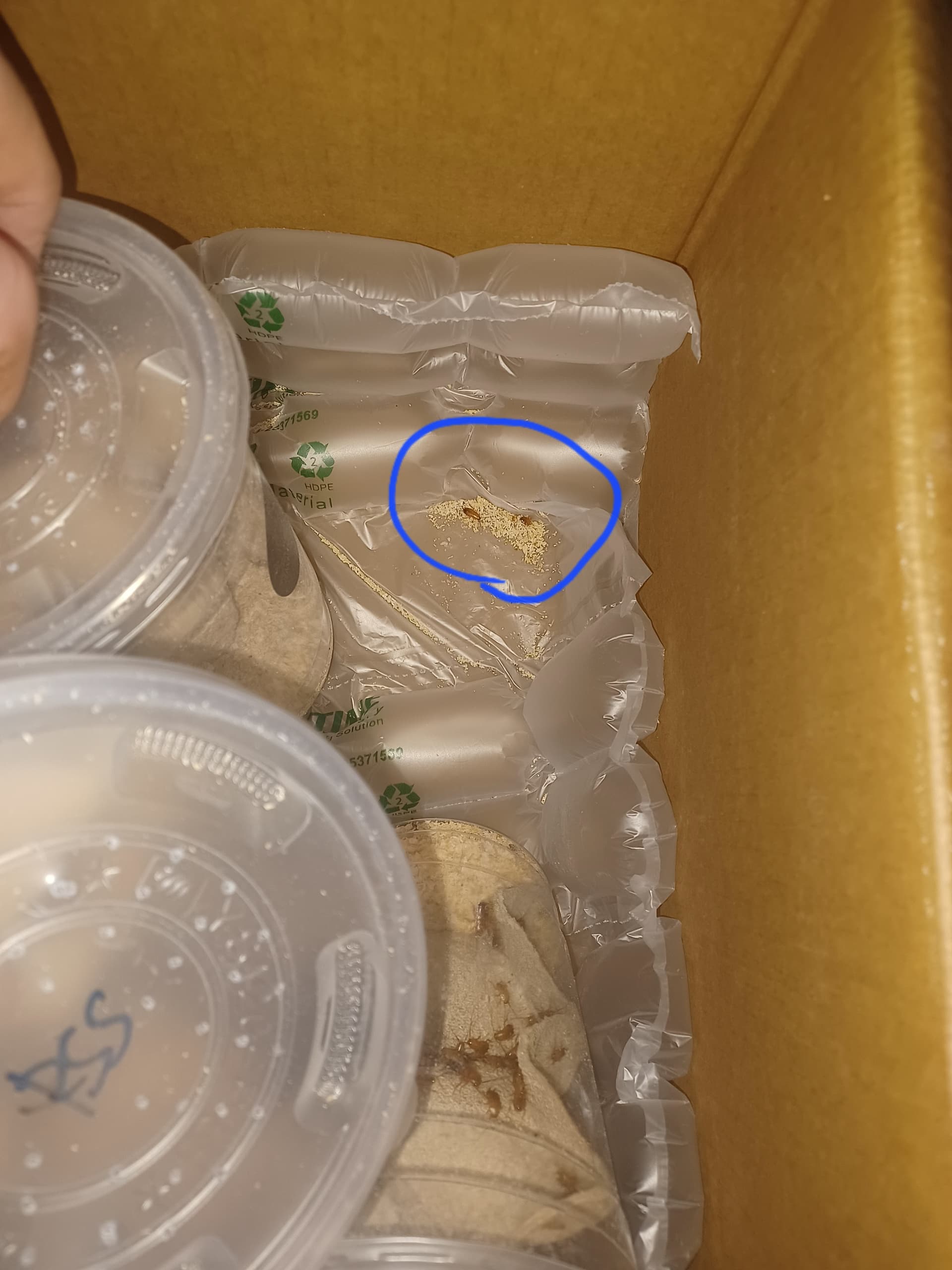
Not exactly on topic. But an example of poor housing and handling which can easily cause escapees and naturalized foreign species.
My cockroach colonies got flooded and wiped out this last typhoon when parts of the roof blew away. So I got a new shipment in of a couple species to rebuild stocks. To my shock, there were some loose in the box. I got all the ones I saw, but I hate to think how many might have escaped in transit. All because people just kept things simple and assumed nothing bad could happen. Quite a lot of responsibility in keeping animals and having proper quarantine/housing setup.
True, and I agree. I’d like to follow-up with an inquiry about your cockroach colonies (and this is meant as a friendly discussion, not as any kind of accusation or sarcasm):
Now, I assume (but may be wrong) that you are keeping the cockroaches in order to have them be consumed by other creatures. Such is nature. Is my assumption right?
If so, then what do you see as your obligations for raising the cockroaches? Do you strive to keep them as comfortable as possible before they are eaten, kind of like free-range chickens?
In my aquarium, I find it interesting to watch how the ecosystem changes over time, though this inevitably means cycling of lifeforms – some die, some survive and reproduce. Sometimes the tank fills up with plants, but then the fish have less room to swim. Sometimes algae takes over the tank. Sometimes the shrimp population increases; sometimes it decreases. Right now, a handful of moderately-sized snails seem to have appeared. Previously there were maybe 20 or more tiny dots that appeared to be snails. That means that around 75% of the tiny-dot snails probably died, with the remaining 25% surviving and becoming larger.
At the same time, I have another shrimp/plants bucket just sitting outside that I should probably maintain more closely. I actually only intended to move the excess plant overgrowth into a separate bucket, but some shrimp seem to have clung to the plants, so now they’re consigned to living in the bucket.
City kids, maybe. My wife is from the countryside and so are our nephews on her side. When we stay with them, they’re always bringing back random small frogs, fish, the occasional turtle even.
Ok, yeah, I guess I don’t hike in the same spots as the countryside kids . But I am someone who goes hiking in Taiwan! I even find neat forest temples and stuff


 )
) . But I am someone who goes hiking in Taiwan! I even find neat forest temples and stuff