I really feel stupid for asking this, but I only had this type of heater in Taiwan, in this house, and never had any issues with it until now.
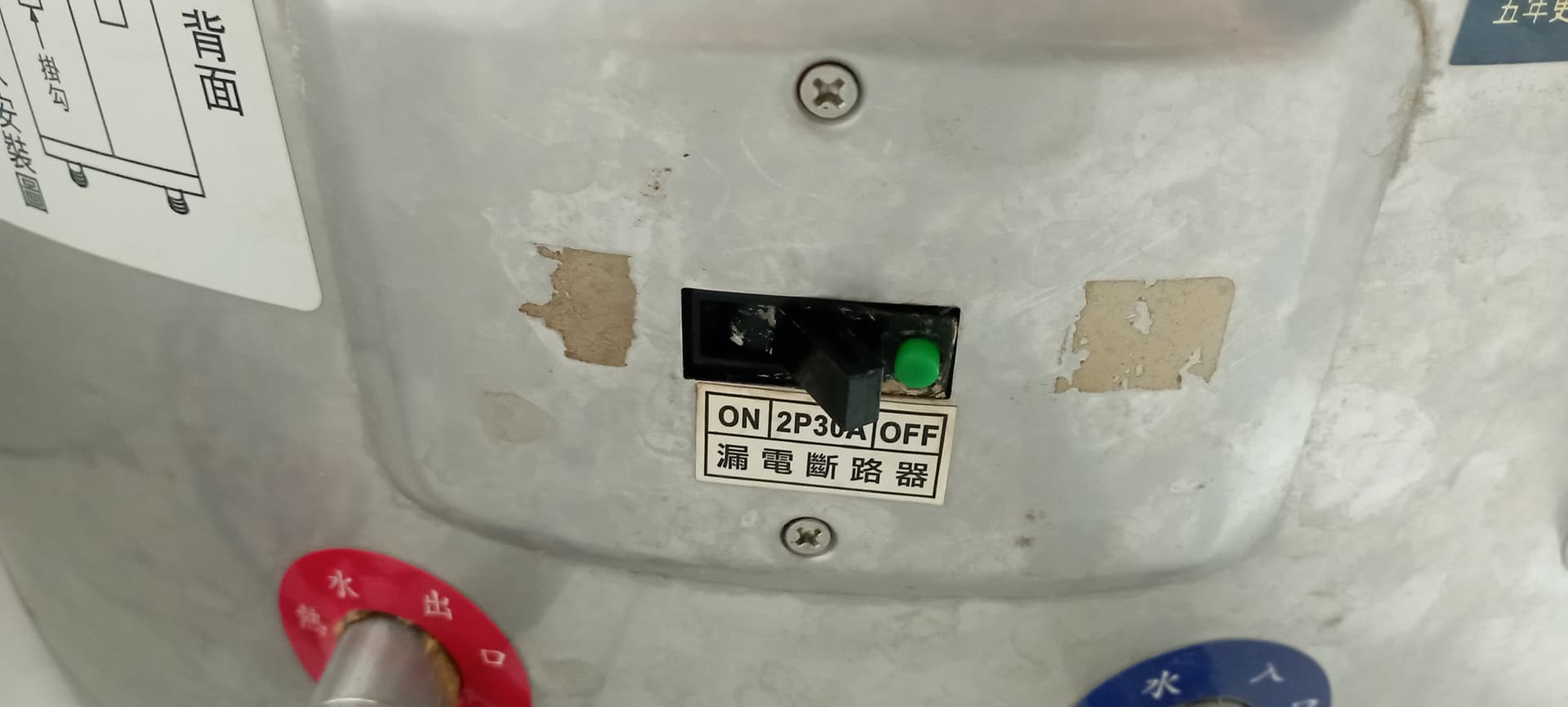
Yesterday when I was taking a shower I noticed that the water wouldn’t get hot, so I looked at the water heater switch and it was in OFF position. I turned it ON… only for it to go back to OFF by itself
I’ve tried many times, and it’s always the same.
The two things that came to mind were a broken fuse inside and perhaps too much power drawn by other appliances but the latter doesn’t really make sense.
The switch looks like a breaker. Whether or not there’s a separate fuse as well, do you know what you’re doing enough to open the heater, check for the problem, and replace it? I think it might be easier just to get a professional?
I’m guessing you’re the owner rather than a renter?
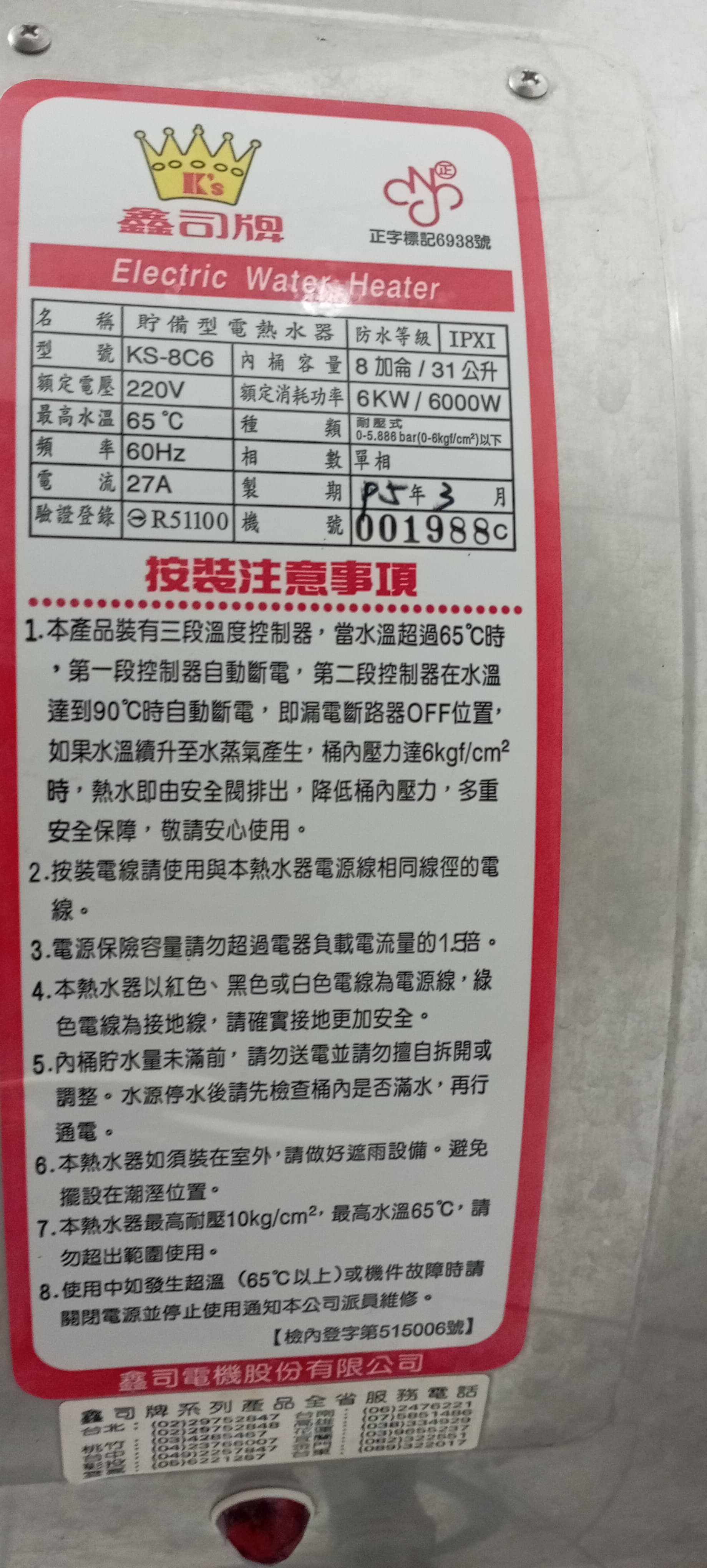
This product is equipped with a three-stage temperature controller. When the water temperature exceeds 65°C, the first stage controller will automatically cut off the power, and the second stage controller will automatically cut off the power when the water temperature reaches 90°C, meaning the leakage circuit breaker will be flipped to the OFF position…
I would check the on off switch first. Probably a switch regulating power to the ignitor. Is this heater hard wired into a breaker panel or fuse box, or the heater battery powered?
It’s what he suggested. If an electric heater gets “ignited”, it would be a different and more severe problem, and you’d need a pretty big battery to supply 6 kilowatts at 220 V (see the label).
There’s a fault somewhere, find the fault before turning it back on.
The reason it’s turning itself off is because the switch is a circuit breaker and it’s designed to turn itself off when there’s a fault to protect you.
Find the fault, fix it, then turn it back on.
The fault could be many things, a short circuit, heater drawing too many amps, or even a ground fault (in other words, it shut itself off so you don’t get electrocuted).
Like I said in my previous post, it’s most likely an issue with the heating element being rusted out or having too much calcium buildup. Do you have a multimeter? Are you comfortable doing DIY diagnosis and repair for electrical stuff? If not, it’s best leaving the job to a professional. The heater is 17 years old. Perhaps it’s time to replace it.
Yeah, I saw that but that’s not what is happening here… water was way cooler than that.
I guess it goes to the main… and there’s a fuse for that part of the house…?
It is an electric heater.
Thanks! I thought everything was alright but now I understand there’s a problem with something!
I read that online, but I’m really hoping for something simpler… like a fuse.
I used to have one. Then it broke, and I’m not spending money on one now… not for the moment. Maybe.
I’m the tenant here and I’m not sure if the landlord will want me to pay for this. Last time I had a small discussion for a small money related issue, and even if I was right I gave up for she was suggesting that the rent was already low and that I could find something else. I don’t want extra expenses at the moment, I’m not in the best situation money wise, so… if there’s something simple I can do on my own like changing a fuse, I can try that first.
The water heater is a part of the house, it belongs to the landlord, it’s their responsibility.
Get a professional to look at it. It’s possible live circuit came in contact with the water which will of course trip a ground fault interrupter.
Saving money isn’t worth getting electrocuted. Would you point a loaded gun at your head and pull the trigger with the safety on? That’s what you’re doing if you shower with the heater on. It shut off to protect you but you can’t rely on the safety protecting you all the time.
There could be other faults, like maybe a short or something caused the heating element to draw too many amps that will melt wires.
There’s even a thermal switch to prevent an explosion. Boiler explosion is no joke, they can do a lot of damage.
I’m no electrician, but I suspect if the breaker keeps tripping it’s not going to be just a broken fuse - I’m not 100% sure, but I would have thought the breaker would stay on in this case (because there would be no excess current to trip it).
Obviously something is causing the breaker to trip…and I doubt it’s going to be something you can deal with yourself unless you really know what you’re doing and how to troubleshoot it (it seems that you don’t - no offense intended - and I don’t either).
The money thing is unfortunate, but I also think this is your landlady’s responsibility (my landlady can be a bit like yours too).
I’m not sure that tankless electric water heaters can explode, can they? It seems like it should be incredibly rare anyway, because even if some part of the flow path gets blocked they don’t have much volume or the capacity to build up that much pressure, nor do they involve any flammable gas. I think boiler explosions usually involve large tanks or gas-based systems.
I’ve seen news report of them exploding. May not be as bad as tanked water heaters, but if you’re in the same room as the heater you will be injured. I think some elect to install them outside of the bathroom for this reason.
I don’t doubt people can be injured (I stayed in a cheap guesthouse in Laos where every time the shower was turned off the heater would boil the residual water then vent it into the bathtub onto the occupant’s feet - that was definitely a surprise the first time it happened), but a true explosion…I’m not sure.
That might be called an explosion for the uninformed. Point is there’s all kinds of safety switches even in a tankless heater to prevent what you just described. Like a temp sensor to shut off heating if the temperature exceeds a certain point or if the water flow is too low.