I see a pedestrian way off to the side, but I can’t tell if there’s anything in between besides the supporting spans - is that very low guardrail the only thing keeping people from doing a header off the side in case of accident? Or is there some kind of netting or platform or something just out of sight to catch them? 
The bridge is built with public transit in mind, they just haven’t built the MRT line.
That is something they could have done in conjunction with building this.
Secondly, while I am aware, it is only going to be an LRT line to Bali and that’s it. And the LRT is so unbelievably circuitous that it makes little sense. Bus lines can be made right now and the ONLY ONE comes SIX times a day!
SIX!
LRT-like transit, like the Brown line in the middle of Taipei city is stupid, but out on the perimeter like Tamsui and Bali, it’s perfectly fine.
It’s not perfectly fine, it’s not enough. These places are wholly underserved, and LRT transit is good for the middle of Taipei too.
It is not enough.
It’s not only not enough, but the government has made sure that they refuse to do anything that inconveniences cars.
If it serves as branches of some main MRT lines, sure. The Brown line though runs through Taipei’s major artery, and connects at least 4 major districts and an airport.
The brown line is medium capacity rapid transit.
LRT is a bus on tracks.
My problem with LRT, besides some really tight corners, is that they follow car centric traffic lights. I don’t know if it is because Taiwan doesn’t want to inconvenience drivers or because their amazing engineers can’t figure an intelligent traffic light system out.
Really? The LRT running in Tamsui has 62 seats per train, and the Brown line has 76. The supposed higher Brown line capacity is assuming 300 additional passengers can stand in the train cars, which I think is not an accurate estimate.
Unfortunately, the brown line needs an upgrade, either with larger capacity cars or more cars overall, but the stations weren’t built to accommodate future expansion, so I imagine that limits the possibility of adding more cars or making them larger.
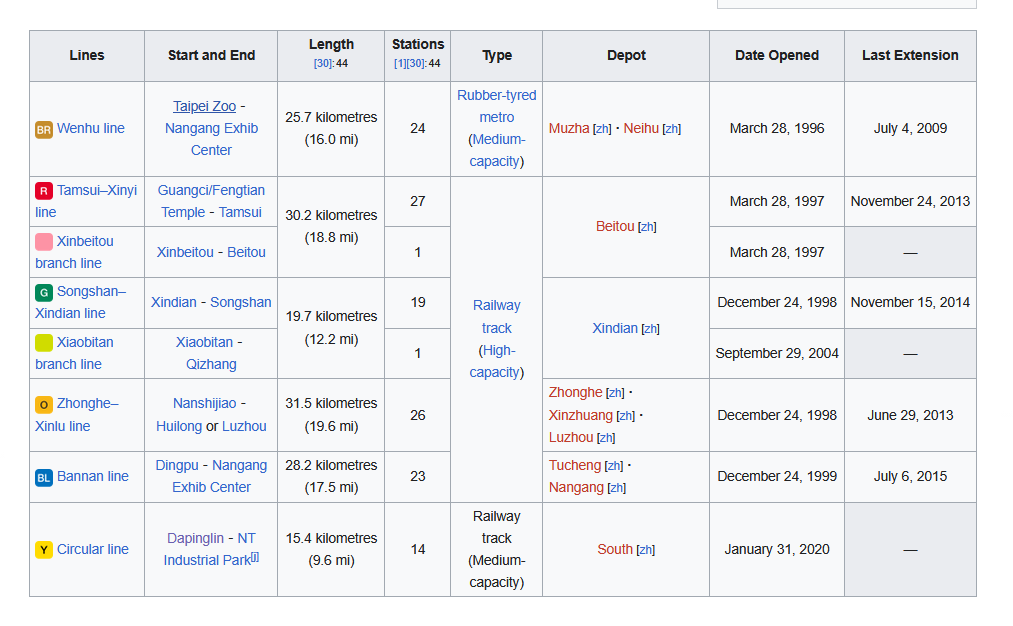
I know how the Taipei City classify it as. If Tamsui LRT is light metro, so should Brown line be classified as such.
The Danshui LRT is not a light metro, it’s a tram. It’s a bus with tracks. The LRT is not rapid transit.
The brown line and yellow line are rapid transit lines.
Not true. The stations are built to accommodate 6 train cars, but currently the system can only operate with 4. The KMT city government that initially designed the Brown Line for whatever reason failed to understand the system they chose didn’t support 6 train cars, and in fact could only have 2 train cars per train. They kept trying to find a workaround that could at least have 4 train cars per train, but the rubber tire system just couldn’t handle it, and ended up in flames twice. The French company also pulled out two months after initial testing, and sued the Taipei city government and got away with 1.64 billion NTD. It was a disaster to begin with.
When they eventually purchased new train cars from the Canadian Bombardier company, they still could only do 4 train cars. The system is essentially the same as the one that was used in SFO for inter-terminal transit.
Sure, I’m not arguing about whether the system in Tamsui has dedicated tracks. I’m arguing that the capacity for Brown Line isn’t actual medium, as it is only comparable to other light systems.
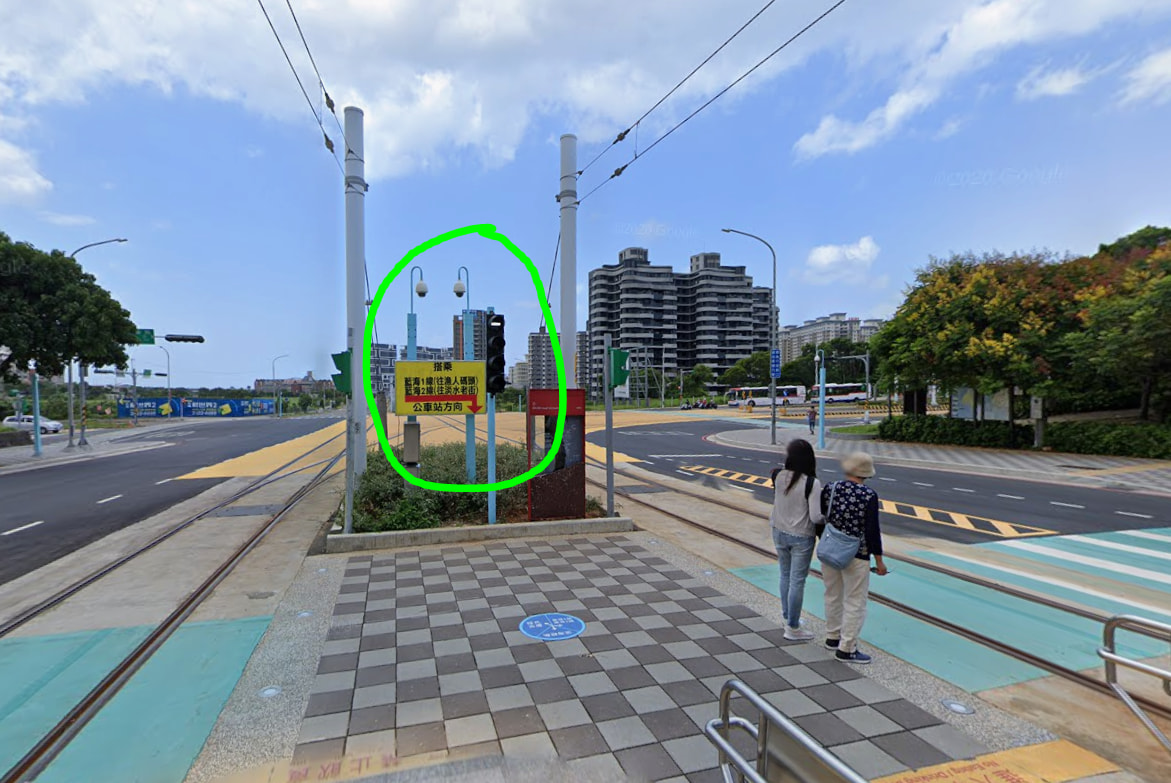
What I meant is that the trams don’t have priority. When they arrive to an intersection the lights don’t change to allow them pass, they have to wait as if they were an SUV.
You’re misunderstanding what I am saying
The brown line is actual light metro.
LRT is meant to be like a bus.
Ok, so I thought you meant the Brown line is on another level when it comes to its capacity.
Although, as long as it’s road traffic that has to wait for an LRT and not the other way around, what exactly is the different between the Brown Line and that kind of LRT system? The top speed of INNOVIA APM 256 is 70~80km/h, but the average speed of the Brown Line is 35km/h. The top speed of Citadis X-05 305 is also 80km/h, the average speed of the Kaohsiung LRT is 25km/h. The slower average speed is mostly due to more stops spread out closer, rather than the trains having to wait for traffic lights.
Light rail is meant for shorter distances, more last mile transit than rapid transit. The lack of grade separation is meant to be more convenient to hop on and off. Rapid transit does best for the medium-distance commute. That’s why it feels like a slog to go one station on rapid transit. If I was going from Pacific Sogo to Brass Monkey for example, ideally, you would take the bus (or if an LRT existed, an LRT) because it would result in less walking and faster transit because rapid transit stations are farther apart as well as avoiding the grade separation that results in even more transit time.
LRT systems are meant to be treated like the bus. In a holistic setup, there would be all levels of transit to accommodate all types of travellers based on distance needed with buses for the shortest distances and gradually climbing up.
While train and bus sizes may vary and overlap a bit, Brown line Rapid Transit people movers tend to be higher official capacity than LRT on average.