I think the problem for a lot of these tasks is sometimes the human experts creating and labeling the training/validation data gets it wrong as well. So there are essentially incorrect data mixed in the stuff we want to teach the network models. Also, often times there is an imbalance of normal images and critical images, which is another issue that DL has to overcome.
Interestingly, people usually expect higher hit rates from machines than from human.
Take self-driving cars, for example. While the majority of accidents are caused by human mistakes and could be avoided by autonomous driving, people in general still resist in trusting a machine behind the wheel.
In most applications, especially image classification, that is the case. A DL model can classify images better and faster than human experts. What bdog is saying is that not only does it needs to be better than humans, it needs to be correct 100% of the time, or at least on occasions when it gets one wrong, the problem has to equally perplexing for humans, otherwise DL will look really dumb.
Which is a sentiment I understand, but I don’t think there is anyway to make sure DL will never get one wrong, just like you’ll never be sure if a person will never get one wrong.
What bdog is saying is that not only does it needs to be better than humans, it needs to be correct 100% of the time, or at least on occasions when it gets one wrong, the problem has to equally perplexing for humans, otherwise DL will look really dumb.
Errh close enough I suppose. If it fails we, as ML software vendors, have to understand why. If it is a bias produced from the training set, for example a human mistake as you say, fine. But the point you have to understand is what if it is not a bias from the training set, but a random, inexplicable flake out. If you can’t explain why, you lose all credibility with your customer for a drop-in solution. Envisage a commerical scenario for these products and you’ll see my point.
There’s a field called explainable AI which could assist here, but it is a difficult problem.
Yeah. The problem with XAI is that it may end up narrowing the algorithms to inherently explainable machine learning methods, which aren’t necessarily the ones with better performance.
That’s the thing with any statistical model, which neural network is technically another method of approximating global minima, by projecting into even higher dimensions than your traditional statistical approaches such as regression or support vector machines. It is very difficult to explain why something goes wrong. If you have inaccurate training data, that’s the easiest part to fix. The rest are difficult to understand because we humans can’t really comprehend beyond the 3rd dimension.
Take CNN for example, you might be able to guess a feature is looking for a line or a dot or a circle from activation maps in the first 2 layers. Once you go to the 5th or 6th layer, it is impossible to understand just what the model is looking for at that point.
I don’t know if we have to understand why an error is made. For me, people are also black boxes. You don’t know why a mistake is made by a person this time but not the other. At most you could ask a person to explain what he/she thinks went wrong. Even if you get a satisfactory explanation, it doesn’t guarantee the same mistake wouldn’t happen the next time.
I’m glad you appreciate this stuff for what it is, glorified curve fitting.
I think the point about not being able to hone in on what neurons are doing comes off as defeatist. There may be more sophisticated ways of explaining than pointing at individual neurons and asking what they do.
With human error, since you know where some of the main risks are, you can control for them. For example a bus company can make sure drivers are well rested, and have taken adequate breaks. With AI driving the bus, you are simply accepting a completely random error, and you have no idea how to control it.
It’s the known unknowns vs the unknown unknowns  .
.
but better for the insurance companies out there.
1 Like


Video of the semi-final. The final and AI v.s. human fighter pilot is going live this afternoon?
No one talked about the final show down between the winner of the AI trials Heron v.s. real human F-16 pilot.
Time code included to jump straight to action. The F-16 pilot is very experienced and is an instructor level pilot. In all 5 simulations, he did well for about 2 turns and then things all went down hill.
It’s a 5-0 win for our robot overlords.
Groups in China and the Philippines have been creating facebook and instagram accounts and fan pages and discussion groups using photos generated by GAN networks.
Guess what happens in 2021!
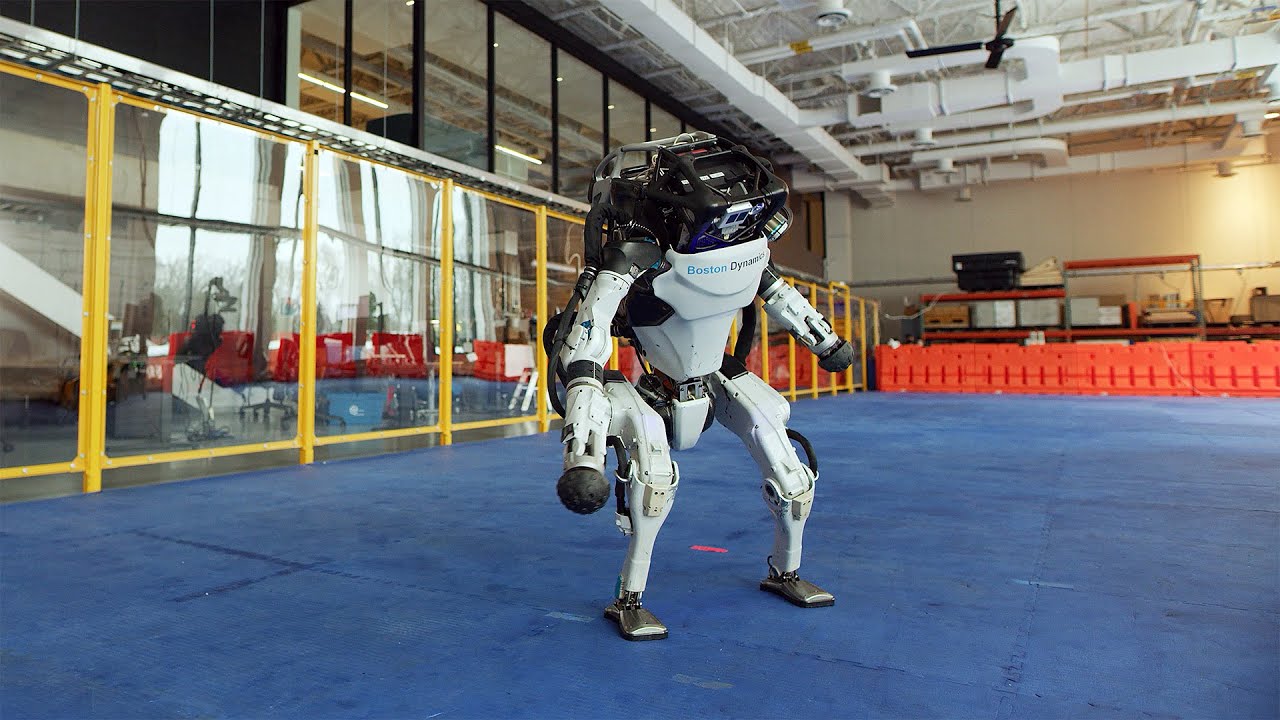
Do the twist!
damn … 
They had this great idea and trained an AI model. Then tried different things and were surprised what it could achieve.
This is the danger of AI. One random day in the future it will completely outperform human intelligence and then things out of our control will happen (could be good or could be bad).
Start worshiping your robot overlords before they take over; I’m talking smart fridges and toasters.
Here’s a take on how these robots can be programed: