Kmt did loosen their grip on power and allowed the dpp to take over.
Nope, it’s their name and this site is English. I can say 中國國民黨 if you all determine this is better (using Mandarin instead of English). This is not disingenuous, it’s as honest and authentic as it comes. Whether I like them or not. It’s their actual name. I am translating it to English so the English community can know what those in Taiwan see at all times. Also, I gave sources 
Perhaps CGMT is better? Though they like a more China centric pinyin system as far as I know.
It’s absolutely nothing like calling taiwanese chinese. For many reasons, but this thread isn’t about such political issue. Link another thread and we can have it out there but it’s a silly comparison as the China Kuo Ming Tan (中國國民黨) calls themselves that. And many members identify as Chinese on record. Again, that’s a political discussion, not a praise for a party list.
The evolution of the CKMT is clearly going more PRC centric. Ma basically cemented this point. It’s not the ROC of the past where they wanted their (our?) Land back from the renegade communists that went to war. It’s different now. It’s Taiwan now. The CKMT of 2024 is overwhelmingly going towards reunification and pro CCP direction (not CKMT direction of years past). Not all members, but an overwhelming direction that can’t be denied. It’s not like grandpa in the army decades ago, the new greed is far less understandable.
But, AGAIN, what are the fucking good things about the CKMT in our lives? There’s almost nothing here save pensions and the light blue stance. I truly want to know. Most people talk about dlsuperficial things that generally relate to giving certain people money. I want to know what else they have done that are great. I want some ideas of why they actually may be good, useful, and for Taiwan.
Anything??
Back in the day, they replaced the Japanese occupation. But, as is often said 「狗去豬來」 .
.
They attempted to eliminate communism, but this resulted in “white terror” and other 事件… Those were different times, though.
Modern KMT politicians have normalized cross-strait relations (can’t trust China, but better to not antagonize), advocated for smaller government (libertarian in some aspects, and less reliant on foreign powers), and willingness to collaborate with other NON - disturbing parties (not the DPP
  ), for example.
This sounds like a temporary arrangement. Japanese colonial rule in Taiwan and Penghu was however not limited by time—the Treaty of Shimonoseki ceded both to Japan in perpetuity.
The true “occupation” of Taiwan and Penghu was by the incoming Chinese forces in 1945, who were only here as occupying forces on behalf of the US and the Allies. There was (and is) no legal basis for them to stay.
If you have these basic historical details wrong, it makes me wonder what else you have wrong. Example: your claim (presented above without any statistical basis) that MIT was the same under recent KMT and DPP governments. Prove me wrong and provide some empirical basis for that claim. Otherwise it looks (and I am sure you don’t want this to be the case) that you simply have some kind of personal or ideological axe to grind. Which, come to think of it, may be a reason some people do support the KMT. 
Guy
Sounds like something a Japanese WWII hold out would say 
Sounds like The PRC line. 
I am not sure what are you going on about here. It’s unambiguous that Japan surrendered sovereignty over Taiwan and Penghu when they signed the Treaty of San Francisco.
Now you tell me where in that document it specifies that the incoming Chinese occupying forces gained sovereignty over Taiwan and Penghu. They didn’t? Damn I guess that just supported my position, which has nothing whatsoever to do with “The PRC line” as you put it.
Guy
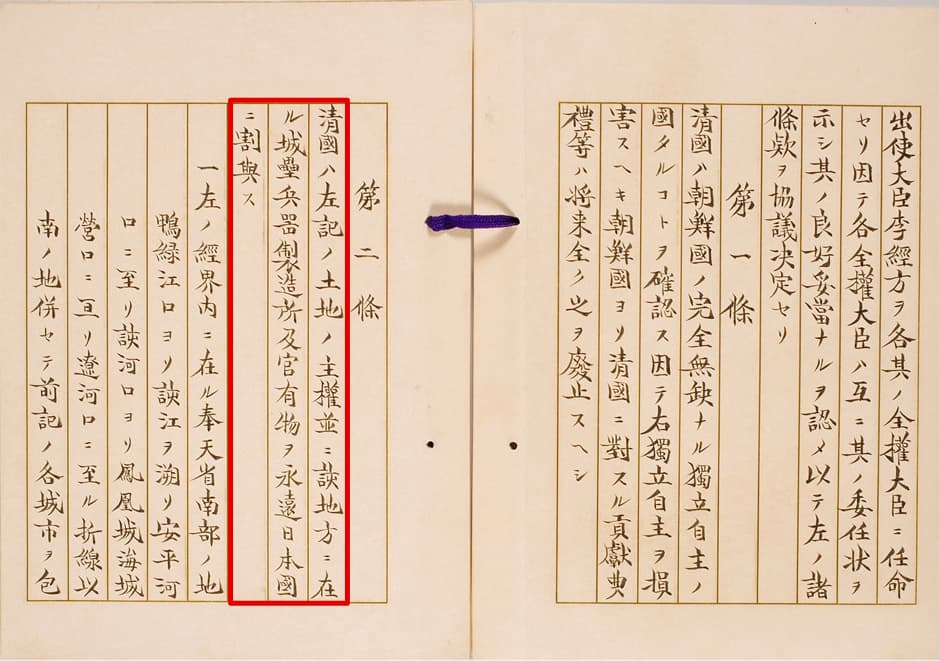
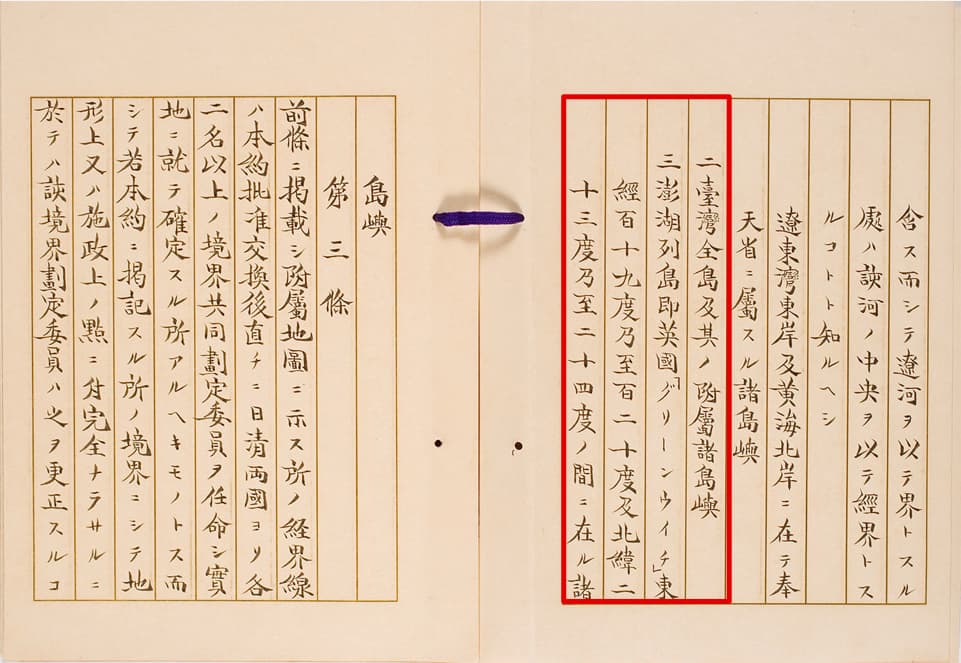
If you could read Kanji or Hanji, it’s clearly written that Taiwan and Pescadores were ceded to the Empire of Japan in perpetuity.
I don’t think you understand the PRC’s position. If the PRC doesn’t support the ROC’s legitimacy to be here, there will be no legitimacy for the PRC to claim Taiwan as its own territory.
The PRC’s position is to follow whatever convoluted reasoning it takes to present the maximal borders of the Qing Empire as natural, normal, and something it should have, now. It’s not unlike Japan claiming in 2024 that Manchuria, Taiwan, the Korean penisula, and all the South Pacific Islands it controlled should belong to it, now. If Japan did that, we’d all be terrified and alarmed. The fact that the PRC gets away with this way of thinking and talking is likewise utterly frightening and unacceptable.
Guy
Yes, in a previous century, hence the ‘holdout’ comment.
You yourself appear to be questioning the legitimacy of the state. (Maybe I read your comment completely backwards? If I did sorry.) But anyway that is why I commented that your comment sounded like ‘The PRC line’
I’d add I suppose there would be different ways to question the state.
Sorry to have yanked this thread off course. 
Guy
So you are saying an international treaty is automatically invalidated once it’s over 100 year-old? Thanks for clarifying your position.
In any case, I don’t subscribe to the positions attributed to me by @Anaptronym . Hopefully we can get on the same page soon. 
Guy
That is not what I said. You can read what I said above.
International treaties are - I imagine - validated by states accepting them as valid, and exercising power in accordance with that.
No, what you’ve described is countries honoring the treaties they’ve made. Just because a country decides to violate a treaty doesn’t immediately invalidate that treaty. If a country wishes to change the terms of a treaty, it needs to seek to renegotiate the terms and make a new treaty.
Things change over time though and new realities emerge. Like you can get treaties the assign the world into two domains one ruled by Spain and the other by Portugal.
Hence the San Francisco Treaty, however, no one was specified to receive Taiwan’s sovereignty, hence the undetermined sovereignty status of Taiwan. However, being a enemy territory separated as a result of WW2, based on the UN charter, the Allied Powers should have the administrative responsibilities, with the ultimate goal of allowing self-determination. That is something CKS himself acknowledged in his diaries and letter to Chen Cheng, the governor of Taiwan appointed by CKS. This makes the immediate declaration of Taiwan as a province of the ROC postwar even more sinister, as CKS knew full well that was illegal annexation and was against international law.
But doesn’t questioning the legitimacy of the current state appear unwise in the present day?
Look, if all comes down to it, everything comes down to who can sustain losses in a global warfare the longest.
That being said, while there’s still a semblance countries wanting to maintain peace through international law, it is the most unwise to go along with the KMT and the ROC’s stances on their illegal annexation of Taiwan.
As long as the majority of the Taiwanese public maintains that the ROC was merely trusted with the administrative responsibilities by General MacArthur as SCAP’s General Order No. One, which instructed the KMT to accept Japanese surrenders on the behalf of the Allied Powers in Taiwan and Northern Vietnam, as well as the Soviets to accept Japanese surrenders in Manchuria and Northern Korea, and the subsequent annexation of Taiwan was against international law, and Taiwan’s sovereignty should be determined by the people of Taiwan as according to the UN charter, the PRC has no legitimate claim over the island.
Sounds to me like this could risk attempting improvements to the coastal defenses while the tide is coming in. Sure you could make the flood defenses better but any change lets water in. This in fact is one reason that I would see as a legitimate one for supporting the KMT: they tend to be less likely to have this very conversation that we are having now. And more likely to engage in talking about other stuff like economic practicalities. Like renegotiating identity and constitutions and state and stuff sounds kind of risky to me.