Tsai already used her political capital to reinstate the one year conscription scheme.
I doubt Lai has the political capital (no control over the LY, for example) to double the length now.
Guy
Tsai already used her political capital to reinstate the one year conscription scheme.
I doubt Lai has the political capital (no control over the LY, for example) to double the length now.
Guy
Nor should he do it, even if he could
Based on his recent speech delivered at the DPP convention (or whatever it’s called) it seems he was hammering on about getting everyone on the same page of Taiwan nationalism. Put otherwise, to try to make it less likely that anyone here would willingly sell out their beloved homeland.
The old generals collaborating with the PRC and so on . . .those guys are already a lost cause, even though the KMT keeps putting one of them on their LY party list. 
Guy
Almost there with you until the second part. They should invest in improving the quality of training and restructuring the organizational structure. I wrote an article on this if anyone is interested. I’m posting it below because I realized my website has my personal information  .
.
Synopsis
Advances and innovations in the social sciences have been at the forefront for modern day efficiency, organization, and restructuring. Insights in the field of social psychology in particular have been instrumental to redefining and measuring group success. Scientifically valid methodology as well as insights from qualitative methods have led to breakthroughs in modernization, long term efficiency and success. In particular, modern armies have realized the value such research provides and have used such research to drive advances in group cohesion and effectiveness. Amid rising tensions and increasing military threat, calls for organizational reform, increase in funding, and lengthening of mandatory service continue to gain traction in the R.OC. However, research in social psychology on military affairs of the R.O.C. reveal deficiencies in social paradigms that go beyond single policy quick fixes. Additionally, the body of research on military organizational structures, command cultures and climates that influence them is woefully underrepresented in the R.O.C. Drawing on a body of existing evidence and in light of increasing hostility across the Taiwan strait, it has become imperative to operational success that Taiwan reevaluate the psychological conditions within the existing military unit and advocate for wide sweeping research and ultimately reform of R.O.C. ‘s military organizational structure.
Background Description
In terms of the Taiwanese military, news reports involving training blunders, military accidents, and corruption are noteworthy. In CNN’s article on issues in Taiwanese military recruitment, they point out that the interior ministry of Taiwan reported that 2022 represents the lowest recruitment rate in ten years1 (Eric 2022, 1). Issues in organizational structure and command climate are not unknown, nor has it escaped the purview of the United States government (Taiwan’s primary defense partner). In their report, reporters from newspaper outlet Roll Call draw on a litany of interviews with military personnel, civilians and experts in the field of Taiwanese Defense. They found responses across the board to be critical of operational effectiveness and most poignantly a lack of clarity and unity over purpose and mission effectiveness (Oswald, 2022, 2). In terms of public opinion, 78% of polled Taiwanese “indicated little confidence in Taiwan’s military to defend itself according to Roll Call News (Oswald, 2022, 2). In terms of contracted active duty personnel, 8,000 volunteers ended their contracts early according to former deputy commander of Taiwan’s air force Ret. Lt. Gen Chang, Yan-ting2 . All of this points to institutional and psychological issues of distrust and gaps in existential purpose within the Taiwanese military.
individual ethic violations. In terms of national defense, ethics are critical to security as unethical military personnel are stewards of vital and sensitive information. Additionally, combat effectiveness and security as a whole is entirely dependent on the will and solidarity of those in charge of carrying out defense capabilities. Each weapon, each piece of gear, each missile, and each fighter aircraft is useless without an operator to wield it.
Yet despite this, research on Taiwanese military organizational structure is severely limited to officer command and to only one dimension (organizational commitment and ethics). However if the scope is broadened into western contexts, we can discover a plethora of research that could be a key to obtaining a better grasp on how social psychological research can directly impact defense capabilities. In a study on Norwegian military operations, (Fors Brandebo, M., Börjesson, M., & Hilmarsson, H. 2022,5)5 found in a longitudinal study involving military personnel taking part in a military exercise that group cohesion had a significant impact both positively and negatively on PTSD symptoms, trust in leadership, and resilience and confidence under stress. When organizations were high in group cohesion overall physical fitness, reduction in military justice charges and lower accident and error rates in combat occurred (Fors Brandebo, M., Börjesson, M., & Hilmarsson, H. 2022, 5). Specifically, researchers (Fors Brandebo, M., Börjesson, M., & Hilmarsson, H. 2022, 5) discovered through a causational survey design that flatter (decentralized commands that allowed flexibility in small unit leaders discretion and control) military organizational structures along with high degrees of information sharing and clarity predicted improved operational decisions. Furthermore, they found that increased centralization of command authority and decision making (rigid hierarchical command) resulted in poorer decisions by small unit leaders. However, this was mitigated at least in part by the degree of trust within the organization.
In their study on ethical work climates within the Taiwanese military, researchers (Hung, Tsai and Wu 2015, 6) outline how organizational deficiencies within the Taiwanese armed forces specifically degrade ethical work climates and in turn, lead to failures and disaster by way of impacting organizational commitment.6 For example, in their literature review, they discovered that Taiwanese military officers reach a career peak at a significantly faster rate than their civilian counterparts. In turn, they discovered that these peaks were highly related to loss of retention and low operational commitment. Building off this, (Hung, Tsai and Wu 2015, 6) sampled 508 military officers across services and ranks at the Taiwanese National Defense University. Building off previous research on organizational commitment, their study examined relationships between Ethical work climate and Organizational commitment which they measured in three dimensions; affective commitment (how committed members feel to the group), Continuance Commitment (feelings of group attachment brought on by cost of separating from the group), and Normative Commitment (Members feel a duty to remain part of the group). In their survey, they found that Ethical work climates resulted in positive correlations along all three measures of operational commitment. This research reveals the importance of organizational reform in terms of manpower specifically. Furthermore, elements of this study reveal deficiencies in organizational structure critical to proper function. For example, the researchers (Hung, Tsai and Wu 2015, 6) point out that the rules climate was selected over that of the caring climate (factoring in the fact that all respondents were military officers). It can be inferred that current military leadership may have been untrained or possibly not exposed to the benefits of caring climates (a dimension that would greatly benefit from further research).
with Taiwanese defense allies, with subsequent exercises and studies providing demonstrable improvements to Taiwanese autonomous defense.
Recognizing the sociological and cultural differences between the two militaries as well as the increased pressure for the Taiwanese military to adapt to consistent and uniquely diplomatic military oppression by an overwhelmingly greater foe, it is critical for Taiwanese national defense to invest in greater academic research in the field of management and social psychology (particularly in the sub discipline of group dynamics). Given the unique cultural and sociological factors of the island, it would be unwise for the Taiwanese government to attempt quick fixes modeled after its allies. The solution, then, comes in the creation of a military research arm within the ministry of defense. In order to reduce bias and to retain academic integrity, it is also critical that this research body be granted unique separation and command that is beyond the direct influence of military and defense leadership. This research body would be in charge of scientifically evaluating the social-psychological dynamics of military units, training, etc… These experimental psychologists and social scientists would then collaborate with policy makers directly to create and implement policy reform within the military itself. Additionally, it is also critical that this body actively conduct research on training, leadership, and effectiveness within various units across the armed forces.
You think doubling the length of service is better for the country, or more progressive, than gender neutral conscription?
IMO, this would not go over well. The established hierarchy would find the idea threatening and/or insulting, and they would fight it at every step.
It’s not so much the length but the training.
My cousin is doing his 1 year now. He says they have made it more serious recently from what he knows. So it looks like there’s at least some attempt to take it more seriously.
A lot of why it got less serious and became the trash pickup joke compared to my father’s time is that the population got upset when conscripts died. I explained during my time that officers are terrified of disciplinary actions from 2 ways.
Edit. There’s 1 worse. If you discipline someone to the point they kill themselves.
I agree. There’s noncombatant roles women could be vital providing. Taiwan should consider have female specific training as it could give Taiwan an advantage in an invasion when women aren’t just helpless dead weight to feed and keep safe. They have an active role in the defense.
Even if the training was good a year isn’t much time for equipment related things or advanced tactics. Other countries in the area practice quite regularly together. Japan, U.S., Philippines and Australia.
My son did 4 months almost a year ago. Training was not bad considering the short time. They did get rifle range about 4 times but they don’t qualify- don’t have shooting badges to determine their ability. At his duty station after bootcamp he fired a machine gun several times and is good at maintaining them.
Still…this just makes them more trainable if that’s needed in the future.
His friend is doing the 2x2 month summer school vacation system now and told him the shooting is much more advanced. They fire a lot more rounds and undergo a tactical type firing range. At least at his bootcamp.
One thing I still don’t understand is why the Taiwan military is one of few that don’t issue dogtags to their military personnel.
You’d think if the government feels it’s a good idea to promote such a TV series that they’d also feel it’s important enough to issue dogtags. Even China and Japan do and of course Korea.
Here if you like you can buy your own online…it’s just considered a cool thing but few guys have them.
I guess if things go like the series then you just got a bunch of bodies with no names or injured who don’t know their blood type.
From what I’ve read if longer then a year it requires a vote
New article on the NYT: https://www.nytimes.com/2024/08/25/world/asia/china-taiwan-zero-day-tv-show.html
Cheng Hsin-mei, the producer of “Zero Day” and a main scriptwriter, said, “How everyone would really face up to a war, how you would confront that possibility — nobody’s actually talking about that.”
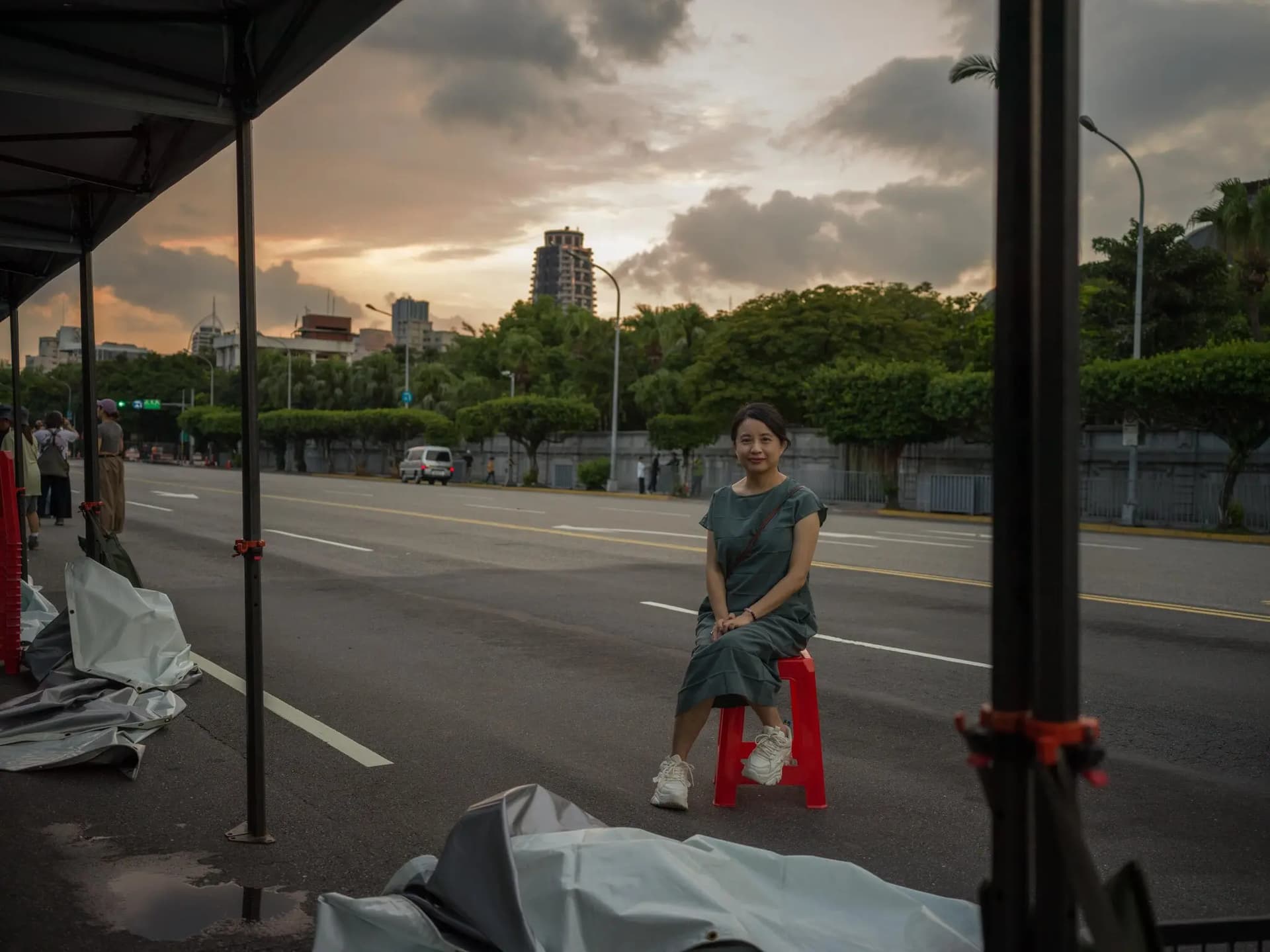
Credit…Lam Yik Fei for The New York Times
SUMMARY
The upcoming Taiwanese television drama “Zero Day” portrays a fictional scenario of a Chinese invasion of Taiwan, sparking intense debate within the country. The 10-episode series, which depicts a weeklong blockade and subsequent military assault by China, aims to highlight the looming threat Taiwan faces. Producer Cheng Hsin-mei seeks to confront the widespread complacency in Taiwan regarding the possibility of war. The series has been both praised for encouraging necessary discussions and criticized, particularly by Taiwan’s opposition, for allegedly serving as propaganda for the Democratic Progressive Party. The show has faced challenges, including actors declining roles due to fear of Chinese backlash and concerns over filming locations. Inspired by Russia’s invasion of Ukraine, “Zero Day” emphasizes the multifaceted strategies, including psychological warfare, that China might use to destabilize Taiwan.

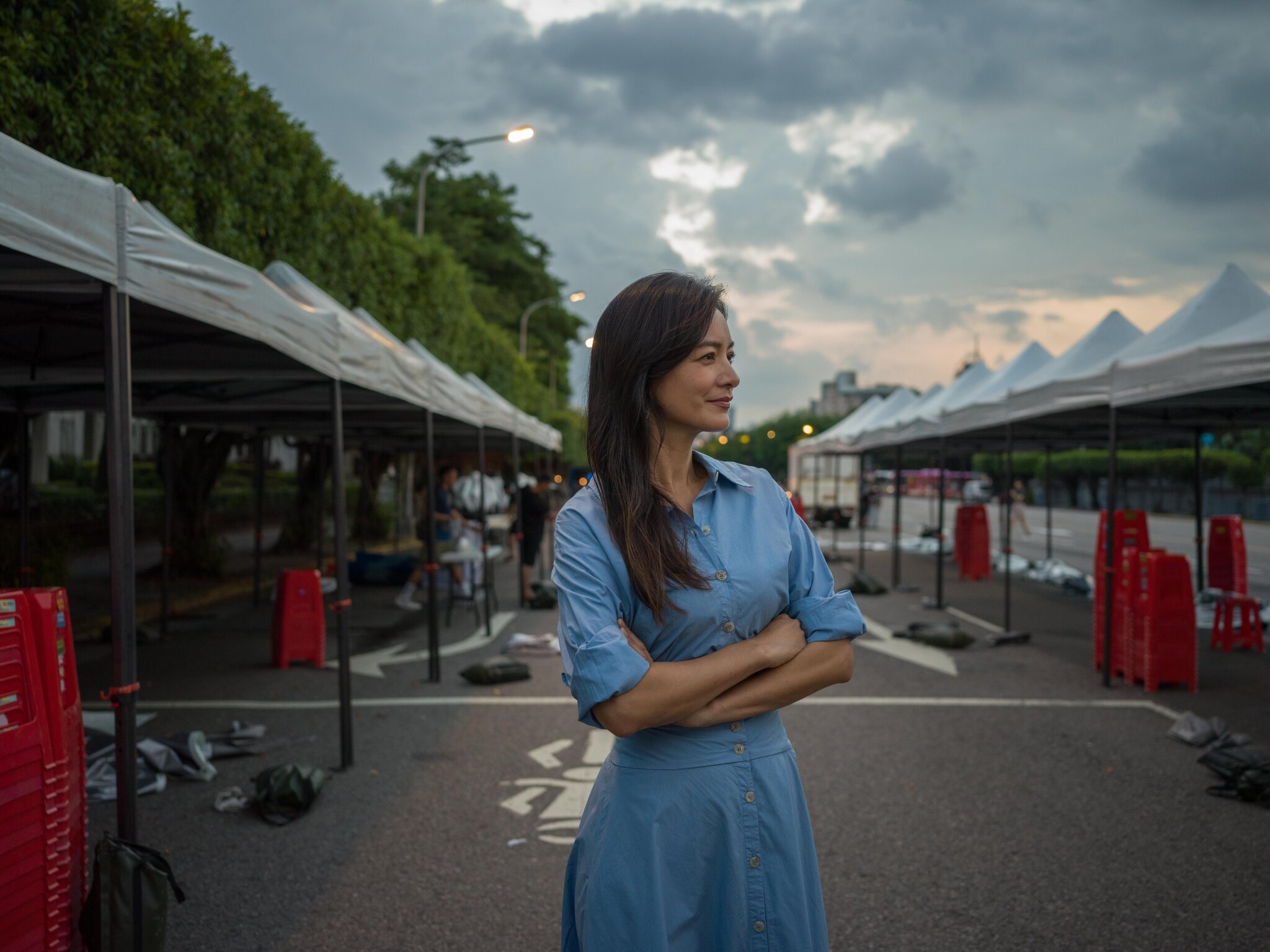
Janet Hsieh plays a Taiwanese president-elect in the series.
Credit…Lam Yik Fei for The New York Times
Lo Ging-zim, one of the 10 directors involved in the series, each directing one episode, said it was normal for Taiwanese television and film productions, including comedies and horror movies, to win some government funding. He said the government had not sought to influence the direction of the drama.
Mr. Lo said he was inspired to join the “Zero Day” project after Russia’s invasion of Ukraine. The characters in the series will grapple with measures that China may use to destabilize Taiwan, like flooding the internet with disinformation, Mr. Lo said. In the trailer, as the Chinese blockade begins, rumors claiming that the president of Taiwan has fled are shared on social media.
So, aside from the hubbub is it any good?
I think it’s only coming out next year. At this stage, maybe look out for filming on the streets?
Jesus, this is all about a TV that hasn’t even been filmed? I hate the internet.
I have lived here for a while, but I haven’t heard of a movie or series made here that addresses this directly. Then again, I’m pretty unplugged when it comes to the local TV and movies. I hope people here can recommend and link below to shows and movies about this topic here.
All that said, I expect this series to be done well – thoughtfully written and well acted (ok, maybe). Taiwan creative is pretty great when it wants to be. And it’s cool to hear that they have different directors, i.e., styles and visions, to shape the series. Even if I do not agree with the premise, assumptions, or conclusion, I do expect it to be well made.
On reflection, it makes sense (if they haven’t filmed it yet) to be talking about it now, otherwise some people might get rather disconcerted when they get up in the morning and find (say) Chinese tanks parked in the street without the foreknowledge that it’s part of a TV shoot. They might as well start talking about it now, since everyone’s going to be talking about it anyway, long before it’s finished.
If people see tanks on the streets and a film production crew standing around and brights lights and make up trucks and PAs running around and think it’s an invasion, Taiwan has larger problems.
But that’s me!
They were filming today in Kaohsiung at the 中央公園 station.
Looked like a scene of a Taiwan swat team and some guy strapped with a bomb and gun taking hostages.
Oh no…Janet Hsieh’s a part of it.
@Mr_PBH , you may see her some day as she wants to retire in Taitung with hubby.
A picture would help. No idea.