I can’t stand Kim Iverson’s takes on Taiwan. but she credibly is reporting that a lot of military personnel are reporting that everything they’re doing is gearing toward war with China.
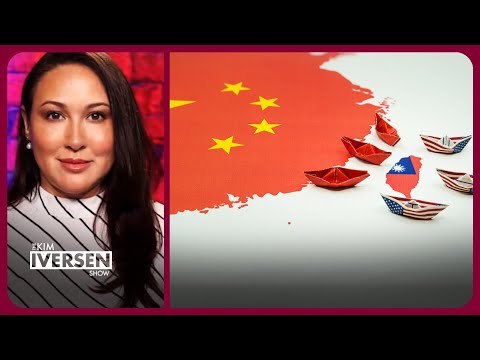
I can’t stand Kim Iverson’s takes on Taiwan. but she credibly is reporting that a lot of military personnel are reporting that everything they’re doing is gearing toward war with China.
The Taiwan military is geared for a war with China…oh my …what a shock 

 .
Isn’t it a good idea to prepare for something if there’s a seemingly high probability of it happening?
US military, not Taiwanese military.
America doesnt have to do anything.
All it would really have to do is blockade the strait of malacca.
after that you start the countdown for the end of China.
Japan would step up to the plate anyways as they have in the past
To prevent misery… definitely.
Welcome first post poster ! 
The biggest single military operation in the history of war was the invasion of Normandy, which could well have gone wrong. I very much doubt the Chinese will even attempt something similar.
With regards to the US? Even the Trumpers see thr US as an Asian power, not helping Taiwan would put immediate paid to that notion. So, yes, USA will get involved, so will Australia, Japan and maybe Korea. China will suffer from a naval blockade thry cannot lift or break, and will run out of energy and fertilizer within 90 days. Then you will see China collapse.
“The war will be over by Christmas” has been prophesized invorrectly on more than one occasion. Don’t underestimate the ability of the CCP to maintain control despite enormous domestic turmoil and it’s worthwhile to consider that the CCP may prioritize conveniently timed “liquidation” (if patriotic mobilization isn’t proving tenable) of the less-than-productive and useful segments of the population during wartime.
This would solidify CCP domestic stranglehold and gear the population towards a total war economy.
Think of this situation as a two-fold action: Externally the CCP wants a limited regional war to expressly seize strategic territory while maintaining as much of it’s international position and influence as possible. This means engaging Taiwan with as few external factors as possible and maintaining trade with partner nations to keep their citizens employed.
Internally the CCP needs excuses to either “educate” or “liquidate” dissidents with as little pushback from the population as possible. But the CCP also needs to make real achievements on the battlefront to present to the people once the war is over.
So conscript the dissidents and ship them off to an “ammunition factory” - oh my the “factory” blew up and the CCP thanks the families for the glorious contribution to the war effort of their now dead family members. Mix this in with any real battlefield losses and it all gets lost in the propaganda soup.
====
As for the “largest military operation in history” that credit actually belongs to the Battle of Kursk on the Eastern Front. And the U.S. amphibious invasion of Iwo Jima was actually larger than that of Normandy.
I think that a lot of legitimacy of the CCP remains bound up on the economy and not just a possible war. Further, it will be a huge miscalculation if they get themselves into a war over Taiwan, as any naval blockade will put the Chinese economy under immense strain. Also, it’s fairly inconceivable that the main trading partners of PRC will keep trading as nothing happened, while the PLA undertakes their huge and rather uncertain venture, global GBP will likely take a 5% to 10% hit, and I guarantee you that the hit to China’s economy will be harder.
Right now, dissidents especially known ones are not a major concern of the CCP, the iron fist applied over the last decade has been very hard.
My final concern regarding PRC’s ability to wage war is that the scandals in military procurement in China appear to be on the Lafayette level, if not worse. Let’s see. Rocket forces emptying rockets of fuel, so they can have hotpot? Missiles not fueled by fuel, but by water? Top leadership of the PLA just disappearing and being replaced all of a sudden? Rumors out that their current deadline of being able to invade Taiwan of 2027 has slipped due to the corruption in the PLA?
I only see Xi Jinping starting a war in order to secure his legacy, and he will only start it when he knows that his military is strong enough to take over Taiwan as a fait accompli in a matter of hours, all alternatives to this are simply unpalatable to him, seriously.
No dispute on most of these points. As for trade embargoes it depends on who the CCP ultimately engages with in a kinetic war and how long it takes to start causing all the other trading partners to drift away.
Lack of external trade can be mitigated with internal manufacturing needs (beans, bullets, bandaids). The crux of that issue is scale and the cost/benefit assessment of other nations to determine who the top dog will be and then try to stay in thw good graces of one or both sides.
Right, they will need to redirect heavily, as they get their Iron ore from 1/3 of the ANZUS treaty signatories. Further, I see the US and Europe likely heavily behind Taiwan, the US has too much to lose in Asia.
In the beginning I can see that. But if there is already pre-existing empathy fatigue related to Ukraine the public outcry may not be as sharp as it could be.
The U.S. is looking to domesticate chip development and research. So the advantages lost may be temporary and another “Operation Paperclip” may be more beneficial than a kinetic war in that respect. Temporary loss in direct acquisition of product in exchange for the brainpower to create newer and more advanced chip design than Taiwan is presently capable of producing may be more appealing to U.S. interests.
edit
Can’t speak much to where alternate iron ore would be sourced from though. I’m mlre familiar with rare earth and oil deposits as strategic points of interest.
The USA is investing heavily in the semiconductor space, and a reindustrialization of the US is a much talked about topic.
Issues abound, though, such as finding engineers, workers, and if they can make the plants as efficient as the ones in Taiwan.
My concerns would be centered around the historical track record of an as blatantly mercantilist industrial policy as the one the US is trying to pull off. I don’t see that succeding to the degree needed, sorry.
I can’t speak for the US when it comes to war weariness regarding Ukraine. In Europe and especially in the frontline NATO states, they seem as gung-ho as ever. We are seeing a belated effort to ensure that Ukraine gets what it needs, and Russia is as unpopular as ever.
The US is focused on China, but pulling out all semiconductor engineers and replicating what they have in Taiwan will take them decades. The base is low.
As for the US I know many current and prior service members are just about done with foreign adventures. The next generation seems to be a bunch of “yes men(?)” more concerned with politics and the right statements to say rather than warfare. Needless to say the political purges of late have sucked out alot of the motivation to go above and beyond and either juat ride out the contracts to the end of the pension rainbow or just get out altogether.
The public would be more or less divided along Red/Blue political lines. Red wants to focus at home and Blue wants to save the world from “Big Bad Russia” while ignoring the worsening domestic issues at home.
As for industrialist policy the biggest hurdles I see are bureaucratic. Nothing halts a project faster than some endangered fish the size of my pinky or a rare flower and getting projects tied up in court only to find that neither of these species are actually rare or endangered.
Brainpower being imported can make up for the lack of domestic expertise, and dangling the carrot of “work for us and we won’t deport you and your entire family over to the CCP” will be the motivator. Nationalizing that chip manufacturing capability (or the U.S. congress playing insider trades of winners/losers) and making the U.S. government the orimary beneficiary will suddenly.make all that red tape go away. Funny how that works.
It already does…
Yep. Knew many Filipinos while in service. At one time ahd an issue with the “Filipino Mafia” among the enlisted and junior officer ranks. Issues related to family feuds and social pressure causing discord in the ranks and splitting the personnel across different units with directions for 90 days of no-contact was the best way to put that issue to rest.
The persistent problem children had to be AR15’d and I only heard of one (I was never able to confirm it) that received a BCD/OTH for interfering with a Command Direccted Investigation (CDI).
Great soldiers and good people though. Little crazy at times. And I will NEVER eat Balut no.matter how.much they tried to convince me it was good.
Rogin cited Admiral Samuel Paparo, commander of the U.S. Indo-Pacific Command, who told him after attending the Shangri-La Dialogue security conference in Singapore that China would prefer a swift and intense war to seize Taiwan before the world could react. Rogin said China aims to avoid the protracted conflict that Russia faced in its invasion of Ukraine.
Paparo indicated that the U.S.'s “hellscape” strategy is crucial to foiling China’s invasion plans. This involves deploying thousands of unmanned submarines, surface vessels, and aerial drones in the Taiwan Strait as soon as China’s invasion fleet begins to cross, thereby buying time for a full-scale counterattack by Taiwanese, American, and partner forces.
Er, how many of these are ready to deploy?
Of course I have no idea. What’s interesting to me is the shift away from strategic ambiguity. You see it more and more often.
they only need to be ready when China is ready (to do the corresponding invasion on taipei).
How many of China’s strategies are ready?