Great country Wales I spelled the confederate outlaw wrong “Jose Wales”

Great country Wales I spelled the confederate outlaw wrong “Jose Wales”
Now you’re just trolling.
Britain threatened the North during the Trent affair, and Seward wanted the Union to declare war to unite North and South against a foreign foe, but Lincoln shot him down by saying “one war at a time”.
Britain was split- some of the Tories wanted to break the blockade with the United States, but most of the Whigs and the lower classes sympathized with the anti-slavery cause, even though the cotton embargo caused great misery in the northern British mill towns.
Interesting. I would hazzard a guess that most of the southern land owners were of British landed aristocracy with their wealth coming from agriculture, and the North being mostly made up of “New Money” from industry? A struggle of “old money” versus “New”. I saw the civil war as a kind of clash between the two, with banning slavery being one of the ways to motivate Northern soldiers to fight. What’s your opinion.about that?
Yeah, the “Cavalier” view was held by a lot of upper-class Southerners, who saw themselves locked in a struggle with a less genteel North, which was seen as less ‘Anglo-Saxon’, and more open to the dregs of Europe (rich dregs included!). One of their arguments was that slavery itself was less brutal than the ‘wage-slavery’ of the North.
This was a time when the earlier idea that working for wages was just an expedient for a young man on his way to owning his own farm and shop was being replaced by the existence of a layer that was destined to work for wages . There was genuine horror at the idea that free (white) men would form a permanent working class- an idea fit for Europeans, but not Americans, with their heritage of liberty.
I doubt that anti-slavery was a great motivator for most Union soldiers. Abolitionism itself was never very popular, as opposed to determination to keep the Union together. ‘Free Soil’ meant a determination to keep slavery out of the territories, but mostly so it wouldn’t provide competition. I think there was a lot of opposition to Negro settlement, slave or free, as there was in California to Chinese labor, because of that.
I agree and great info too  , I doubt this view is much taught in high school history classes
  . It seems quite obvious to me though, And I doubt in those times when the value of human life was not high (unless being of nobility or very wealthy) that slavery was the genuine reason for the war. I would guess slavery would have soon been abolished anyway even if the south had fought to a stale mate or even a victory without the so called Pickets charge blunder (I am not sure how much of the Pickets Charge is myth or fact though).
No, it’s pretty standard fare, in the north anyway (can’t speak for the south).
I just thought this less simple view of the civil war would be a little destabilizing.
“East” Indians is what is derogatory  not Punjab. Just because those idiots from 1492 didn’t correct their mistake we have West Indians.
On another note, we’d call most white skinned foreigners in India as goras- white is partly just “white” partly derogatory if in the context of imperialism etc.
Damn Yankee
Nah, the idea that individual northerners were primarily motivated by a desire to save “the Union” isn’t controversial. I’m not sure it ever was.
In Canada it’s used to delineate them from West Indians (people from the Caribbean) and ‘real’ Indians (Canadian First Nations, to use the pc term). The whole thing is screwed up because Columbus didn’t know where he was.
What’s strange about “Punjab” is that it is (was?) used in a derogatory way in western Canada, but is apparently unknown elsewhere- I can’t even find it on the net. As I said, it’s the intention, not the word.
“Chinaman” is such an example; it originally was no more offensive than Englishman or Frenchman- it became offensive because the people using it intended it to be offensive. Same as we had a white Brit (intentional use of word) here whining that he couldn’t use the term “Paki”, which, he claimed, is no more offensive than “Aussie”, Saffie", “Kiwi” or “Brit”-it just described where someone came from. Which it could have been-except that’s not the intent of people who use the term; they intend to be offensive and then hide behind the word’s original meaning.
but she was good in the sack I bet
There’s also the possibility of no malicious intent.
The obvious problem with controlling language because people may be using it as a pejorative, is the new word that replaces it can easily become a pejorative. In fact, this is what always happens. Special needs used to be a positive replacement for retarded, for example. You’re constantly chasing your tail coming up with new nice definitions because the intent is the issue not the language. Beliefs can’t be policed.
Yes, the past should remain as an example, good or bad.
Things like this just reduce the righteous they might have had to nothing.
That’s what they always say. They’re usually lying. In the case of ‘Punjab’ in Canada, extremely few people didn’t know what was meant- my friend Sammy was an exception, being a new immigrant. In North America, very very few English-speakers wouldn’t know ‘Chinaman’ is derogatory
It’s like the scene in “Rush Hour” where Jackie Chan doesn’t realize what’s wrong in saying “Hey, my nigger” to a bar full of black people- it can happen, but not likely, and only among people who are unfamiliar with the culture.
A kung fu master can call you anything he likes, and you had best get over it.
The past is data. I agree. Learn, do better.
How long does it take white marble Confederate statues that are twenty feet tall to deteriorate to nothing? A lot longer than backing up a truck, dismantling them and crating them up in this place forever I surmise.
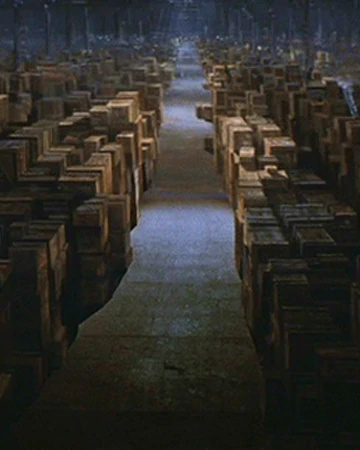
This didn’t age well.